

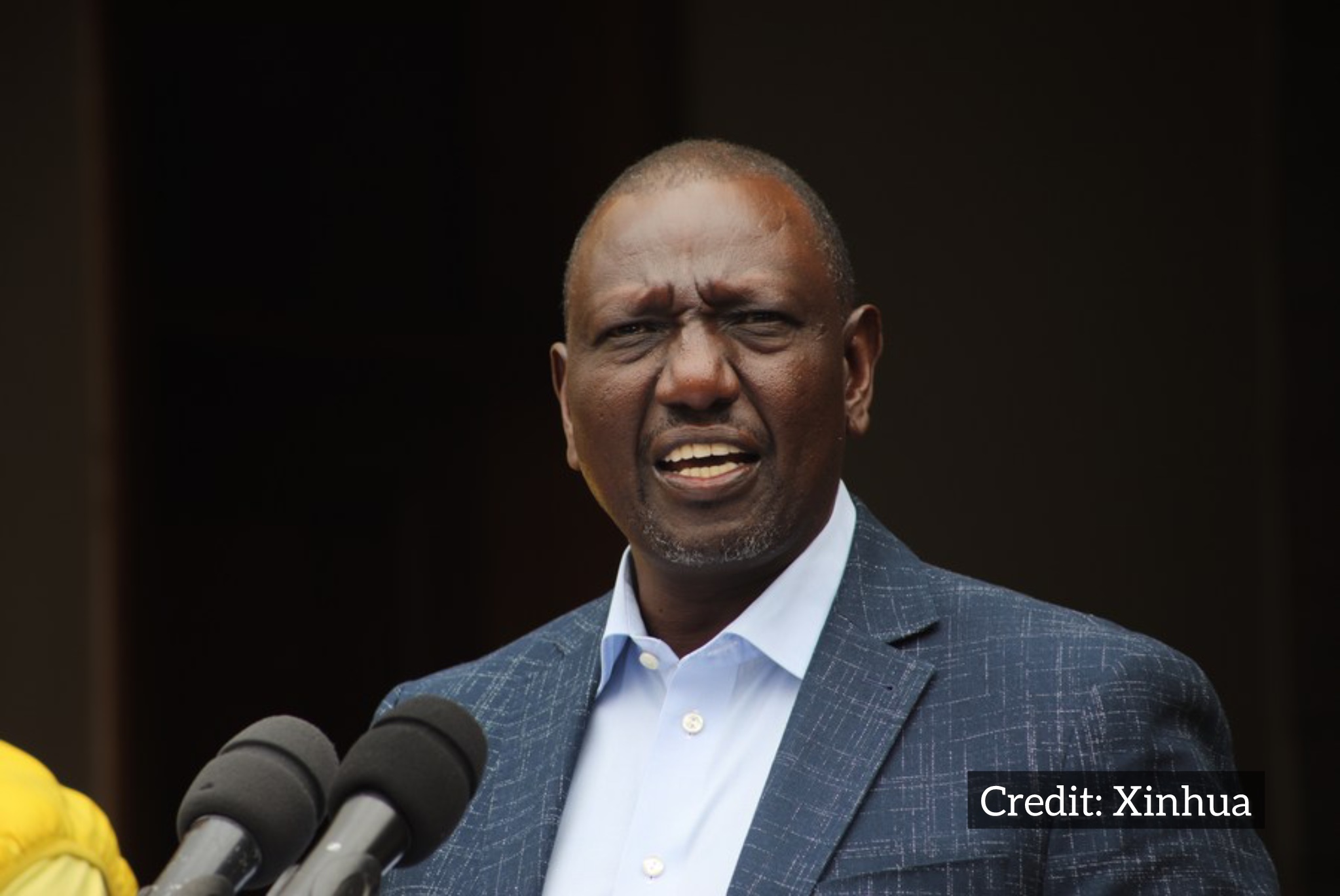
At the United Nations General Assembly in New York, Kenyan President William Ruto declared that the worsening security crisis in Haiti “can and must be solved”, while emphasizing the urgent need to address the logistical and resource challenges hampering international efforts.
Ruto made the remarks during a High-Level Meeting on Haiti, where he reflected on Kenya’s leadership role in the Multinational Security Support Mission (MSS), a UN-backed initiative tasked with restoring stability in the Caribbean nation.
The UN Security Council authorized the MSS in October 2023 with plans to deploy about 2,500 personnel. However, nearly two years later, fewer than 1,000 officers, primarily Kenyan, have been sent to Haiti. This shortfall has left the mission underpowered against the backdrop of escalating gang violence.
According to Ruto, the most significant hurdles have been related to transport, equipment, and general logistical support. He warned that without consistent and reliable backing, the mission risks repeating the failures of previous international interventions in Haiti.
“The greatest challenge remains logistics and transport. If those remain unpredictable, then unfortunately, this mission may face the same difficulties as past efforts,” Ruto said.
The Kenyan president acknowledged U.S. assistance in transporting personnel and equipment but expressed frustration over the poor quality of some resources.
“Most of the vehicles were second-hand and broke down repeatedly, sometimes in highly dangerous areas. This exposed our personnel to serious risks,” Ruto explained. “But at least the United States stepped up to provide much-needed support.”
The United States also used the UN platform to advocate for a Gang Suppression Force (GSF) with a far larger mandate than the MSS. According to U.S. Deputy Secretary of State Christopher Landau, the GSF has already received backing from all 32 members of the Organization of American States (OAS).
“It’s rare to see such unanimous agreement in an international body,” Landau said. He added that the proposed force would deploy over 5,500 personnel, more than five times the size of the current MSS contingent.
The urgency of the discussions is heightened by the fact that the MSS mandate is set to expire on 2 October, even as gang-related violence continues to spiral across Haiti. With armed groups controlling significant portions of the capital, Port-au-Prince, the mission’s future, and Haiti’s fragile stability, hangs in the balance.
Kenya has emerged as a central player in the UN’s latest attempt to stabilize Haiti, marking a rare instance of an African nation taking the lead in a peace and security mission in the Western Hemisphere. For Ruto, the stakes are both symbolic and practical: the mission is a test of Kenya’s global leadership and a measure of international solidarity in addressing transnational crises.
As the UN weighs whether to extend or expand the mandate, Ruto’s message was clear: Haiti’s crisis is solvable, but only if the world delivers the resources and political will necessary to make the mission succeed.