

|
Getting your Trinity Audio player ready...
|
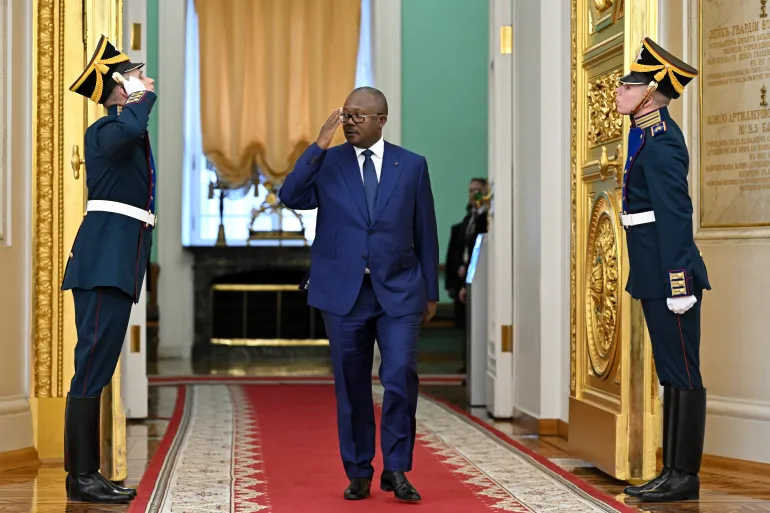
Just weeks before Guinea-Bissau’s general elections, several senior military officers have been arrested for allegedly plotting a coup — the second known attempt against President Umaro Sissoco Embaló since he came to power in 2020.
According to the country’s armed forces, the plot was led by Brigadier General Dahaba Nawalna, director of a military training school, along with several commanders including Domingos Nhanke and Mario Midana. The officers were detained in their homes in Bissau on Thursday after going missing earlier in the week.
Deputy Chief of Staff General Mamadu Ture Kuruma confirmed the arrests, describing the alleged plot as an effort “to subvert the constitutional order.” He added, “This sad episode, involving generals and senior officers, jeopardises the peace and stability we need for socio-economic development and foreign investment.”
The announcement came on the eve of the November 23 elections, an already tense political moment for the small West African nation, where Embaló faces accusations of overstaying his term.
A Country with a Fragile Peace
Since gaining independence from Portugal in 1974, Guinea-Bissau has endured more than a dozen coups and attempted coups, earning a reputation as one of Africa’s most politically unstable states. The country has struggled to maintain a consistent democratic rhythm, with rival factions inside the army often shaping its political destiny.
Embaló, who has survived a previous coup attempt in December 2023, insists that “no disorder will be tolerated.” He told reporters after a cabinet meeting that his government had “taken all necessary measures to ensure the safety of every candidate” during the campaign period.
Political Tensions Ahead of the Vote
The president remains in a constitutional standoff with the opposition, which argues that his five-year term ended in February 2025. The Supreme Court ruled that it should run until September, but tensions persist. In March, the West African regional bloc ECOWAS attempted to mediate — but its mission was cut short after Embaló reportedly threatened to expel them.
Despite fatigue from political instability, many citizens see the upcoming election as an opportunity for a democratic reset — if it can be held peacefully. But others fear the latest arrests may be used to tighten control and silence dissent, deepening divisions ahead of the polls.
A Call for Accountability and Renewal
Guinea-Bissau’s story mirrors that of many young African democracies: caught between progress and power struggles. For a new generation watching from the sidelines, the crisis is more than politics — it’s about trust. Africa’s youth want leadership that protects institutions, not personalities, and governance that strengthens, not survives, the constitution.
As the continent continues its democratic journey, Guinea-Bissau’s challenge is clear: stability cannot come through force — only through legitimacy, transparency, and reform.
🌍 What This Means for Africa
Guinea-Bissau’s ongoing turmoil is a warning to the continent: democracy must mature beyond the ballot box. Military coups, power extensions, and political manipulation erode Africa’s credibility globally and block its youth from the future they deserve. The continent’s next phase of growth will depend not just on elections — but on leaders who respect their limits.