
Trapped Between Wars: Sudan’s Women Face a New Nightmare in Overcrowded Camps
By Maxine Ansah

|
Getting your Trinity Audio player ready...
|
TAWILA, SUDAN – When Asmaa* fled El Fasher, she believed she was escaping death. Instead, she walked into another nightmare. “They killed my husband in front of me,” she said quietly. “He could only afford to pay the ransom for me and our children. Then they killed him.”
For many women and girls escaping Sudan’s North Darfur, safety remains a distant dream. After the Rapid Support Forces seized El Fasher, the capital of the state, following more than 530 days of siege and bombardment, a wave of brutal violence has forced thousands to flee. In just one week, close to 71,000 people fled the city, joining hundreds of thousands already displaced across the region.
The journey to safety is fraught with danger. Reports of sexual violence, abductions and executions continue to surface, painting a grim picture of the suffering endured by women and girls. Salam*, 19, recounted the horror she faced while escaping. “They asked if I was a virgin. When I said yes, they took me to their office and raped me before allowing me to continue walking.” She later received clinical management of rape services from UNFPA partners in Tawila.
Life on the edge
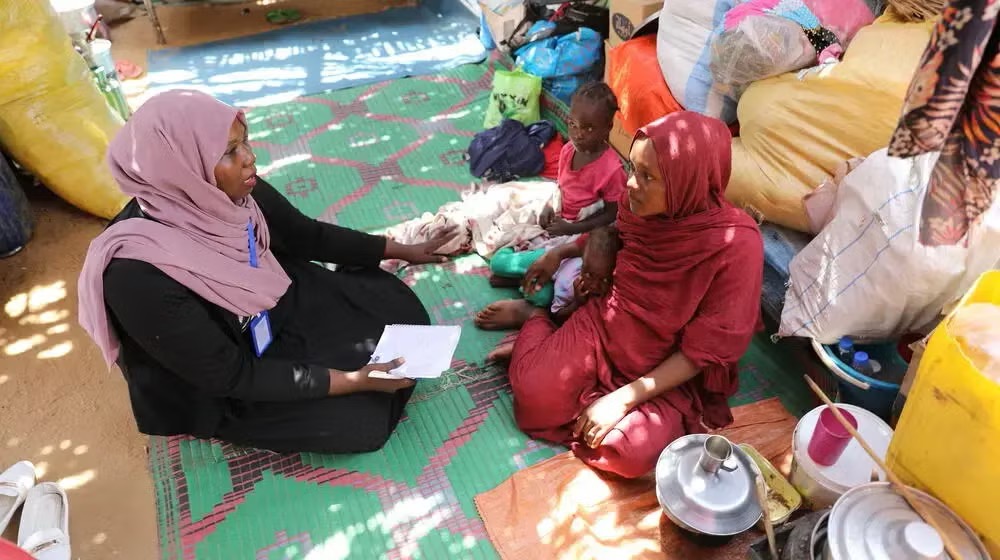
Reaching camps such as Tawila and Al Dabba offers only fleeting relief. Tawila, once a small rural outpost about 50 kilometres west of El Fasher, was already home to more than 652,000 displaced people before the recent influx. The latest wave has pushed the fragile infrastructure to the brink.
Families huddle under makeshift shelters that barely protect them from the rains. Many sleep in the open, exposing women and girls to increased risks of assault, exploitation and abuse. The lack of private latrines forces them to venture out at night in search of secluded spots, further compounding their vulnerability.
In Al Dabba, hunger and disease are constant threats. A cholera outbreak spreading across Sudan has worsened the crisis, particularly in overcrowded camps where clean water and sanitation are scarce. Pregnant women and children are among those most at risk.
Manasik*, 18, arrived in Al Dabba after a twelve-day trek that cost her dearly. “I lost my father and three-year-old sister to a mortar attack in El Fasher,” she said. “For nine days, we didn’t eat or drink anything. Here, even toilets cost money. Sometimes I wonder whether we should have stayed under the mortars and shooting. Maybe I should never have left.”
Maternal care on the brink
The conflict has also stripped expectant mothers of essential care. Farha*, 26, is nine months pregnant and lives against a market wall with her children after walking seven days through the desert to escape El Fasher. Her husband, father and brothers were all killed. She has received cash and voucher assistance from UNFPA to help her access the maternal health care she needs as she prepares to give birth.
UNFPA, the United Nations sexual and reproductive health agency, continues to provide critical services under dire conditions. In Tawila, a 24-hour emergency obstetric and newborn care facility remains operational. Five women and girls’ safe spaces in Tawila and Al Dabba are offering survivors of gender-based violence psychosocial and medical support.
Midwives, case managers and social workers have been deployed to ensure maternal health and protection services reach those in need. Reproductive health medicines, including for emergency obstetric care and rape management, have been supplied to Al Dabba Maternity Hospital, with additional hygiene kits and supplies prepositioned in South Darfur.
A race against despair
Despite these efforts, the scale of the crisis is overwhelming. With more than 12 million people displaced across Sudan and aid convoys frequently blocked by insecurity, humanitarian agencies are warning of an impending catastrophe.
UNFPA has appealed for urgent and unimpeded humanitarian access to reach women and families trapped in conflict zones. Without immediate support and sustained funding, the suffering of those in places like Tawila and Al Dabba will only deepen.
As the world’s attention shifts elsewhere, the women of Darfur remain caught between war and neglect, fighting for survival in camps bursting at the seams. Their stories are a painful reminder that fleeing violence does not always bring freedom.
Names have been changed for protection.