

|
Getting your Trinity Audio player ready...
|
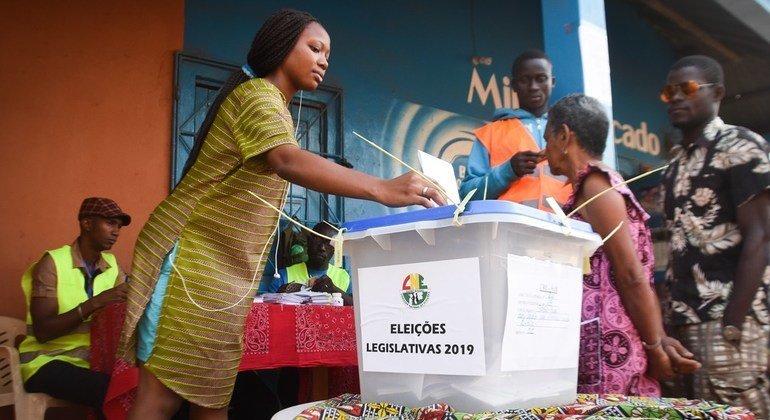
Guinea-Bissau is counting votes after Sunday’s presidential and legislative elections, with incumbent President Umaro Sissoco Embaló seeking a second term in a country where political stability has been the exception, not the rule. Nearly half of its 2.2 million citizens registered to vote, showing how much is at stake in a nation shaped by decades of coups, contested elections and fragile institutions.
The race is tight. Analysts say Embaló faces a strong challenge from Fernando Dias da Costa, a 47-year-old backed by former Prime Minister Domingos Simões Pereira. With the main opposition party disqualified from the ballot, this is one of the most contentious votes in recent years. If no candidate crosses 50 percent, the race heads to a runoff.
Embaló, who first took office in 2021 after a disputed 2019 election that wasn’t fully validated until months later, urged calm as he voted in Gabu. Dias da Costa accused the government of intimidation and warned against arrests of supporters. Political observers say the tension around this election reflects deeper concerns: executive overreach, a dissolved parliament and an opposition that claims the president has overstayed his mandate.
Guinea-Bissau remains one of the poorest countries in the world. Half of the population is considered poor, according to the World Bank. The nation has also faced increasing drug-trafficking networks that exploit its weak institutions. The Africa Center for Strategic Studies notes that the ongoing political crisis is less about who wins and more about whether guardrails against abuse of power can survive.
Campaign narratives reflected the country’s divide. Embaló emphasized infrastructure—roads, airports and modernization. Dias da Costa campaigned on stability, freedoms and ending what he called systematic human rights violations. Citizens like Marinho Insoldé in Bissau simply hope for peace and relief from hunger.
Across the continent, West Africa is facing democratic pressure. Recent coups and disputed elections have emboldened militaries from the Sahel to the coast. Guinea-Bissau now sits in that same regional storm, testing whether the country can chart a different path.
Africa has seen this cycle before—fragile institutions, contested mandates and rising youth frustration. But these moments also reveal something else: the demand for accountable leadership and systems rooted in transparency, not personalities. As Guinea-Bissau awaits its results, the question is not just who wins. It’s whether democracy will win with them.
What this means for Africa:
The stability of smaller nations matters. When one state cracks, regional blocs feel the shockwaves. Strengthening institutions, not personalities, will decide West Africa’s next chapter. Young Africans are watching closely—and demanding better.