
Somalis Worldwide Reject Trump’s Remarks as Communities Demand Respect and Accountability

|
Getting your Trinity Audio player ready...
|
Somalis across the United States, East Africa and the global diaspora are pushing back after US President Donald Trump described Somali immigrants as “garbage,” comments already fuelling fear on the ground in Minneapolis and anger in Mogadishu. The backlash has united community leaders, ordinary citizens and African voices who say the remarks are not only bigoted but dangerous — especially as Trump heads into the 2026 US midterm election cycle and intensifies his rhetoric around immigration.
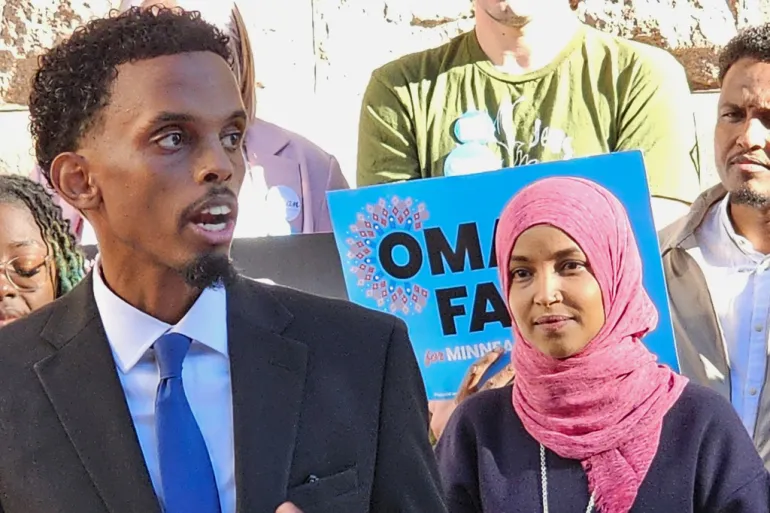
In Minneapolis, home to one of the largest Somali communities in the world, the reaction was immediate. Local businesses reported empty streets, families stayed indoors, and community organisers warned that Trump’s comments, paired with a new wave of ICE raids, are already heightening tensions. Minnesota State Senator Omar Fateh called the remarks “hurtful” and “disgraceful,” emphasising that Somali Americans are deeply embedded in every sector of Minnesota’s economy and public life. “It was flat-out wrong,” he said. “This is political theatre designed to inflame his base.”
Community activists say the fear is real. Small business owners in Minneapolis described neighbourhoods that have fallen silent after days of uncertainty. Civil rights groups warned that language like this has historically encouraged harassment and political violence. Last June, a state legislator and her husband were killed in what authorities linked to rising extremist sentiment — a reminder of how volatile the climate has become.
Online, however, the diaspora is fighting back with satire, art and a wave of creative content reframing Somali identity in the United States. Young Somalis are using humour to expose contradictions in America’s immigration and racial politics, generating millions of views across platforms. Some mocked Trump’s message by inserting Somalis into iconic scenes of US history; others parodied nationalist rhetoric to highlight the absurdity of anti-immigrant narratives. Legal analyst Mohammed Eid says the response reflects a community refusing to be intimidated: “We’re all Americans. Trump doesn’t have more rights than we do.”
In Somalia, the reaction is more direct. Many citizens are calling for the government to issue a stronger diplomatic response. Though Prime Minister Hamza Barre has urged calm, residents of Mogadishu say the comments are disrespectful and destabilising, especially coming from a president who has repeatedly targeted African nations. Some Somali politicians argue that Trump’s attacks are meant to weaken Ilhan Omar — the US Congresswoman born in Somalia — whose district continues to reject Trumpism at the ballot box.
Analysts say the timing is not accidental. With Republicans holding a narrow congressional majority and Trump preparing for a contentious election year, this kind of rhetoric has historically energised the MAGA base. Somali Americans, who are both Black and Muslim, sit at the intersection of identities frequently targeted by far‑right messaging. Critics warn this strategy carries real consequences for public safety, community cohesion and America’s relationship with African nations.
For many Somalis, the issue extends beyond politics. It is about dignity, belonging and the right to participate fully in the country they call home. Despite the fear, community members insist they will not be silenced — a message echoed across Minneapolis, Mogadishu and the diaspora.
The debate now reaches far beyond Minnesota. It raises questions about US foreign policy, immigrant rights, global perception of American leadership and the safety of minority communities navigating an election season increasingly shaped by inflammatory rhetoric. For millions of Somalis worldwide, this moment has become a test of resilience — and a reminder that visibility, unity and voice remain their strongest tools.
Somalia, Somali Americans, Minneapolis, Mogadishu, Trump comments, Ilhan Omar, Somali diaspora, xenophobia, immigration raids Minnesota, ICE, US politics, African diaspora, discrimination, Islamophobia, racism, Minnesota politics, Omar Fateh, Jaylani Hussein, CAIR, community safety, hate speech, election strategy, MAGA base, Somali businesses, Mogadishu reaction, US‑Somalia relations, political fear, diaspora unity, African communities USA, Black Muslim community, US midterm elections, Minneapolis Somali population, Trump rhetoric, immigrant rights, human rights, discrimination in America, political violence Minnesota, social media response, satire resistance, First Amendment, free speech, Somali pride, social media activism, TikTok Somali creators, cultural identity, generational trauma, political mobilisation, African immigrant communities, global backlash, Mogadishu residents, Prime Minister Hamza Barre, US foreign policy, authoritarian rhetoric, policing of immigrants, diaspora resilience, community response, Minneapolis economy, immigrant contributions, American diversity, fear in diaspora, Ilhan Omar harassment, political attacks, Minneapolis neighbourhoods, xenophobia impact, Somali youth, hybrid identities, civic participation, diaspora strength, election messaging, MAGA politics, racist rhetoric, Black communities, Muslim voters, American values, citizenship rights, immigrant histories, democracy threats, global reactions, African diaspora solidarity