
Leading with Purpose: How Co-Impact and Mary Wandia are Championing Feminist Systems Change Across Africa
By Maxine Ansah

|
Getting your Trinity Audio player ready...
|
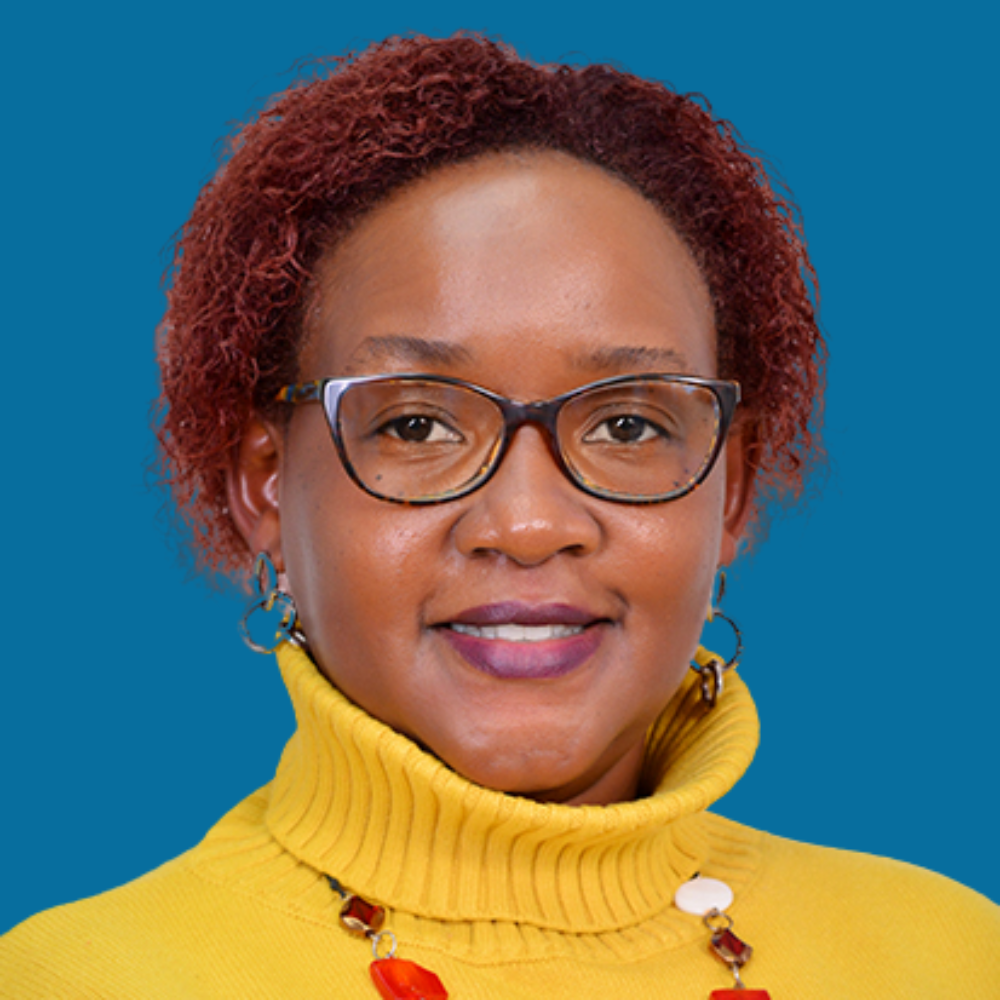
Mary Wandia’s journey to becoming Regional Director for Africa at Co-Impact is one marked by conviction, collaboration, and a lifelong commitment to gender justice. With over two decades of experience across leading organisations in Africa and beyond, she reflects on her work, the lessons she has learned, and her vision for systems change on the continent.
You have worked across several leading organisations including FEMNET, Oxfam, The Open Society Foundations, and more. Looking back, how did these roles shape your understanding of power, gender justice and systems change?
I have had the honour of learning from and walking alongside African feminists whose wisdom and courage continue to shape me. They opened my eyes to the deep and persistent power imbalances between women and men, boys and girls: imbalances that manifest in discrimination, marginalisation, and denial of rights and opportunities perpetuated by patriarchy.
They helped me see that gender inequality is not just about access but about power—about who makes decisions, whose voices are heard, whose lives are valued and who has ownership and control over resources. This realisation is what drives my work at Co-Impact today.
Through their mentorship, I came to understand that women and girls experience not just gender-based exclusion, but multiple and intersecting forms of oppression. Factors like race, class, disability, and geography weave together to compound their disadvantage. It is why I push for interventions that are holistic, inclusive, systemic, and grounded in the lived realities of those most affected. True change is not just about designing programmes; it is about challenging the systems and structures that perpetuate inequality.
Across those chapters of your career, what have been some of the most formative lessons, especially in terms of engaging institutions, building coalitions and sustaining movement work?
I have had the privilege of engaging national governments, the African Union, and the United Nations to shape, review, and implement laws and policies advancing gender equality. These institutions, while often seen as rigid systems, are composed of people who are ultimately shaped by prevailing social norms, narratives, and structures, many of which are deeply entrenched in patriarchy. To advance equality, we must transform not only policies but also the very norms that sustain inequality. And this requires a multi-faceted approach: partnerships, capacity strengthening, data, narrative change, and most importantly, centring women in decision-making at every level.
Governments have a critical role to play in upholding human rights and advancing gender justice. Their obligations are clearly enshrined in national laws and international frameworks like the Convention on the Elimination of All Forms of Discrimination Against Women (CEDAW) and the Beijing Platform for Action. But these commitments must be more than words on paper. They must be matched by action. And that action must be informed and led by the very people it seeks to serve.
While working with Oxfam GB, I joined hands with women’s rights organisations, supporting women survivors of sexual violence to speak directly to power at the African Union Peace and Security Council in 2011. Their testimonies were raw, brave, and undeniably powerful, resulting in the appointment of the first AU Special Envoy for Women, Peace, and Security to embed women’s perspectives into the peacebuilding process. This is the kind of bold, people-powered work that drives systems change. These are the kinds of initiatives that give me hope and remind me why I do this work.
What inspired you to join Co-Impact, and how did your previous experience prepare you for your current role?
I joined Co-Impact in 2021, thanks to a close friend who sent me a simple text: “Here’s a job for you.” When I opened the job advert, it felt as though someone had stitched together the threads of my two-decade journey in advancing gender equality and human rights into a single tapestry.
The role spoke to me because of Co-Impact’s bold vision: transforming systems in the Global South so they deliver sustainable, equitable outcomes for millions, while advancing women’s leadership at all levels. Since its creation in 2017, Co-Impact has brought together funders and local organisations that are closest to the lived experience of women in their communities, and are therefore the best placed to improve public systems for women and girls.
Stepping into this role came at a moment when I had become deeply convinced that the real game-changer is making government systems work for women, for girls, and for all those who have been persistently left behind. When systems work for the most marginalised, they ultimately work better for everyone. As I stepped into my role at Co-Impact, I brought with me a toolkit honed over years: a feminist analysis and political lens, an appreciation for nuance in African and global contexts, strong networks, and an unwavering commitment to stand with the most oppressed.
As Regional Director for Africa, how would you describe your work? What does leading programme strategy and grant making on the continent look like in practice?
When I think about my role as Regional Director for Africa at Co-Impact, I feel honoured, inspired, and energised. In practice, leading strategy and grant making in Africa means identifying and partnering with bold, women-led, and locally rooted organisations.
One of the most fulfilling aspects of our work is supporting these partners during the critical design phase, which is an intentional 8- to 12-month period where they step back from the daily noise to reflect, strategise, and design systems change strategies. Once they are ready, we walk with them through implementation, offering not only resources but also leadership support, and connections to peers, funders and regional allies.
Co-Impact takes a collaborative approach to philanthropy, working with a range of funders and locally rooted partners. What does meaningful collaboration mean to you, and how do you support that in your work?
Collaboration is in our DNA. We collaborate with bold and visionary programme partners who are transforming systems at the grassroots level; with funders from across the globe who pool resources and shift how philanthropy works; and with a diverse team, supported by wise advisors and a committed Board.
But for us, collaboration is not transactional, it is deeply relational. We approach it with intention, grounded in shared values, mutual trust, and a commitment to learning together. We seek out like-minded funders who believe, as we do, in long-term investments that build systems where gender equality and social justice are not ideals but lived realities. We are reshaping philanthropy by encouraging giving that is more significant, more flexible, and rooted in trust—philanthropy that listens to and follows the lead of locally-rooted organisations that carry the wisdom, experience, and solutions needed to drive lasting change.
One of Co-Impact’s core values is shifting power. How do you interpret this value in the African context, particularly when working with partners and governments?
To answer this question, we have to recognise the moment that we are in. Many of Africa’s global partners are rolling back support. The end of traditional aid has deep and devastating consequences for many programmes across the continent. But it is also a moment for a much-needed conversation around power imbalances, and philanthropy’s role in this new landscape. Our role is not to replace public systems but to support governments in making them work better for all.
No government can solve the complex challenges that they face without the involvement of the communities that they are meant to serve. These convictions drive our work and approach at Co-Impact. We support local leaders who have come up with solutions, so that they can scale and embed those solutions into public institutions for the long term, working in close partnership with governments to advance national ownership, increase domestic resource commitments, and shape an inclusive national agenda.
What are some of the opportunities you see right now to advance systems change across health, education, and economic opportunity in Africa?
There are many opportunities across our portfolio but one area that I am particularly excited about is the growing momentum to reframe childcare not only as a private responsibility, but as a public good that can boost economies. In many African countries, access to quality, affordable childcare is limited. This forces many women out of the workforce. Their care responsibilities in the home are unrecognised and uncompensated. Formalising and supporting women-run, in-home childcare businesses offers an incredible opportunity to solve both challenges.
With more oversight, resources, and state support, the quality of informal, women-led childcare businesses could be vastly improved.
In Kenya, we are partnering with ICRW-Africa to map these informal childcare enterprises, assess their quality, and surface the unmet needs of vulnerable families. This community-driven research will inform stronger policies and identify funding and support needs.
In South Africa, we are supporting Ilifa Labantwana and Smart Start who are working in coalition to ensure universal access to quality early childhood development (ECD) services in South Africa, with a view to disrupting gender inequality and intergenerational poverty. So far, 1.5 million children have been enrolled, and 1 million caregivers are now able to participate in the workforce, with a goal to reach 2.1 million children and 1.4 million caregivers. This coalition also supported the government to create the first national ECD strategy and improve funding and regulations for the sector.
These are just two examples of how we are working with partners to shift economic systems so that every child has a safe start in life, and every woman has the opportunity to build her future safe in the knowledge that her children are cared for.
In your role, how do you balance strategic influence with being led by the context and vision of local partners?
First, we do not arrive with predefined strategies or prescriptive solutions. Instead, we listen to our partners, deeply and intentionally. We allow them to guide us, drawing on their lived experience and nuanced understanding of the systems they are working to transform. They show us where the greatest needs and opportunities for change lie.
Second, our team and partners are close to the people we serve. We live, work, and engage in the same contexts, which enables us to understand the cultural, political, and social dynamics that shape these systems. This closeness is not just geographic; it is relational and grounded in trust.
Finally, localisation is reflected in how we define and measure success. We do not impose rigid metrics or externally determined outcomes. Instead, we offer flexible frameworks and empower partners to define what impact looks like in their context, honouring their vision, leadership, and understanding of progress.
Finally, what keeps you hopeful in this work, and what advice would you offer to emerging feminist leaders who want to drive change on a systems level?
Begin by listening to the communities you seek to serve. Centre their voices, lived experiences, and leadership not as a token gesture, but as the foundation of decision-making. Embrace an intersectional lens, recognising that systems of oppression are interconnected and mutually reinforcing.
Real, lasting change requires alliances that transcend boundaries. We must connect government, civil society, philanthropy, and the private sector in shared purpose and mutual accountability.
Hold tight to your vision and hope. Adopting a systems change approach will test your patience and resolve. There will be setbacks, slow progress, and pushback from those who benefit from the status quo. But change is possible, and it is already happening because of leaders like you.
About Co-Impact: Co-Impact brings together local change makers and funders from around the world to make health, education, and economic systems stronger and more inclusive. Our commitment to advancing gender equality and women’s leadership is central to this goal.
By focusing on systems, our partners in Asia, Africa, and Latin America work at the scale of the problem and create impact that lasts. Pooling funding and expertise allows us to provide large-scale, flexible grants and optimise funding.
Together, we aim to deploy over $1 billion by 2030 and achieve a world where everyone can live fulfilling lives.
Mary Wandia, Co-Impact Africa, feminist leadership Africa, gender justice Africa, systems change Africa, women’s rights Africa, African feminists, philanthropy in Africa, gender equality initiatives Africa, women-led organisations Africa, African social justice, shifting power Africa, inclusive systems Africa, women in development Africa, African gender policy, feminist movements Africa, early childhood development Africa, childcare systems Africa, African philanthropy networks, development funding Africa, African women leadership, human rights Africa, Africa governance reform, AU gender policy, SDG gender targets Africa, women economic empowerment Africa, African nonprofits, Africa civil society, Africa policy advocacy, African Union women peace security, African gender activists, women’s rights defenders Africa, Co-Impact Gender Fund, Africa education systems, Africa health systems, economic opportunity Africa, women in philanthropy Africa, Africa social impact funding, African feminist research, African grassroots movements, intersectional feminism Africa, Africa public systems reform, African community leadership, African women in policy, African programme strategy, Africa grant making, systems transformation Africa, Africa community development, African women changemakers, African youth advocacy, African feminist coalitions, Africa human rights advocacy, African development partners, Africa structural reform, African public policy, gender norms Africa, feminist philanthropy Africa, Africa women empowerment programmes, African inequality systems, African gender equality funders, African NGO coalitions, African feminist networks, Africa equality movements, African public sector reform, women’s leadership Africa, Africa feminist organising, African social policy, Africa development collaboration, Africa grassroots advocacy, African gender coalition building, Africa international development, African feminist agenda, Africa transformative change, African poverty reduction strategies, women and girls Africa, African governance systems, Africa civil participation, Africa community empowerment, African human development, Africa women’s education, Africa caregivers economic participation, Africa childcare reform, Africa ECD systems, Africa advocacy organisations, Africa reform partners, feminist systems change Africa, African development solutions, Africa intersectional advocacy, African public institutions, Africa equality champions, African local leadership, Africa philanthropic partnerships.