

|
Getting your Trinity Audio player ready...
|
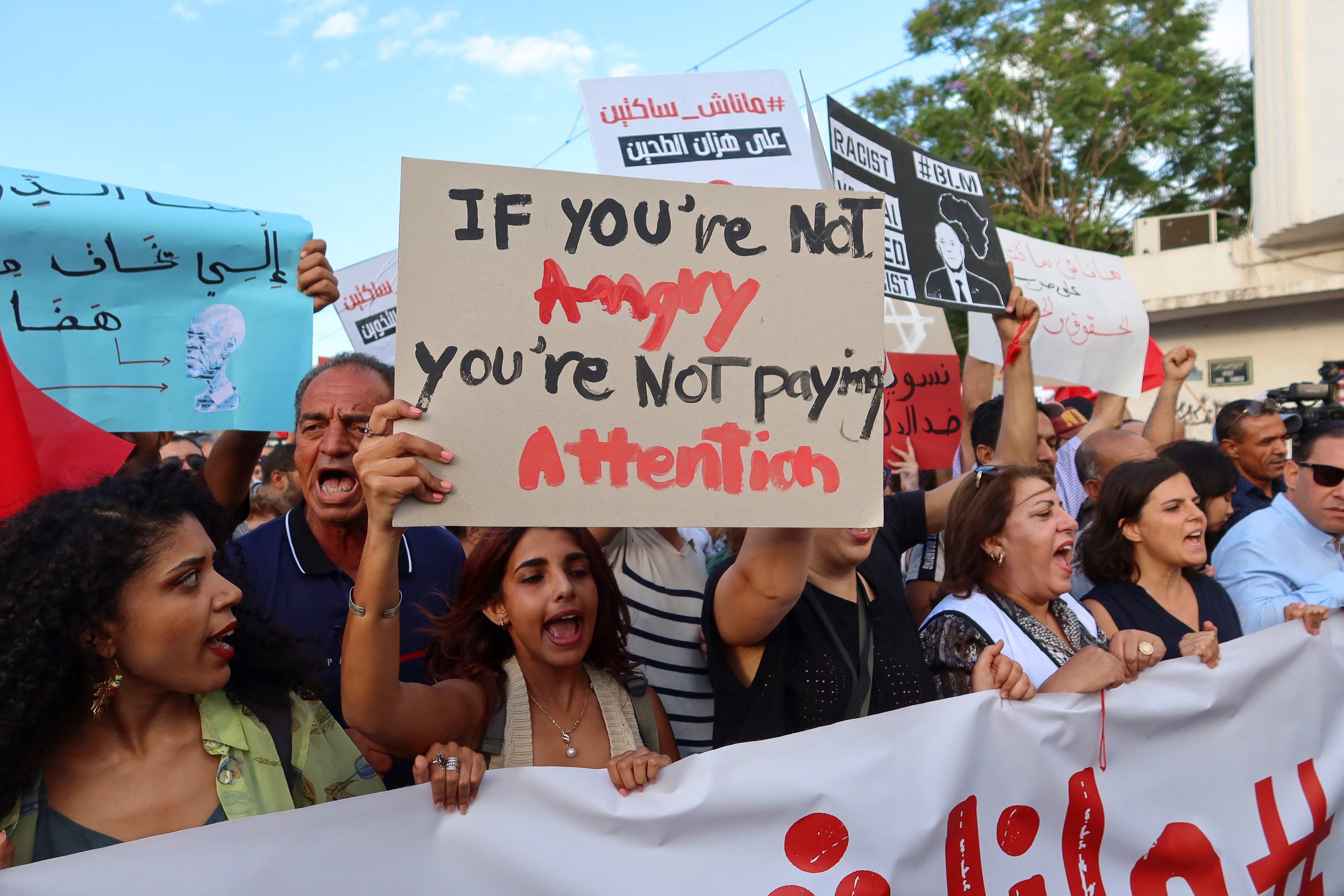
Tunisia witnessed a rare moment of political unity on Saturday as activists, civil society groups and opposition figures marched together in the capital to protest against President Kais Saied. Demonstrators called for an end to one‑man rule and demanded the restoration of democratic institutions, marking the strongest coordinated pushback since Saied took extraordinary powers in 2021.
The protest followed 3 consecutive weeks of demonstrations and reflected growing frustration with what rights groups describe as an unprecedented crackdown on dissent. Hundreds filled the streets carrying portraits of imprisoned politicians, journalists and activists. The gatherings have now become weekly showdowns between the presidency and its critics.
According to rights organisations, Saied has eroded institutional checks, weakened judicial independence and ushered Tunisia into a period of severe restriction on civil liberties. Saied rejects these claims and insists that his actions aim to remove corruption and “traitors” from public life.
Saturday’s turnout stood out because it brought together ideological rivals and fractured opposition blocs that had struggled to mobilise collectively in previous years. Many protesters said unity had become the only viable response to widespread arrests.
A Tunisian court sentenced opposition figure Abir Moussi to 12 years in prison on Friday, a ruling rights groups view as further evidence of political repression. Last month, an appeals court sentenced dozens of political leaders, business personalities and lawyers to prison terms of up to 45 years for alleged conspiracy to overthrow the government.
Recent arrests of activists Chaima Issa, Ayachi Hammami and Nejib Chebbi triggered strong criticism from both domestic and international observers. Three civil society organisations also reported that authorities suspended their activities over alleged foreign funding.
The government denies using state institutions to target opponents.
TVOA Insight
Tunisia’s unrest is another reminder of how young democracies move through unstable cycles. It took the United States more than 200 years to refine its governance systems. Tunisia, just 14 years into its democratic experiment, is still navigating the early turbulence of nation building. Despite political strain, the streets continue to show one undeniable truth: people believe their country can do better. And across Africa, where the majority of citizens are under 30, this persistence is not a weakness but a signal of a continent learning to hold its leaders accountable. Hope remains, because the people remain.