
ECOWAS Rejects Guinea‑Bissau Transition Plan, Threatens Sanctions Amid Rising West African Instability

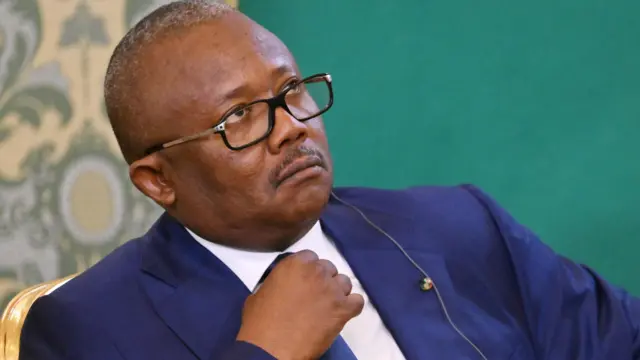
|
Getting your Trinity Audio player ready...
|
The Economic Community of West African States (ECOWAS) has firmly rejected the transition plan proposed by Guinea‑Bissau’s military authorities, escalating diplomatic pressure and signalling possible targeted sanctions as political instability intensifies across the region.
Meeting at the 68th ECOWAS Summit in Abuja, West African leaders used unusually strong language, calling for the “swift restoration of constitutional order” amid growing concerns over coups, attempted coups, and democratic backsliding in the bloc.
ECOWAS Takes Hard Line on Guinea‑Bissau Crisis
The summit’s position came as Guinea‑Bissau’s junta attempted to set out a transition roadmap following the December political upheaval, which regional leaders say undermines democratic norms and violates ECOWAS protocols.
ECOWAS Commission Chair and Sierra Leone’s President Julius Maada Bio emphasised that the region is again battling a rise in unconstitutional military takeovers:
“The resurgence of unconstitutional changes of government threatens our regional stability, undermines our citizens’ rights, and weakens our collective future.”
Bio highlighted both Guinea‑Bissau’s instability and the recent attempted coup in Benin as evidence that the region’s democratic gains remain fragile.
Nigeria Calls for Unity Through Dialogue, Not Force
Representing President Bola Tinubu, Nigeria’s Vice President Kashim Shettima urged member states to recommit to regional solidarity, stressing that political differences must not fracture West Africa’s historical and cultural bonds:
“West Africa is not a random assemblage of borders drawn by chance. It is a family bound by memory, culture, struggle, and aspiration.”
He added that dialogue, not coercion, must shape ECOWAS’ future engagements with military-led governments.
Wider Regional Concerns: Security, Economy, Climate and Integration
Beyond governance challenges, the Abuja summit reviewed progress and setbacks in several strategic areas:
1. Economic Integration
-
ECOWAS Trade Liberalization Scheme (ETLS)
-
Major cross-border infrastructure initiatives
-
Ongoing energy cooperation frameworks
2. Regional Security
-
Continued violence in the Sahel
-
Instability spilling into coastal states
-
Political volatility in Guinea‑Bissau, Burkina Faso, Niger, and Mali
3. Climate Change & Food Security
Leaders highlighted worsening floods, droughts and their impact on agricultural production — urging coordinated regional action to build resilience.
ECOWAS Faces Existential Questions as Member States Drift Away
Negotiations remain ongoing with military governments in Niger, Burkina Faso, Mali and Guinea, some of which have withdrawn from ECOWAS or suspended participation.
The trend has raised international concern about:
-
The viability of West Africa’s regional integration model
-
The future of ECOWAS’ security architecture
-
The bloc’s ability to enforce democratic norms
Founded in 1975, ECOWAS’ mandate is to promote economic integration, peace and political stability across its 15 member states — a mission increasingly challenged by the region’s complex geopolitical landscape.
Why This Matters for West Africa
The rejection of Guinea‑Bissau’s transition plan is more than a diplomatic rebuff — it signals ECOWAS’ intention to reassert authority after years of rapid coup contagion.
It also shows the bloc’s desire to:
-
Prevent further collapse of democratic institutions
-
Strengthen cross-border unity
-
Protect regional economic progress
-
Preserve ECOWAS’ credibility as Africa’s most influential regional body