
CAR Election Tests Democracy as Touadéra Eyes Third Term

|
Getting your Trinity Audio player ready...
|
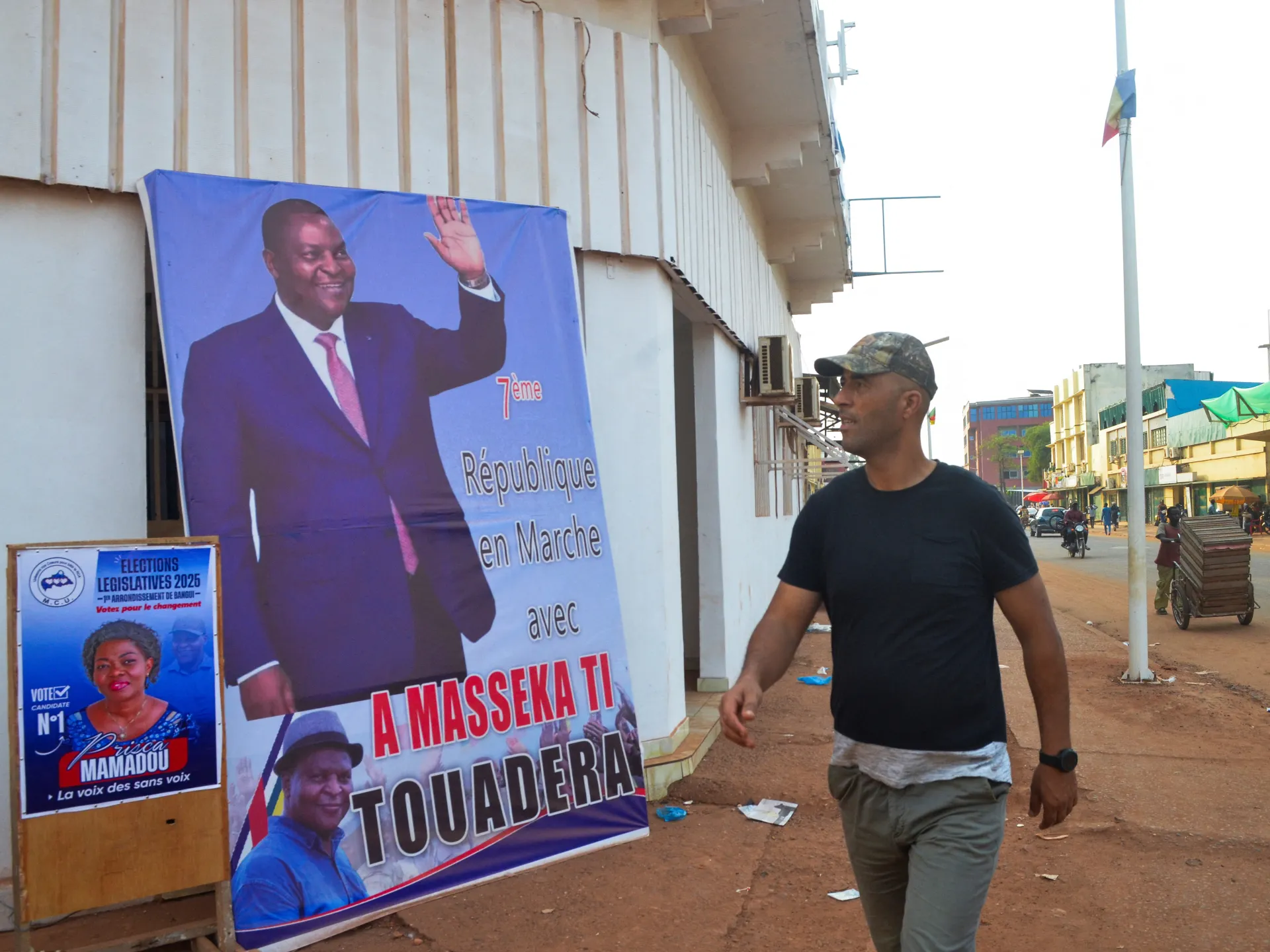
The Central African Republic went to the polls on Sunday in a general election widely expected to extend President Faustin-Archange Touadéra’s grip on power, as he seeks a controversial third term following constitutional changes that removed presidential term limits.
The vote comes two years after Touadéra oversaw a constitutional amendment scrapping term limits, a move that sparked protests and accusations from opponents that the country was being steered toward permanent rule. Despite the backlash, the amendment passed, clearing the path for his candidacy and reshaping the political landscape in his favor.
Touadéra remains the frontrunner, backed by firm control over state institutions and significantly greater financial resources than his rivals. Analysts say the election outcome is unlikely to surprise voters, with turnout expectations muted and opposition supporters already questioning the credibility of the process.
The president has campaigned on promises of improved security, much of it delivered with assistance from Russian mercenaries and soldiers, including forces linked to Wagner Group. That partnership has positioned the Central African Republic as one of Moscow’s closest allies on the continent, even as critics warn of growing dependency and reduced sovereignty.
Six opposition candidates are contesting the race, led by former prime ministers Anicet‑Georges Dologuélé and Henri‑Marie Dondra. Both narrowly avoided disqualification after challenges over alleged foreign citizenship, a reminder of how constrained the political space has become. Analysts caution that post‑election unrest is possible, particularly if the results are seen as predetermined.
Provisional results are expected by early January. If no candidate secures more than 50 percent of the vote, a runoff is scheduled for February, though few observers expect the process to reach that stage.
This election reflects a wider continental pattern where constitutional resets, security alliances, and control of institutions are increasingly used to maintain continuity of power. For many Central Africans, the priority is stability over uncertainty, even if it comes at the cost of democratic renewal.
Africa’s story, however, has never been linear. The continent is still politically young, learning through hard lessons, and redefining governance in real time. The challenge ahead is not simply who wins this election, but whether future systems are built to outlast individuals. History shows Africa evolves slowly, then all at once, and the next chapter will belong to those who invest in institutions, not just incumbency.
Central African Republic election, Touadéra third term, CAR presidential election, Africa elections 2025, Central Africa politics, Touadéra constitution change, CAR term limits, Wagner Africa, Russia Africa influence, African coups and elections, CAR democracy, Central African Republic news, African leadership, Africa governance, post election unrest Africa, African presidents third term, constitutional amendments Africa, Africa political reform, Central African Republic security, Russian mercenaries Africa, Wagner CAR, Africa sovereignty, African institutions, African voters, Africa political stability, CAR opposition, African democracy debate, Africa power consolidation, Sahel politics, Francophone Africa elections, Africa geopolitics, CAR Russia ties, African authoritarianism, Africa youth politics, Africa governance systems, African constitutions, Central Africa unrest, African elections analysis, Africa political transitions, Africa leadership crisis, African state institutions, CAR election results, Africa international relations, Africa security partnerships, African political future, democracy in Africa, African voters turnout, Africa political accountability, African leadership change, Africa reform agenda, Africa emerging governance, African stability narrative, Africa political economy, Africa resource politics, Africa foreign influence, Africa elections watchdog, Africa human rights elections, Africa civil society, Africa political maturity, Africa democratic evolution, Africa power structures, Africa governance reform, Africa political cycles, Africa leadership succession, Africa constitutional law, Africa institutional development, Africa political realism, Africa future governance