

|
Getting your Trinity Audio player ready...
|
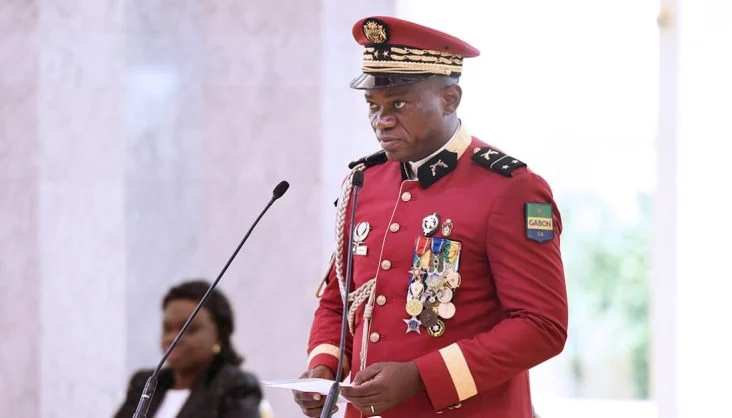
Gabon’s President Brice Oligui Nguema has begun 2026 with a sweeping government reshuffle, signaling the next phase of the country’s political transition following the 2023 coup that ended more than five decades of Bongo family rule.
The reshuffle, announced in the opening days of the new year, introduces key changes at the top of government. Hughes Alexandre Barro Chambrier has been appointed Vice President of the Republic, while Hermann Immongault moves from the powerful Interior Ministry to become Vice President of the Government. Immongault’s promotion is widely interpreted as recognition for overseeing Gabon’s recent legislative and parliamentary elections.
Those elections delivered a decisive outcome for President Nguema’s political movement, the Democratic Union of Builders, which secured 101 of the 145 seats in parliament. The result has given the president firm control of the legislature as he consolidates authority following his April election victory.
The new cabinet consists of 31 ministers, an increase of one from the previous government, with women holding 10 of those positions. The composition reflects an attempt to project inclusivity and administrative continuity at a time when Gabon is redefining its post coup political order.
Nguema’s rise to the presidency came two years after he led the military takeover that removed Ali Bongo and brought an end to a political dynasty that had shaped Gabonese governance for generations. Since then, the transition has been marked by elections, institutional reforms, and a steady concentration of power around the presidency.
Supporters argue the reshuffle provides stability and rewards competence, particularly in managing elections that restored a civilian framework. Critics remain cautious, pointing to the risks of power becoming too centralized and the need for strong institutions beyond personalities.
What is clear is that Gabon is entering 2026 with a clearer political hierarchy and a leadership intent on shaping its own legacy. The reshuffle is not just administrative housekeeping. It is a statement about control, direction, and the pace of change in a country still navigating life after long term dynastic rule.
For Gabon, the challenge now is translating political reorganization into tangible improvements in governance, opportunity, and public trust. Africa’s nations do not all move at the same speed or from the same starting line. Gabon’s story is still unfolding, and while the road is complex, it remains one being written by a young continent learning, adapting, and pressing forward with cautious optimism in its own time, carrying the belief that progress, however uneven, is still possible.