

|
Getting your Trinity Audio player ready...
|
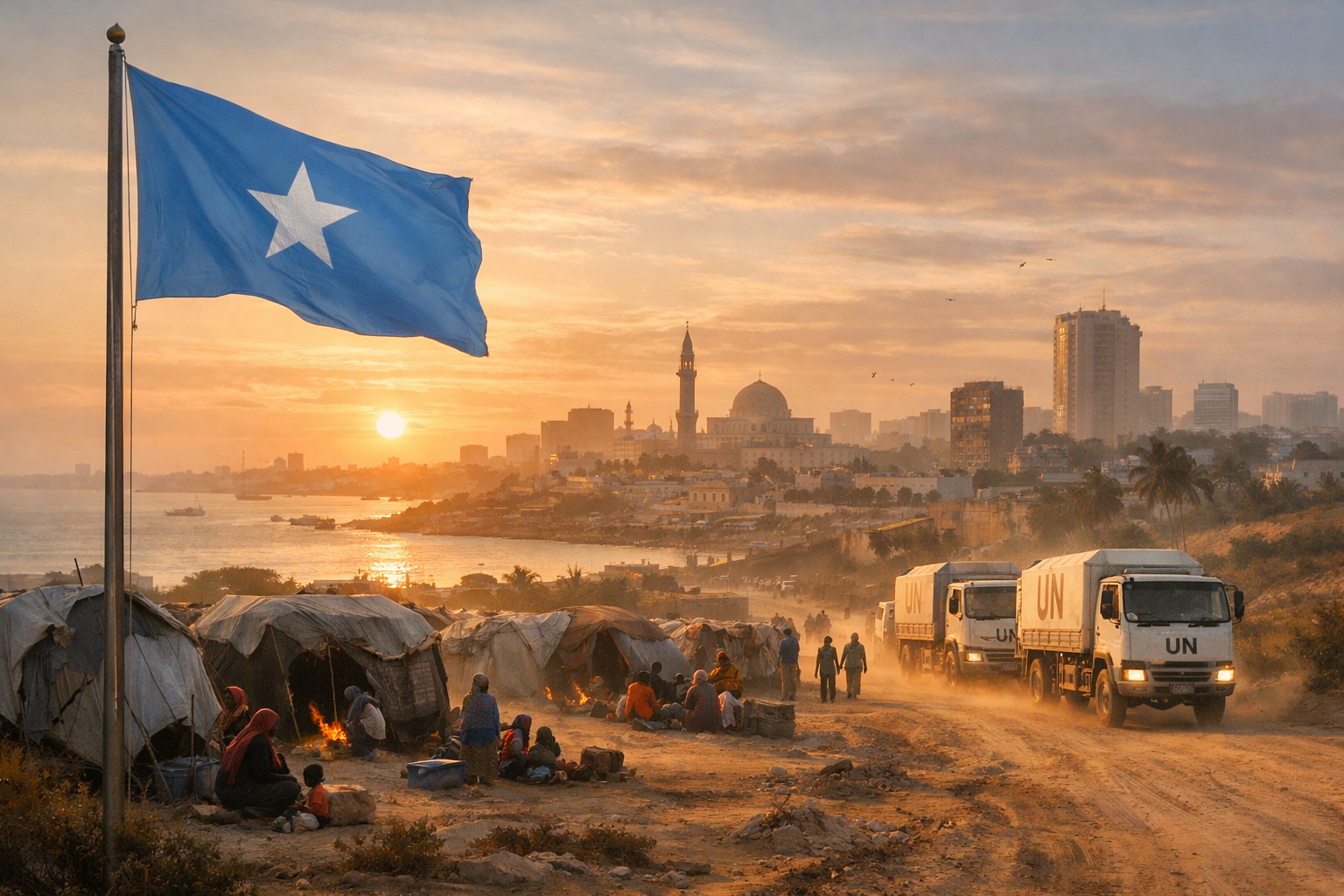
One year after Somalia’s humanitarian needs reached critical levels, the United Nations has unveiled a new $852 million Humanitarian Needs and Response Plan — a lifeline that comes at a time of growing urgency and shrinking global resources.
At a press briefing in New York, UN spokesperson Stéphane Dujarric announced that the 2026 plan aims to support 2.4 million people across Somalia. However, the funding target represents a 40 percent reduction compared to last year’s appeal — not because conditions have improved, but because available resources have declined.
“This reduction is due to constrained funding, not reduced humanitarian needs,” Dujarric stressed.
Somalia remains trapped in a convergence of crises: prolonged drought, widespread displacement, collapsing livelihoods, disease outbreaks, and rising food insecurity. According to the UN, less than half of the people in urgent need of humanitarian assistance are expected to receive support under the new plan.
Without significant and immediate funding, the consequences could be severe. The UN warned that gaps in essential services will widen, placing millions at risk of worsening hunger, water shortages, and deteriorating health conditions.
Last year’s response plan paints a sobering picture. Out of the $1.4 billion requested in 2025, only $397 million was received — just 27 percent of the target. The shortfall forced humanitarian organizations to scale back or suspend life-saving operations across the country.
Somalia’s vulnerability has been further complicated by regional political tensions. The aid plan comes just weeks after Israel officially recognized Somaliland as an independent state — a move that sparked protests and reignited sensitive debates around sovereignty and national unity.
Somaliland, a former British protectorate, declared independence from Somalia in 1991 after the collapse of the central government. Despite operating with its own institutions and relative stability for decades, it had never been formally recognized by a UN member state until now.
The recognition triggered mass demonstrations, with Somali citizens waving national flags and chanting patriotic songs in public shows of unity. Somalia’s President Hassan Sheikh Mohamud warned that the decision could undermine the country’s political stability, economic recovery, and long-term development if not handled carefully.
Against this backdrop, the UN’s latest appeal highlights a harsh reality: Somalia’s humanitarian crisis is not fading — it is intensifying, even as global attention and funding continue to decline.
For millions of Somalis, the 2026 aid plan is not a policy document. It is the difference between resilience and catastrophe.