
African Union Peace and Security Council Convenes Ministerial Talks on Sudan and Somalia
By Maxine Ansah

|
Getting your Trinity Audio player ready...
|
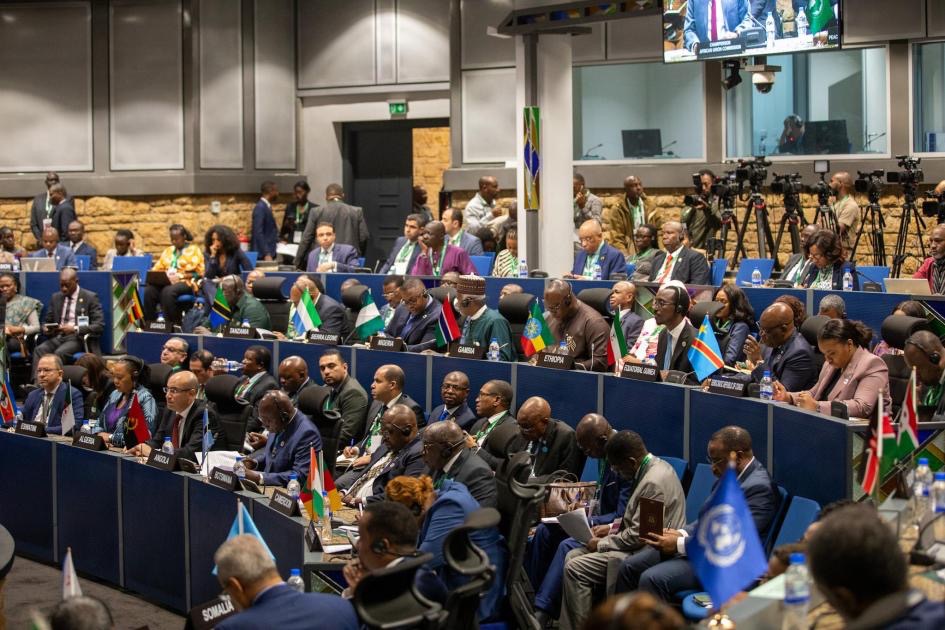
The Chairperson of the African Union Commission, H.E. Mahmoud Ali Youssouf, this morning addressed the Ministerial Meeting of the AU Peace and Security Council on Sudan and Somalia. The session took place on the margins of the 48th Ordinary Executive Council of the African Union, at a moment when both crises continue to test continental resolve.
The Chairperson brings extensive diplomatic experience to the role. A former Minister of Foreign Affairs and International Cooperation and Government Spokesperson of the Republic of Djibouti, he served in that capacity from 2005. During his tenure, he led the implementation of national foreign policy and managed international relations, agreements and cooperation frameworks with states and international organisations, shaping Djibouti’s engagement at regional and global levels.
In his remarks, the Chairperson called for unity, coherence and firm African leadership in responding to conflicts on the continent. He underscored that the credibility of the Union depends on its ability to act collectively and decisively.
On Sudan, he urged an immediate, verifiable and durable ceasefire. He stressed that any cessation of hostilities must be backed by credible monitoring mechanisms to ensure compliance. The priority, he said, is the protection of civilians and the preservation of Sudan’s territorial integrity. He further emphasised that the path forward must lead to an inclusive, civilian-led transition capable of restoring constitutional order and long-term stability.
Turning to Somalia, the Chairperson warned that hard-won security and governance gains must not be reversed. He called for sustainable and predictable financing for the African Union Support and Stabilization Mission in Somalia, AUSSOM. He noted that Somalia’s stability is not only a national concern but also directly linked to regional security and global maritime routes, making sustained support a strategic necessity.
He concluded by reaffirming the African Union’s firm commitment to territorial integrity across the continent and its rejection of external interference. The Chairperson reiterated the enduring principle of African-led solutions to African challenges, urging Member States to translate political will into coordinated action.
For Africa, these crises are not abstract policy debates. They are lived realities affecting millions across borders. As one of the world’s youngest continents in institutional terms, Africa continues to shape its security architecture in real time. The test now is whether collective leadership can transform declarations into durable peace, anchored in sovereignty, solidarity and shared responsibility.