

|
Getting your Trinity Audio player ready...
|
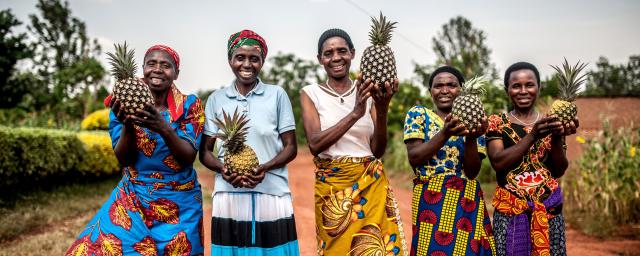
Across Rwanda, a quiet transformation is reshaping the foundations of agricultural development. Women farmers, once seen primarily as subsistence producers, are building structured, resilient cooperative systems that are redefining how rural economies function.
What is emerging is not a collection of aid-driven projects, but a model of locally owned economic organization that is steadily scaling across districts.
In many parts of Africa, agricultural development programs struggle to translate theory into lasting impact. Rwanda presents a contrasting case. Its progress is rooted not in short-term interventions, but in systems built gradually through discipline, shared ownership, and market participation.
From Informal Groups to Economic Institutions
Women-led cooperatives in Rwanda are evolving beyond informal savings groups into functioning economic entities.
In districts such as Kayonza, groups like Urumuri began with minimal contributions, sometimes as little as a few cents per week. Over time, these contributions formed the basis of collective investment, enabling members to build poultry businesses, manage feed production, and generate consistent income streams.
The key distinction lies in structure. These cooperatives are not externally imposed frameworks. They are internally governed systems that align incentives, distribute responsibility, and ensure continuity.
Capital Formation at the Grassroots Level
Financial data from development programs highlights the scale of this transformation.
Collective savings have reached hundreds of millions of Rwandan francs, while loan disbursements within groups demonstrate a level of financial discipline that challenges traditional perceptions of smallholder farmers as high-risk borrowers.
Capital is not extracted from these communities. It circulates within them.
This localized financial ecosystem allows women farmers to invest in productivity, improve household stability, and build long-term resilience.
Policy as an Enabler
Rwanda’s progress is not accidental. It is supported by a policy environment that enables cooperatives to transition from informal groups to recognized market actors.
Legal frameworks, governance standards, and institutional support have created a structure within which cooperatives can scale.
This alignment between grassroots activity and national policy is a critical factor. Without it, many similar initiatives across the continent fail to sustain momentum.
Aligning with Continental Goals
The development of Rwanda’s cooperative systems closely mirrors broader continental priorities under frameworks such as the Comprehensive Africa Agriculture Development Programme.
However, while many countries continue to discuss these goals, Rwanda is actively implementing them.
Its cooperatives are already performing key functions expected of modern agricultural systems: organizing production, maintaining quality standards, and ensuring reliable supply to markets.
Rethinking Risk in Agricultural Finance
One of the most significant implications of Rwanda’s model is its challenge to traditional financial assumptions.
Organized farmers operating within structured cooperatives demonstrate reliability and accountability. The barrier to financing is not necessarily risk, but the mismatch between existing financial products and agricultural realities.
As cooperative performance data accumulates, this gap is becoming increasingly difficult for financial institutions to ignore.
Women at the Center of Growth
The role of women in this transformation is central.
Research consistently shows that improving women’s access to resources can significantly increase agricultural productivity and reduce food insecurity. Rwanda’s model moves beyond theory, demonstrating how these outcomes can be achieved in practice.
Rather than waiting for ideal conditions, women farmers are building systems that create those conditions themselves.
A Model Already in Motion
Rwanda’s experience offers a clear lesson for the rest of the continent.
The challenge may not be the absence of solutions, but the failure to recognize and scale those that already exist.
By focusing on structure, accountability, and local ownership, Rwanda’s women-led cooperatives are not only improving agricultural outcomes. They are building durable economic systems capable of sustaining long-term growth.
For Africa, the question is no longer what needs to be done.
It is whether existing success models will be taken seriously enough to replicate.
Rwanda agriculture, women farmers Rwanda, African agriculture, cooperatives Africa, Rwanda cooperatives, women empowerment agriculture, smallholder farmers Africa, Rwanda farming systems, agricultural cooperatives, Africa food systems, rural development Africa, women economic empowerment Africa, agriculture innovation Africa, Rwanda development model, African farming growth, cooperative farming Africa, agriculture policy Rwanda, Rwanda rural economy, Africa agriculture transformation, women farmers impact, agricultural productivity Africa, food security Africa, Rwanda food systems, smallholder productivity, African rural finance, agriculture investment Africa, farming cooperatives Rwanda, Africa development agriculture, gender equality agriculture, women in farming Africa, Rwanda success story, agriculture systems Africa, rural entrepreneurship Africa, cooperative finance Africa, agricultural markets Africa, farm to market Africa, agriculture infrastructure Africa, Rwanda policy success, Africa economic growth agriculture, development models Africa, Africa farming solutions, agricultural sustainability Africa, climate resilient farming Africa, livestock farming Rwanda, poultry farming Africa, rural income Africa, farming innovation Africa, agricultural systems design, Africa cooperative model, financial inclusion farmers, microfinance agriculture, savings groups Africa, rural capital formation, agriculture loans Africa, farming networks Africa, community farming Africa, Africa agriculture policy, Rwanda economic development, women leadership Africa, agricultural ecosystems Africa, development success Africa, Africa case studies agriculture, farming education Africa, agriculture training Africa, farmer cooperatives benefits, food production Africa, Africa agribusiness, rural systems Africa, development programs Africa, Africa farming challenges, agriculture solutions Africa, women farmers productivity, Africa agriculture data, rural savings Africa, cooperative governance Africa, Africa food economy, agriculture scaling Africa, African markets agriculture, farm enterprises Africa, cooperative success Africa, Rwanda case study, Africa agriculture lessons, development impact Africa, women farmers success, Africa growth agriculture, agricultural resilience Africa, food supply chains Africa, farming communities Africa, Africa agriculture future