
Nigeria Moves to Join the International Energy Agency as Global Oil Markets Tighten

|
Getting your Trinity Audio player ready...
|
Nigeria has formally applied to join the International Energy Agency (IEA) as an associate member, signaling a calculated shift in its global energy positioning at a time of mounting pressure on oil markets.
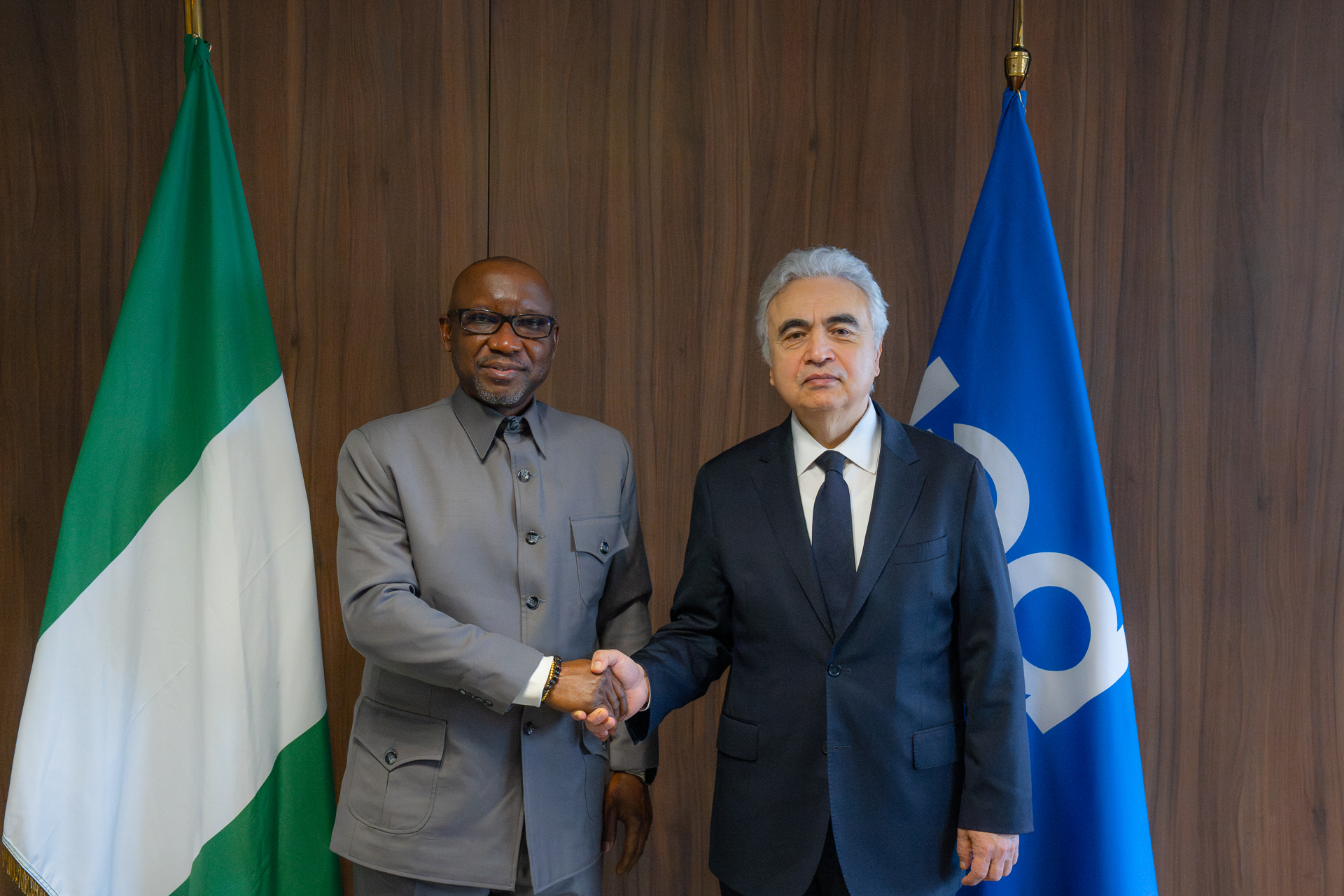
The request, confirmed by IEA Executive Director Fatih Birol, was submitted through a formal letter from Nigeria’s Minister of State for Petroleum Resources, Ekperikpe Ekpo.
“Delighted to receive a formal request from the Government of Nigeria… to join the IEA family,” Birol said, underscoring what could become a significant step in integrating Africa’s largest oil producer into the global energy policy framework.
A Strategic Move at a Critical Moment
Nigeria’s bid comes as global oil markets face renewed instability. The IEA has warned that supply may fall short of demand this year, driven largely by disruptions linked to escalating tensions in the Middle East.
For Nigeria, the timing is not coincidental.
As Africa’s biggest oil producer, the country has long played a central role in global energy supply. However, its influence has often been limited to production rather than policy.
Joining the IEA as an associate member would begin to change that.
From Producer to Policy Player
The IEA, made up of 32 member countries, serves as one of the most influential bodies in shaping global energy strategy, data, and emergency response coordination.
Associate membership would not grant Nigeria full voting rights, but it would provide access to critical market intelligence, policy dialogue, and coordinated energy planning mechanisms.
For a country navigating both domestic energy challenges and global market volatility, that access carries weight.
It also reflects a broader ambition: moving beyond being just a supplier of crude oil to becoming an active participant in how global energy systems are structured.
Energy Pressures and Opportunity
Global oil markets are entering another period of uncertainty, with disruptions affecting key supply routes and production hubs.
These pressures are particularly relevant for countries like Nigeria, where oil revenue remains a cornerstone of government finances.
At the same time, the global energy transition is accelerating, forcing traditional producers to rethink long-term strategies.
By aligning more closely with institutions like the IEA, Nigeria is positioning itself to navigate both realities — short-term market shocks and long-term structural change.
Africa’s Growing Voice in Energy Governance
Nigeria’s move also reflects a wider shift.
African energy producers are increasingly seeking a stronger voice in global decision-making forums that directly affect their economies.
Historically, these institutions have been dominated by developed economies, with limited representation from resource-rich regions in Africa.
Nigeria’s application signals a push toward rebalancing that dynamic — even if incrementally.
What Comes Next
The process of becoming an associate member involves engagement, alignment with IEA frameworks, and approval from existing members.
If successful, Nigeria would join a growing group of countries outside the traditional OECD bloc that are integrating into the agency’s ecosystem.
For now, the application itself sends a clear message.
In an energy landscape defined by uncertainty, shifting alliances, and evolving power structures, Nigeria is seeking not just to respond — but to participate in shaping what comes next.
Nigeria IEA, Nigeria energy policy, International Energy Agency membership, Nigeria oil production, Africa oil producer, global oil markets, oil supply shortage, IEA associate member, Nigeria energy strategy, Ekperikpe Ekpo, Fatih Birol, global energy governance, oil demand forecast, Middle East oil disruption, energy crisis 2026, Africa energy sector, Nigeria crude oil, global oil supply chain, energy market volatility, Nigeria petroleum ministry, Africa global influence, oil price instability, energy security Africa, Nigeria global strategy, oil economy Nigeria, Africa oil exports, IEA expansion, non OECD energy countries, Nigeria policy shift, energy diplomacy Africa, oil producing nations Africa, Nigeria energy reform, global oil demand, Africa energy transition, Nigeria economic outlook, oil revenue Nigeria, energy intelligence IEA, global oil coordination, Nigeria strategic move, oil politics Africa, global energy leadership, oil market trends, Africa participation global policy, Nigeria international relations, energy partnership Nigeria, Africa oil influence, global energy dialogue, oil market analysis, Africa energy governance, Nigeria investment energy, energy institutions world, Nigeria global integration, oil sector Africa, Nigeria international membership, energy cooperation Africa, Nigeria oil demand, energy supply imbalance, oil exporting countries Africa, Nigeria economic strategy, energy alliances Africa, global oil framework, energy policy access, Nigeria oil leadership, Africa IEA involvement, energy transition Nigeria, Nigeria future energy, oil market risks, Nigeria energy planning, Africa policy voice, oil trade Africa, Nigeria energy outlook, global oil imbalance, energy governance reforms, Africa economic policy, Nigeria oil exports growth, energy partnerships global, Africa oil diplomacy, Nigeria global role, energy sector transformation, Nigeria oil influence, global energy shifts, oil industry Nigeria, energy collaboration Africa, Nigeria market position, oil demand growth, Africa energy integration, Nigeria economic growth oil, IEA cooperation, Nigeria oil reserves, energy investment Africa, Nigeria strategy oil, Africa oil governance, Nigeria global economy, energy leadership Nigeria, oil supply gap, Africa international policy, Nigeria economic diversification