
African Passion Drives Arsenal FC’s Global Popularity

|
Getting your Trinity Audio player ready...
|
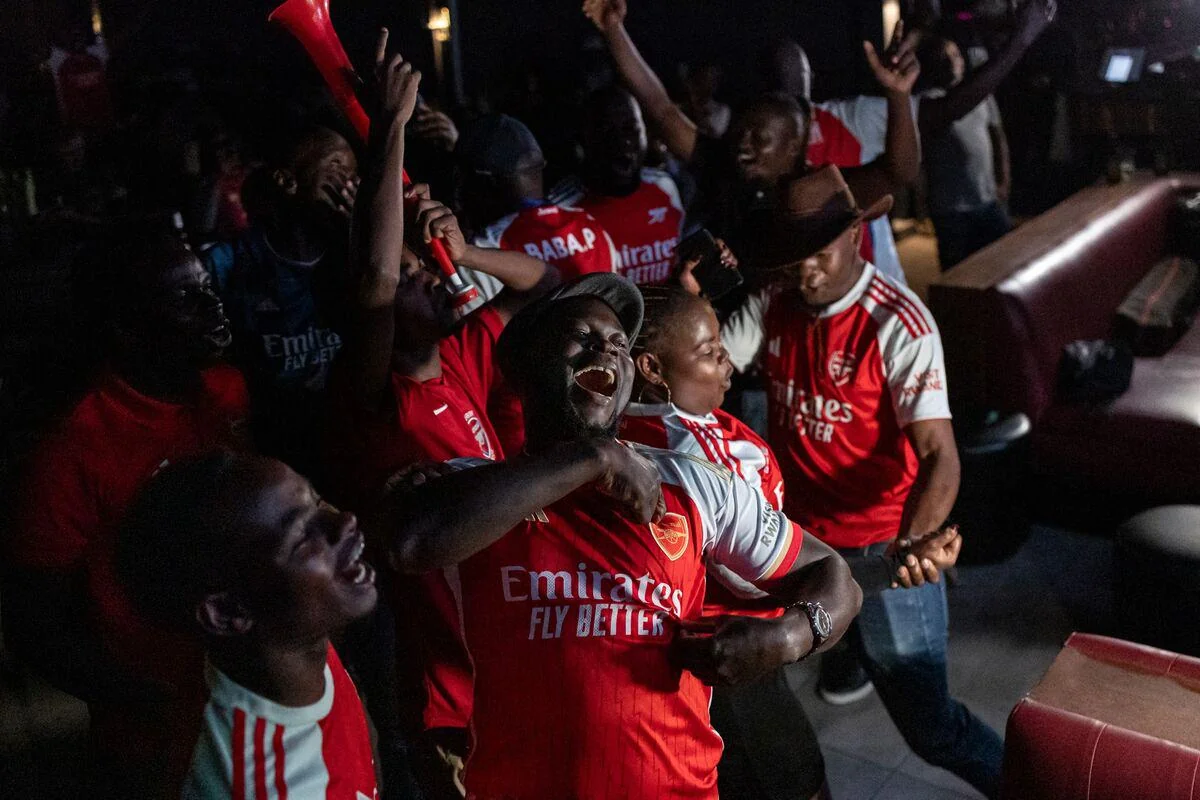
Arsenal’s latest Premier League triumph has once again highlighted the club’s global reach, but nowhere is that connection more visible than across Africa.
The London club secured its 14th Premier League title this week, ending a 22 year wait since the 2003 to 2004 season. While celebrations took place worldwide, African fans played a central role in amplifying the moment.
Arsenal’s popularity across the continent has been built over decades. It reflects more than football success. It is rooted in identity, representation, and cultural connection.
Wenger era laid the foundation
The rise of Arsenal in Africa can largely be traced to the era of Arsène Wenger.
During his time at the club, Arsenal became known for trusting and developing African talent. Players such as Nwankwo Kanu, Kolo Touré and Emmanuel Adebayor were not just stars on the pitch. They represented visibility and pride for millions of fans across Africa.
For many supporters, Arsenal was a club where African players could succeed at the highest level. That connection created loyalty that has lasted for generations.
Growth through media and culture
The expansion of Premier League broadcasting played a major role in strengthening this bond. Networks such as SuperSport brought Arsenal matches into homes across the continent.
In countries like Kenya, Nigeria, Ethiopia and Rwanda, the club’s following grew rapidly.
Arsenal became more than a football team. It became part of everyday life. Supporters clubs formed, communities gathered to watch matches, and the club’s identity spread across generations.
This cultural influence extended beyond sport. Raila Odinga, one of Kenya’s most prominent political figures, was widely known for his support of Arsenal.
Loyalty beyond trophies
Arsenal’s connection with African fans has never depended solely on winning titles. Even during difficult seasons, support remained strong.
That loyalty is built on emotional attachment and shared history. Fans saw themselves reflected in the club during key moments, and that bond has endured.
The recent title win simply adds another chapter to a long relationship.
A connection that continues to evolve
Arsenal’s global identity remains closely tied to Africa. A new generation of fans continues to engage with the club, while African players still aspire to follow in the footsteps of those who came before them.
The story reflects a broader shift in global football. Africa is not just a market for the game. It is a driving force behind its growth, culture, and future direction.
As the continent continues to develop, its influence in global sport will only expand. Arsenal’s enduring connection with African fans is a reminder that the game’s future is increasingly shaped by a young, dynamic, and globally connected Africa.