
Libya races to save ancient Greek ruins as conflict and climate threaten UNESCO heritage sites

|
Getting your Trinity Audio player ready...
|
For centuries, the ancient cities of Cyrene and Apollonia stood as symbols of one of the Mediterranean’s greatest civilizations. Today, these UNESCO World Heritage sites in eastern Libya face a different battle as archaeologists race against conflict, climate disasters and coastal erosion to preserve thousands of years of human history.
The effort has become one of Libya’s most important cultural preservation missions, bringing together archaeologists, museum officials and local communities determined to protect a heritage that belongs not only to Libya but to the world.
Priceless treasures survived years of conflict
The greatest immediate threat emerged after the fall of longtime Libyan leader Muammar Gaddafi in 2011, when instability spread across the country.
Between 2014 and 2016, insecurity left many archaeological sites vulnerable to looting and destruction.
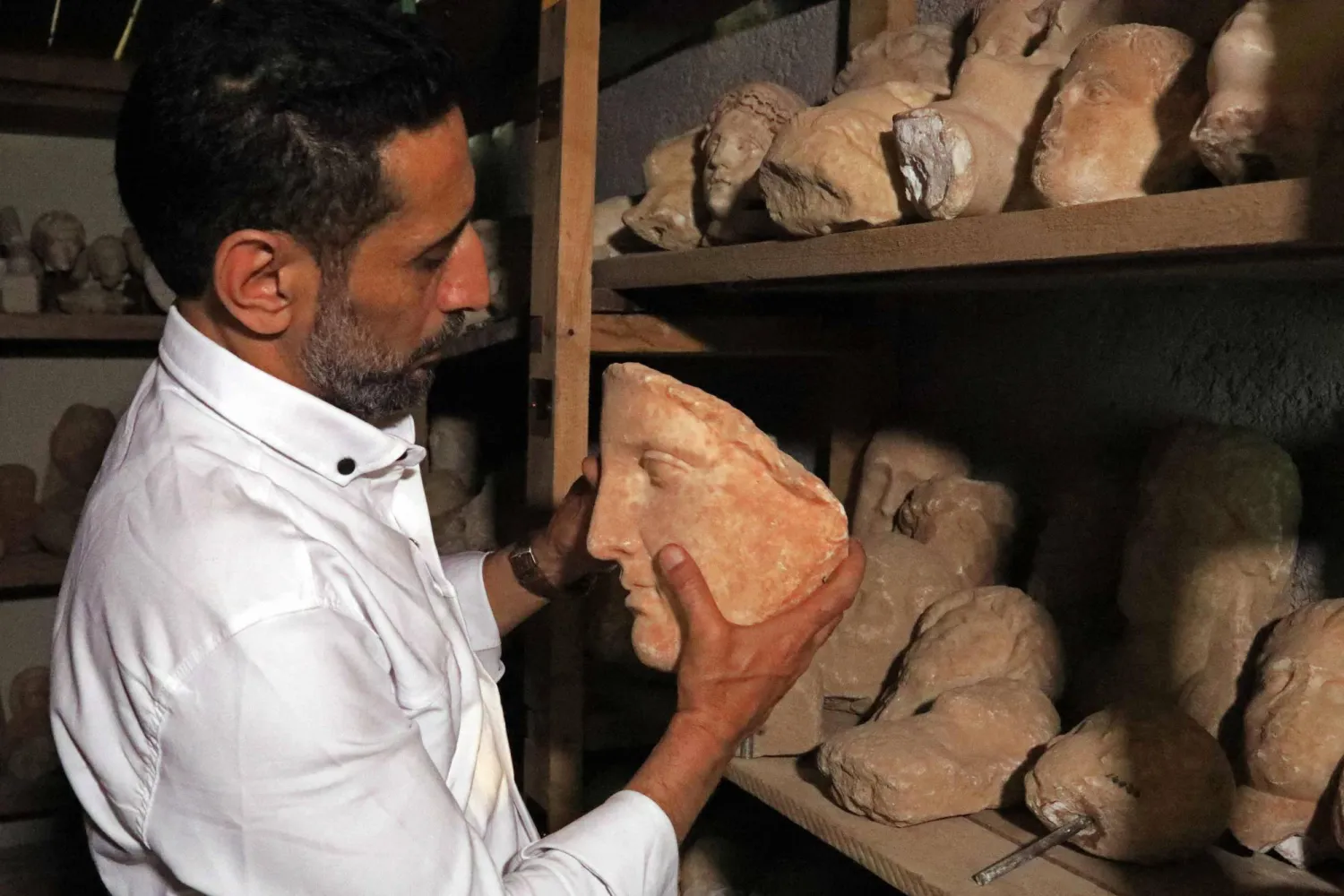
Smail Dakhil, who oversees the Museum of Cyrene, recalled the uncertainty during those years. Fearing irreplaceable artefacts could disappear, museum staff secretly removed small statues, ancient gold coins and historical archives, hiding them inside their own homes until conditions improved.
Larger sculptures that could not be moved, including a rare female sphinx, were guarded day and night by volunteer archaeologists and local residents. Their efforts helped ensure that no major thefts were recorded at Cyrene during one of Libya’s most turbulent periods.
A city that once rivalled the greatest of the ancient world
Founded in 631 BCE by settlers from the Greek island of Thera, now known as Santorini, Cyrene grew into one of the most prosperous cities of the Hellenic world.
Together with its coastal port of Apollonia, it later flourished under Roman rule and became renowned for philosophy, science, music and the arts. At its peak, the city was home to as many as 100,000 people.
Centuries of earthquakes, wars and abandonment eventually reduced both cities to ruins before they were rediscovered by European explorers during the eighteenth century.
Today, visitors can still explore temples, theatres, sacred pathways and thousands of tombs that reveal the remarkable history of one of North Africa’s greatest ancient civilizations.
Storm Daniel created destruction and unexpected discoveries
Nature dealt another devastating blow in September 2023 when Storm Daniel triggered catastrophic flooding across eastern Libya.
The disaster claimed thousands of lives in nearby Derna, located about 100 kilometres east of Cyrene, while causing significant damage to archaeological structures throughout the region.
Restoration teams have since spent months removing rubble, recovering fallen stone blocks and rebuilding sections of ancient sanctuaries and nearly 60 metres of historic defensive walls.
Yet amid the destruction came surprising discoveries.
Archaeologists uncovered previously hidden engravings and funerary offerings among thousands of Greek and Roman tombs, providing fresh insight into the region’s ancient past.
Rising seas threaten Apollonia’s future
While restoration continues at Cyrene, experts say Apollonia faces an even more urgent challenge.
Over centuries, roughly one third of the ancient port city has already disappeared beneath the Mediterranean Sea. Following Storm Daniel, local heritage officials estimate the danger has increased dramatically, warning that marine erosion now threatens much of what remains.
Some structures are already fully exposed to relentless wave action, making urgent conservation work essential if future generations are to experience the site.
Tourism remains a long term ambition
Despite its extraordinary history, eastern Libya receives relatively few international visitors.
Tour guide Hamdi Al Kailani believes many travellers simply do not realise what the country has to offer.
He hopes that improved stability, continued restoration and better international awareness will eventually attract more tourists to the region, helping preserve both the sites and the local economy.
Restoration teams are aiming to reopen sections of Cyrene to visitors in September, although officials acknowledge that limited funding and outdated equipment continue to slow progress.
Heritage beyond politics
For many archaeologists, preserving Cyrene and Apollonia extends beyond archaeology.
Ahmad Essa Abdulkariem of Libya’s Department of Antiquities believes the country’s political divisions should never overshadow the responsibility to protect a heritage shared by humanity.
He argues that while natural resources such as oil are finite, cultural landmarks can continue educating and inspiring future generations if properly protected.
Libya remains politically divided between the internationally recognised government based in Tripoli and a rival administration in the east. Even so, heritage experts hope all sides can unite behind safeguarding some of Africa’s most significant archaeological treasures.
Across Africa, countless historic sites continue to demonstrate the continent’s extraordinary contribution to human civilisation. Protecting this heritage requires sustained investment, cooperation and long term vision. As restoration efforts continue in Libya, they serve as a reminder that Africa’s rich past remains a powerful foundation for a future built on knowledge, cultural pride and shared global appreciation.