
Ghana Leads Africa’s Reparations Push as Slavery Justice Debate Gains Global Momentum
By Maxine Ansah

|
Getting your Trinity Audio player ready...
|
Ghana is positioning itself at the forefront of Africa’s growing campaign for reparations over the transatlantic slave trade, pushing the international conversation beyond apologies towards debt relief, institutional accountability, investment in African development and a deeper reckoning with the human consequences of slavery.
The campaign has gathered significant momentum this year as African governments, traditional leaders, religious institutions and members of the diaspora confront increasingly difficult questions about what meaningful reparatory justice should look like centuries after millions of Africans were forcibly removed from the continent.
In March, Ghana tabled a resolution at the United Nations recognising slavery as “the greatest crime against humanity”.
The resolution passed, although the United States voted against it and European countries abstained.
For Ghana, the campaign is closely connected to both its history and its longstanding Pan-African identity.
Foreign Minister Samuel Okudzeto Ablakwa has described Ghana’s involvement as part of a tradition that stretches back to the country’s independence and its subsequent role in movements for African liberation.
“Ghana has always been a pan-African leader. We’re the first country to attain independence in sub-Saharan Africa and to prove that it is possible to fight imperial might, and win,” Ablakwa said.
The African Union has given Ghana special responsibility to serve as a champion for reparatory justice, placing the country in a leading diplomatic position as African states seek a more coordinated approach to the issue.
That leadership was reinforced in June when Accra hosted a major reparations summit attended by delegates from around 80 countries.
The gathering concluded that recompense for slavery and its enduring consequences was long overdue.
Ghana’s place in the history of the slave trade
Ghana’s determination to lead the campaign is inseparable from the role its territory played in the transatlantic slave trade.
Of the estimated 12 million Africans forcibly removed from their homes during the trade, approximately 10 to 15 per cent are believed to have originated from the territory that is now Ghana. Even larger numbers passed through its shores.
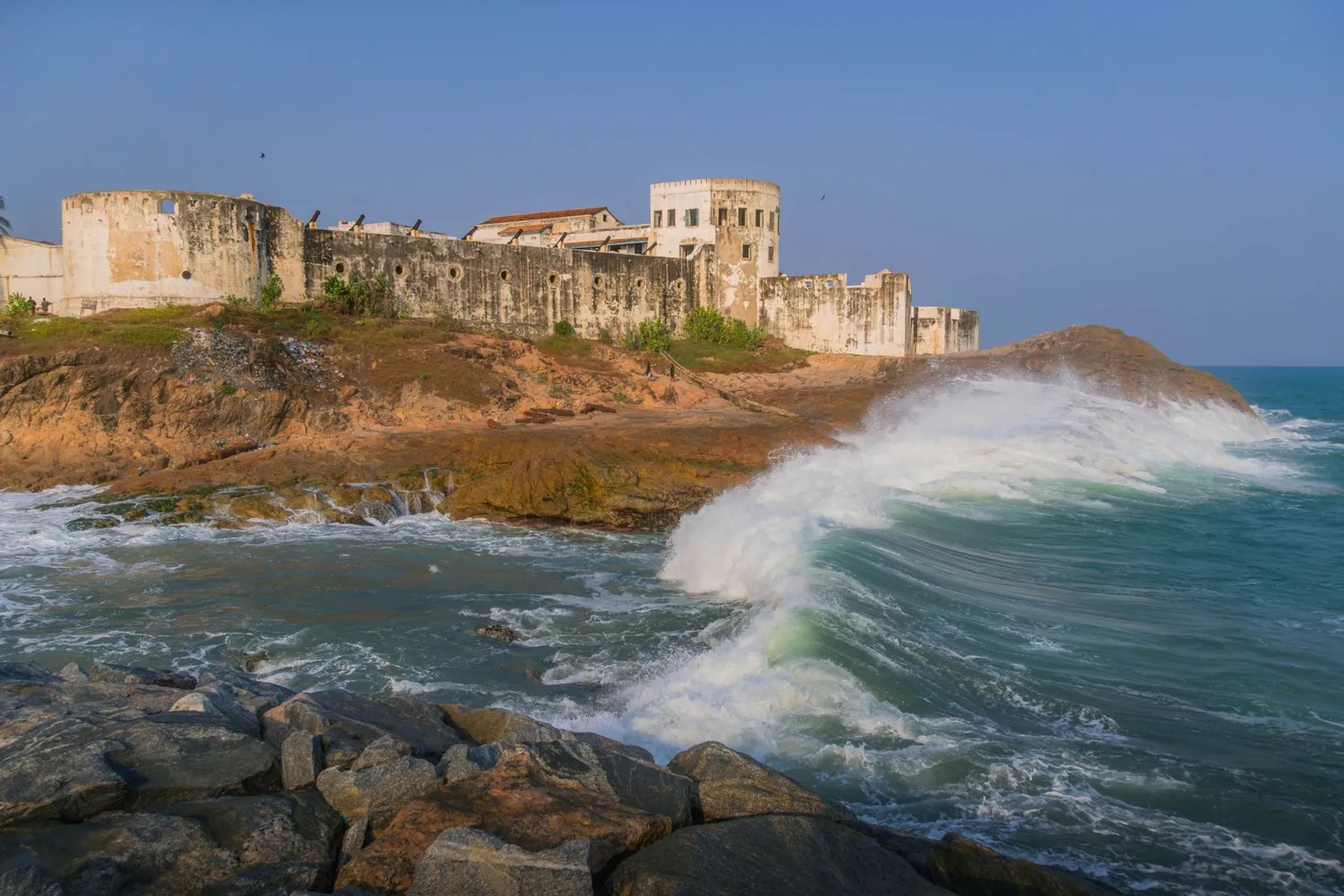
Along Ghana’s coastline, forts and castles became part of the machinery through which enslaved Africans were imprisoned before being transported across the Atlantic.
That history is still physically visible today at sites such as Cape Coast Castle, where enslaved Africans were held in dungeons before being forced through the infamous “Door of No Return” and onto ships bound for the Americas.
Ablakwa has described Ghana as a central location of the atrocities.
“Ghana was the crime scene where these atrocities took place, so Ghana cannot afford to be silent on ensuring that we hold perpetrators accountable,” he said.
But the reparations being advocated by Ghana go considerably further than direct cash payments.
Ablakwa has proposed a model that could finance educational grants, provide venture capital to young African entrepreneurs and support research into enduring health problems that some believe may have links to generations of severe malnutrition and the inhumane conditions experienced during enslavement.
Debt relief and debt cancellation have also become part of the agenda.
These proposals attempt to connect historical injustice with present-day development, asking whether reparations could be used not merely to compensate for the past but to expand opportunities for future generations.
The Church of England confronts its own history
Ghana is also calling for institutions that benefited from slavery to accept responsibility.
Among them is the Church of England.
During the 18th Century, the Church’s missionary wing operated plantations and owned hundreds of enslaved people. Individual clergy also owned enslaved people, while the Church’s endowment fund has acknowledged that the institution made substantial investments connected to the slave trade.
The Archbishop of Canterbury, Dame Sarah Mullally, confronted that history directly during a visit to Ghana in July.
During one of her first international visits in the role, she travelled to Cape Coast Castle and walked through the dungeons where enslaved Africans had been confined.
She also passed through the Door of No Return and prayed inside a 17th Century chapel positioned directly above the dungeons.
“I felt the weight of the depth of evil that the transatlantic slave trade was,” she said. “You can’t help but be deeply moved by the horrific conditions that people were kept in.”
For the Archbishop, the physical positioning of a Christian chapel above the place where enslaved Africans were imprisoned carried particular significance.
“How can the church have sat above the horrors that were going on below?” she asked.
The Church of England has apologised for its involvement in the slave trade and established a £100 million social impact fund intended to benefit communities believed to continue experiencing its legacy.
The fund itself has encountered resistance within the Church, demonstrating how difficult the transition from acknowledgement to material action can become.
The difficult question of African complicity
One of the most contentious arguments surrounding reparations concerns the involvement of Africans who participated in capturing and selling other Africans.
Ablakwa rejects attempts to use that involvement to place equal responsibility on Africans and European powers.
He argues that the legal, commercial, insurance and financial systems that transformed slavery into a vast transatlantic enterprise were designed by Western slave-owning powers.
When those systems were being constructed, he said, “there was no African at the table”.
“We denounce and totally reject those claims that Africans are as guilty and complicit as those who masterminded this whole atrocity,” Ablakwa said.
Within Ghana, however, the conversation is also producing a more complicated reckoning.
King Tackie Teiko Tsuru II, the Ga Mantse and traditional leader of the Ga people, has publicly apologised for the role played by his ancestors in the slave trade.
The Ga became intermediaries in trade with Europeans, exchanging commodities including gold and ivory and, eventually, enslaved Africans for manufactured goods such as textiles, alcohol and guns.
Some of those sold into slavery had been captured during local conflicts.
“I think that the transatlantic slave trade was the greatest crime against humanity, and ancestors also took part as players in that trade,” the Ga Mantse said.
His apology extended beyond his own ancestors.
“I stand on the same point of apologising on behalf of all traditional authorities and my ancestors and forebears for the part they also played in the slavery of our brothers and sisters.”
For the traditional ruler, accepting African complicity does not remove responsibility from the European powers that built and profited enormously from the system.
Instead, he views acknowledgement as necessary for healing.
“It has affected lives and societies up to now, and to be able to go forward, you have to look at your past. It dawns on us to admit our fault and correct it,” he said.
The Ga Mantse also supports reparations and has acknowledged that accepting historical responsibility means being willing to consider financial responsibility as well.
For him, doing so demonstrates “moral courage and credibility”.
When reconnection becomes commercialisation
Ghana has also attempted to address the legacy of slavery through reconnection with the African diaspora.
High-profile initiatives encouraging people of African descent, particularly African-Americans, to visit Ghana have transformed the country into an important destination for diaspora tourism and cultural reconnection.
But that success has also produced criticism over whether an initiative rooted partly in healing has become too commercial.
Yaw Asare, a Ghanaian PhD student at Howard University who previously worked within the President of Ghana’s Diaspora Office, recalls the initial gathering of Black people from around the world as a “beautiful, profound experience devoid of capitalist motives”.
He believes that changed as tourism became more central to the initiative.
Asare argues that the focus increasingly shifted towards tourism numbers and foreign spending rather than the deeper psychological and cultural work required to repair the relationship between Africans on the continent and descendants of those who were taken from it.
He has also raised concerns that increased prices connected to diaspora tourism can have consequences for local residents.
“We are dealing with humans, we are dealing with people. We cannot reduce them to, ‘come see this site, pay this entrance fee’,” he said.
His criticism reaches the very sites that have become central to Ghana’s diaspora tourism.
Asare questions why members of the African diaspora seeking to engage with the history of slavery are charged entrance fees at coastal castles at the same rates as other international tourists.
For him, the issue illustrates the difference between treating historical sites as tourism products and treating them as places of trauma, memory and potential healing.
What does repair actually mean?
The debate unfolding in Ghana demonstrates why reparations cannot easily be reduced to a single financial figure.
Governments are discussing debt cancellation and compensation.
Religious institutions are creating social investment funds.
Traditional authorities are confronting the involvement of their ancestors.
Members of the diaspora are returning to places from which enslaved Africans were taken.
And critics are asking whether the commercialisation of that return risks reproducing another form of extraction from people seeking connection with their history.
Together, these conversations are pushing the meaning of reparations towards something broader: acknowledgement, accountability, economic justice, institutional reform, memory and psychological repair.
That may ultimately be one of Ghana’s most important contributions to the global debate.
The country is not presenting reparations solely as a bill to be calculated and paid. It is increasingly becoming a place where the world is being forced to ask what repairing centuries of violence might actually require.
For Africa, there is power in the fact that this conversation is increasingly being shaped from Accra rather than dictated elsewhere. Ghana cannot change what happened inside the dungeons of Cape Coast Castle, nor can any payment restore the millions of lives uprooted by the transatlantic slave trade. But reparatory justice is ultimately about what the living choose to do with that history. It can mean compensation and debt relief, but it can also mean honesty, investment, acknowledgement and healing. Ghana’s challenge now is to ensure that the pursuit of repair does not itself become merely symbolic or commercial. If the continent is asking the world to confront its past honestly, Africa must be willing to do the same. That does not weaken the case for reparations. It may make it considerably stronger.
Ghana slavery reparations, Ghana reparations, slavery reparations Africa, reparatory justice, Ghana reparatory justice, transatlantic slave trade, Africa reparations movement, Samuel Okudzeto Ablakwa, Ghana Foreign Minister, African Union reparations, AU reparatory justice, Ghana slavery history, Cape Coast Castle, Door of No Return, Ghana slave trade, Accra reparations summit, slavery compensation, slavery debt relief, African debt cancellation, UN slavery resolution, United Nations slavery resolution, slavery crime against humanity, Ghana UN resolution, Africa reparations summit, reparations summit Ghana, British slavery reparations, UK slavery reparations, Church of England slavery, Church of England reparations, Archbishop Sarah Mullally, Sarah Mullally Ghana, Archbishop of Canterbury Ghana, Church slavery apology, Church of England £100m fund, slavery social impact fund, African slavery history, Ghana slave castles, African descendants reparations, African diaspora Ghana, diaspora tourism Ghana, Ghana diaspora initiative, African-American Ghana tourism, Ghana Year of Return legacy, reparations for Africans, institutional reparations, slave trade accountability, historical justice Africa, Pan-African reparations, Pan-African justice, Ghana Pan-African leadership, African economic justice, education grants reparations, venture capital Africa, African youth entrepreneurs, reparations and development, reparations and debt, slavery health legacy, African historical trauma, transgenerational trauma slavery, King Tackie Teiko Tsuru II, Ga Mantse, Ga Mantse slavery apology, African complicity slavery, Ghana traditional leaders slavery, Ga people slave trade, African slave traders, African role slave trade, European slave trade responsibility, British slave trade Ghana, Dutch slave trade Ghana, slave trade financial system, slavery insurance industry, African historical accountability, reparations moral responsibility, Ghana global diplomacy, Ghana foreign policy, Africa global justice, reparations diplomacy, reparations campaign Africa, Ghana reparations campaign, African slavery reparations 2026, Ghana reparations 2026, slavery reparations debate, global reparations movement, diaspora reconnection Africa, Ghana diaspora tourism criticism, reparations and tourism, Yaw Asare Ghana, Howard University Ghana reparations, Jamestown Accra slavery, Jamestown slave trade, Ghana historical sites, slavery memory Africa, healing from slavery, reparations psychological healing, African diaspora healing, reparations human connection, slavery apology Africa, African traditional authority apology, slavery institutional accountability, Ghana reparations leadership, Africa reparations future, TVOA Ghana news