
Somalia Displacement Housing Gives Families a Safer Future After Decades of Uncertainty
By Maxine Ansah
|
Getting your Trinity Audio player ready...
|
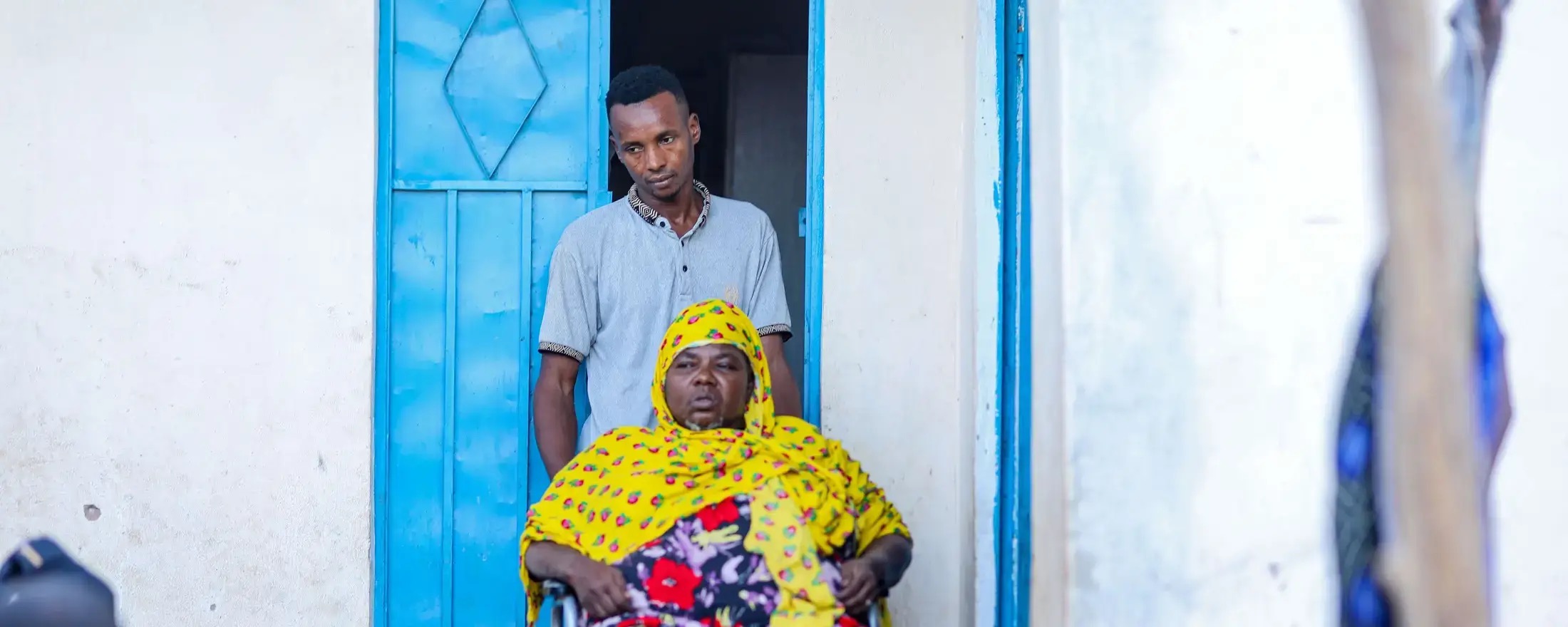
After more than three decades of displacement, 67-year-old Mako Mohamed Mohamud Hassan finally has something many people take for granted: a home where she does not have to fear what will happen when the next storm arrives.
For years, Mako lived in the Boqolka Buush settlement in Bosaso, Somalia, in a traditional buul shelter constructed from wooden branches, plastic sheets and scraps of cloth.
The structure provided little protection against Bosaso’s intense heat, strong coastal winds and heavy rains. As a person with disability, Mako faced an additional danger whenever severe weather threatened her home.
She depended on neighbours to physically carry her to safety.
“The biggest difference between the permanent house and the buul shelter is security and protection from the weather. During floods or strong winds, the buul shelter could easily be damaged,” Mako said.
Today, that reality has changed.
Mako has moved into a permanent home at the new Gribble Settlement on the outskirts of Bosaso, where an initiative is attempting to move displaced families beyond temporary humanitarian shelter towards lasting housing, greater independence and security.
From three decades of displacement to a permanent home
Mako was born in Mogadishu in 1959.
Her life changed dramatically following the collapse of Somalia’s central government in 1991 and the outbreak of civil war.
She fled Mogadishu with relatives and travelled to Bosaso, hoping to find safety and rebuild her life away from the conflict.
But leaving the immediate danger of war did not end the uncertainty.
Mako and her relatives eventually settled in Boqolka Buush, where they lived for years with limited basic services and inadequate protection from the weather.
“We used to live together in a buul shelter. We were never comfortable there,” she said.
More than 30 years after she was first displaced, Mako is now among 245 internally displaced people living at Gribble Settlement.
Thirty permanent houses have been constructed at the site through the Saameynta Joint Programme, bringing housing together with water access, accessible infrastructure and communal facilities.
The programme is being implemented by UN-Habitat in partnership with the International Organization for Migration, the United Nations Development Programme and the Government of Somalia.
Rather than treating displacement solely as an emergency requiring temporary shelter, the programme is designed around the idea of durable solutions.
“For us, this project is about more than building houses. It is about creating durable solutions where families can live in climate-resilient and inclusive spaces and have greater security over their land without the constant risk of eviction,” UN-Habitat project manager Sophos Sophianos said.
“Ultimately, it is about giving people a safe and dignified place to rebuild their lives.”
Building communities, not simply houses
Each of the 30 homes at Gribble has been equipped with a 1,000-litre water storage tank, allowing residents to keep water at home.
Trees have also been planted around individual houses and communal areas, providing shade while improving the environment surrounding the settlement.
The development includes a shaded community centre where residents can meet and participate in social activities.
Children have their own playground, providing a designated area for safe play and early childhood development.
Taken together, the facilities represent an attempt to create a functioning community rather than simply rows of emergency accommodation.
For families who have experienced prolonged displacement, that distinction can be significant.
A house provides physical shelter. A community provides the wider conditions in which people can begin rebuilding ordinary life.
Disability inclusion gives Mako greater independence
For Mako, one of the most important changes is her ability to move around more independently.
The Gribble Settlement incorporates accessible housing designs, pathways and ramps intended to support persons with disabilities, older residents and others with limited mobility.
Seventeen residents received assistive devices, including wheelchairs and crutches.
Mako received a wheelchair.
It represents a major change from her previous circumstances, when she relied on neighbours to carry her whenever dangerous weather threatened the fragile shelter in which she lived.
Accessible infrastructure and mobility support now allow her to navigate her surroundings with greater independence and reduce her reliance on other people during emergencies.
Her experience demonstrates why disability inclusion can be particularly important in humanitarian and development programmes.
People with disabilities can face disproportionate risks during displacement, especially where temporary shelters, sanitation facilities, roads and emergency systems are not designed with accessibility in mind.
At Gribble, accessibility has instead been incorporated into the settlement itself.
Housing that can also create livelihoods
The programme has also attempted to ensure that residents participate in building the community.
People living at the settlement were given opportunities to take part in site clearance and construction.
Five residents, four women and one man, completed certified construction skills training as part of the process.
The training provides practical skills that can potentially support their livelihoods beyond the immediate housing project.
That approach adds an economic dimension to the programme.
Displaced communities frequently need more than shelter to achieve long-term stability. Sustainable solutions can also require access to employment, skills and opportunities that allow families to support themselves.
By combining housing with construction training, water infrastructure, accessibility and communal facilities, the project demonstrates how responses to displacement can begin moving beyond emergency relief.
Somalia’s displacement challenge
Mako’s journey also reflects part of Somalia’s much longer national story.
She fled Mogadishu after the collapse of the central government in 1991. More than three decades later, she is finally living in a permanent home where the fear of displacement and fragile shelter has begun to recede.
Her story demonstrates how displacement can last far longer than the conflict or emergency that originally forced someone to flee.
For people who spend years or even decades in temporary settlements, displacement can become an entire way of life.
That makes durable housing particularly important.
Security over where a person lives can affect almost every other aspect of life, from health and education to employment, mobility and participation in a community.
For Mako, the transformation can be expressed in four simple words.
“Now I feel safe.”
That sentence carries particular weight after more than 30 years of uncertainty.
Somalia is often presented to the world through conflict, insecurity and humanitarian emergency. Those realities cannot be ignored, but neither should they become the only story told about the country. Gribble represents another side of Somalia: institutions, international partners and communities attempting to solve problems that have accumulated over decades. Thirty houses cannot resolve a national displacement crisis, but for 245 people they represent something concrete, and for Mako they represent home. African progress is not always measured by billion-dollar projects or dramatic economic statistics. Sometimes it is a wheelchair, a water tank, a secure roof and a 67-year-old woman finally being able to say, after more than three decades, that she feels safe.
Somalia housing, Somalia displacement, Gribble Settlement, Bosaso Somalia, internally displaced people Somalia, Somalia IDPs, Mako Mohamed Mohamud Hassan, Somalia permanent housing, UN-Habitat Somalia, Saameynta Joint Programme, Somalia development, Somalia positive news, Somalia humanitarian progress, Somalia durable solutions, displacement housing Africa, Bosaso displacement, Somalia accessible housing, disability inclusion Somalia, Somalia climate resilient housing, Somalia housing project, Somalia IDP housing, Gribble Bosaso, Boqolka Buush, Somalia buul shelters, Puntland housing, Bosaso housing, Somalia disability inclusion, accessible infrastructure Africa, Somalia wheelchair access, persons with disabilities Somalia, Somalia women development, Somalia community development, Somalia water access, Somalia water storage, Somalia 1000 litre water tank, Somalia community centre, Somalia children’s playground, Somalia construction training, Somalia skills training, women construction training Somalia, Somalia livelihoods, displaced women Somalia, older people Somalia, Somalia civil war displacement, Mogadishu displacement, Somalia 1991 civil war, Somalia rebuilding, rebuilding Somalia, Somalia recovery, Somalia resilience, African development news, positive Africa news, Africa housing projects, African humanitarian solutions, durable solutions Africa, IDP durable solutions, internally displaced persons Africa, African displacement crisis, Somalia humanitarian response, UNDP Somalia, IOM Somalia, Government of Somalia, UN Somalia, Somalia United Nations, Somalia shelter programme, permanent homes Africa, climate resilient homes Africa, inclusive housing Africa, accessible housing Africa, disability rights Africa, humanitarian disability inclusion, Somalia land security, Somalia eviction protection, displacement and eviction Somalia, secure housing Somalia, safe homes Somalia, Somalia basic services, Somalia infrastructure, Somalia social development, Somalia community infrastructure, Somalia local development, Somalia human interest, African human interest stories, Somalia success story, Africa positive development, African resilience stories, Horn of Africa development, Horn of Africa displacement, East Africa development, Bosaso development, Puntland development, Somalia housing 2026, Somalia development 2026, African housing solutions, sustainable settlements Africa, inclusive settlements Africa, Somalia IDP settlement, Gribble Settlement Somalia 2026, UN-Habitat Gribble Settlement, Somalia displaced families, Somalia lasting homes, TVOA Somalia news, TVOA positive Africa