

|
Getting your Trinity Audio player ready...
|
A Senegalese pharmaceutical company is producing what has been described as Africa’s first locally manufactured generic hydroxyurea treatment for sickle cell disease, offering a new route towards reducing the continent’s dependence on imported medicine.
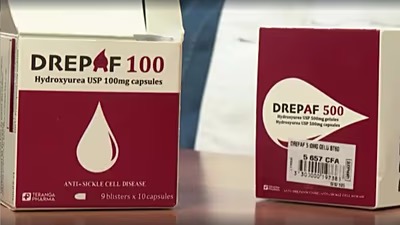
Teranga Pharma is manufacturing the treatment under the name Drepaf at its facility in Senegal. The development is particularly significant because Africa carries a disproportionate share of the global burden of sickle cell disease.
Nearly 80 per cent of cases occur on the continent, yet patients have traditionally relied on medicines imported from Europe and the Americas. That reliance affects cost and availability.
Hydroxyurea is recommended in the management of sickle cell disease because it can reduce painful crises, hospital admissions, blood transfusions and premature death.
Drepaf is a generic form of the medicine. It is available in a 500mg formulation for adults and a 100mg formulation for children. The treatment was launched in November 2025, but Teranga Pharma is now expanding its production and regional ambitions as interest grows across Africa.
The project is backed by approximately US$7.1 million in funding and involves technical cooperation with an Indian partner. Teranga Pharma says it is working with Burkina Faso, Guinea and Côte d’Ivoire and has received requests from the Democratic Republic of Congo, Gabon and Cameroon. Its longer-term objective is to meet demand across sub-Saharan Africa by 2030.
The significance reaches beyond one medicine. African governments have increasingly identified pharmaceutical manufacturing as a health-security priority.
The COVID-19 pandemic exposed how vulnerable countries can become when global supply chains tighten and the production of vaccines and medicines is concentrated elsewhere. Local manufacturing can reduce that dependence, although producing medicine domestically does not automatically guarantee affordability or availability.
Companies must operate at sufficient scale, meet rigorous regulatory standards and ensure products reach health facilities and patients.
For sickle cell disease, the need is particularly urgent. The inherited blood disorder can cause severe anaemia, chronic pain, fatigue and repeated hospitalisation. Children and young people living with the condition can also experience disruption to schooling and ordinary daily life.
Access to effective long-term treatment therefore has consequences that go beyond managing individual medical crises. Teranga Pharma’s expansion could also have an industrial effect.
Developing pharmaceutical production creates demand for scientists, pharmacists, technicians, manufacturing specialists, regulators and supply-chain professionals.
A stronger African pharmaceutical sector can therefore serve both health and economic-development objectives.
For Africa, this is the type of progress that pharmaceutical sovereignty should mean in practice. The continent carries some of the world’s heaviest disease burdens but has historically manufactured too little of the medicine required to address them. Senegal’s achievement will matter most if Drepaf becomes safe, affordable and widely accessible to the patients who need it. But an African company manufacturing an African-needed medicine at home is an important step towards a health system in which the continent is not permanently dependent on someone else’s production line.