
|
Getting your Trinity Audio player ready...
|
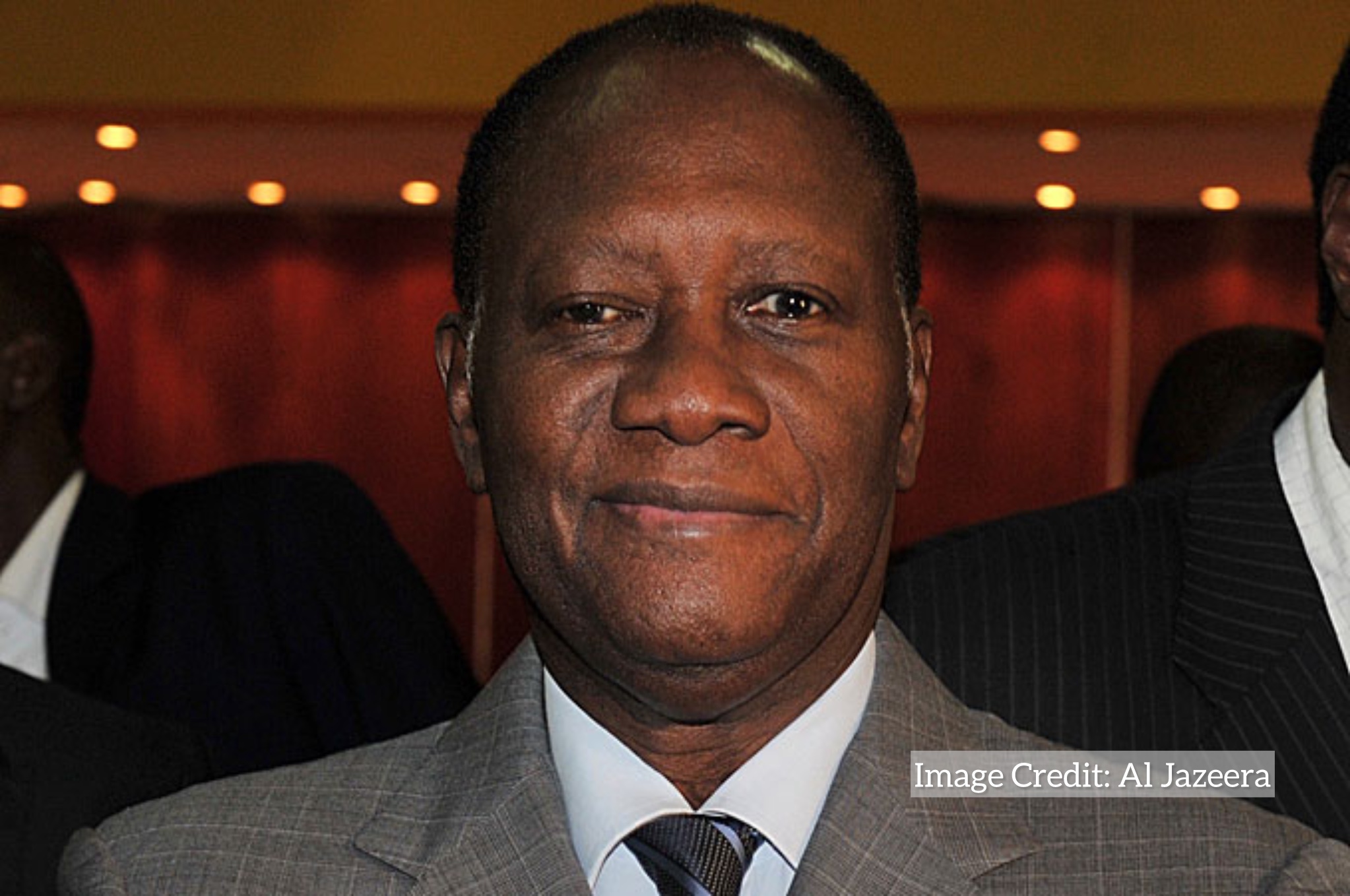
Ivory Coast is facing a wave of political tension as President Alassane Ouattara signals his intention to seek a fourth term in the upcoming presidential election scheduled for October 2025. The move has triggered significant public backlash, revived opposition alliances, and raised fresh concerns over the state of democracy in the West African nation.
President Ouattara, who has been in power since 2011, announced earlier this year that he would “not rule out” running again. Though he had previously said he would step aside for younger leadership, he now claims that his continued leadership is necessary for the country’s stability. Supporters of Ouattara and his ruling Rally of Houphouëtists for Democracy and Peace (RHDP) party argue that the 2016 constitutional reform reset presidential term limits, allowing him to run legally for another five years.
However, critics argue that a fourth term would undermine constitutional principles and entrench one-man rule.
“We cannot build a democracy on manipulated laws and recycled leadership,” said a spokesperson from the Democratic Party of Côte d’Ivoire (PDCI), one of the major opposition parties.
Protests have erupted across major cities, with thousands of Ivorians taking to the streets, demanding that Ouattara step aside and allow a democratic transition.
Tensions have further escalated due to the disqualification of several high-profile opposition leaders. Among them is Tidjane Thiam, a widely respected economist and former CEO of Credit Suisse, whose candidacy was rejected due to his dual nationality. Former president Laurent Gbagbo and ex-prime minister Guillaume Soro also face legal and political hurdles preventing them from contesting. The opposition accuses the government of weaponizing the judiciary to sideline credible challengers.
Civil society groups and legal experts warn that the political environment is increasingly restrictive. They point to the Independent Electoral Commission’s lack of impartiality and to the judiciary’s alignment with ruling party interests as major risks to the integrity of the upcoming vote.
“An election cannot be free and fair when the strongest opposition voices are excluded by design,” said Dr. Marie Kouadio, a constitutional law professor at the University of Abidjan.
International observers, including the African Union, ECOWAS, and the European Union, have urged Ivorian authorities to ensure an inclusive, transparent, and peaceful electoral process. ECOWAS, in particular, is under pressure to prevent another constitutional crisis in a region already destabilized by coups and political unrest in neighboring Mali, Burkina Faso, and Niger.
Despite these concerns, the RHDP maintains that Ouattara remains the only viable leader capable of maintaining economic growth and national cohesion. They highlight his track record of infrastructure development, macroeconomic stability, and international partnerships as reasons for continuity. A party congress is expected to formalize his candidacy before the end of June.
As the October election draws closer, the political climate in Ivory Coast is likely to become even more polarized. The exclusion of key opposition leaders, mounting public protests, and the president’s controversial bid for another term suggest a turbulent path ahead. For many Ivorians, the next few months will test the strength of the country’s democratic institutions and its ability to uphold the rule of law.