
Kenya to Privatize Key State Assets in Push for Investment and Financial Independence

|
Getting your Trinity Audio player ready...
|
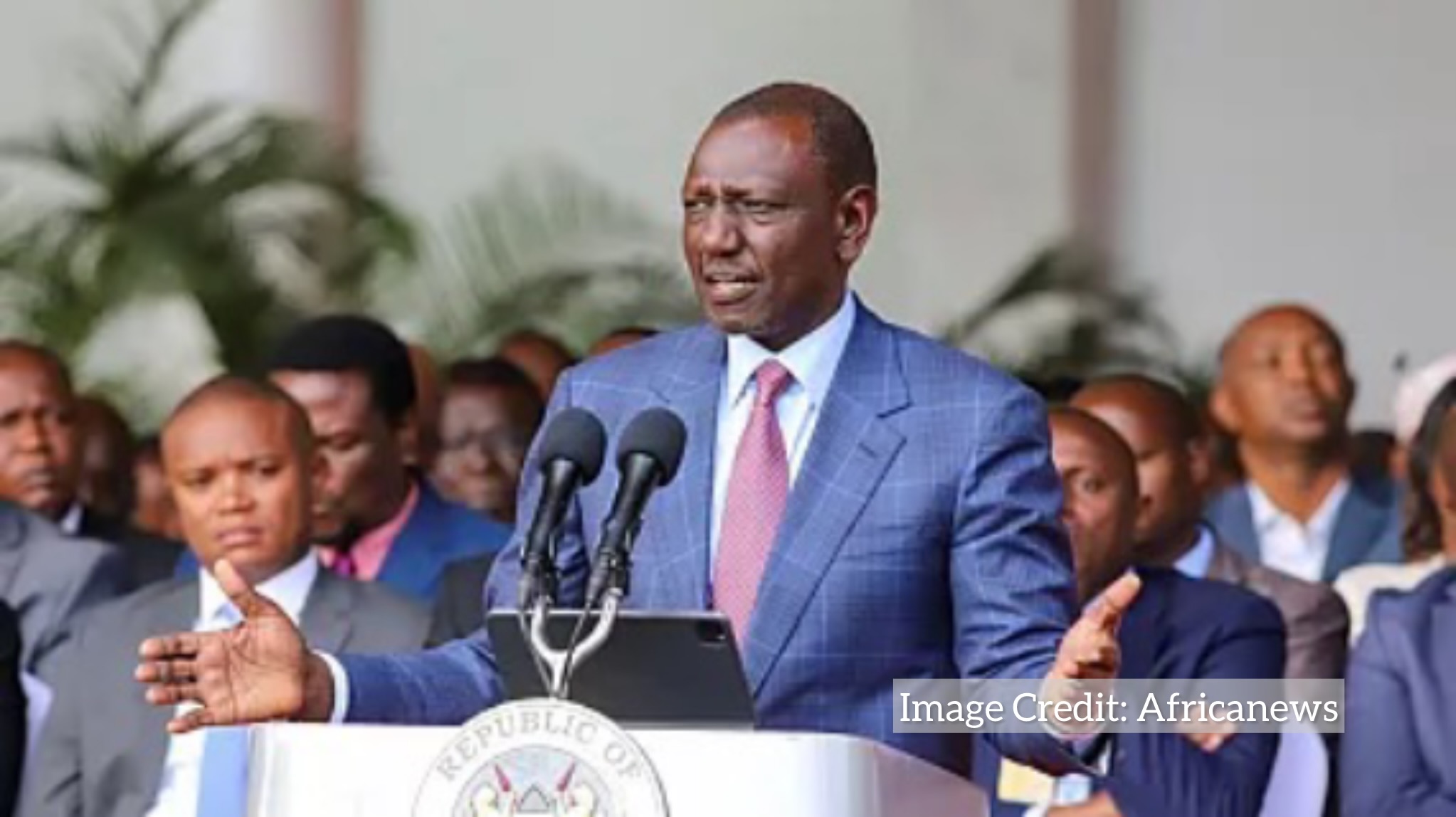
Kenya has announced a renewed and strategic plan to privatize several state-owned enterprises through stock market listings, in an effort to attract private capital, deepen its domestic financial markets, and reduce its dependence on foreign debt. The announcement was made by President William Ruto during a speech at the London Stock Exchange on Wednesday, marking a pivotal moment in Kenya’s economic reform agenda.
Ruto confirmed that the government would begin the process with the Kenya Pipeline Company, which is set to be listed on the Nairobi Securities Exchange (NSE) later this year. The company is a critical player in the country’s energy infrastructure and a significant state asset.
“This will offer investors a unique opportunity to deploy capital in one of our most strategic infrastructure enterprises,” Ruto said.
President Ruto emphasized that the privatization process will be carried out through a “structured, time-sensitive programme” aimed at identifying and preparing a steady pipeline of state-owned enterprises (SOEs) to be either privatized via public offerings or revitalized through private sector partnerships.
This initiative builds on Kenya’s previously stated ambition to privatize 35 state enterprises, with plans for over 100 more to follow. However, those efforts faced legal obstacles last year when the country’s High Court temporarily halted the process on constitutional grounds.
Despite the setback, Ruto’s latest announcement signals the government’s determination to revive and execute the program in compliance with legal frameworks. He also pointed to the value of global financial centers like London in informing Kenya’s capital market reforms.
“We are drawing lessons from institutions such as the London Stock Exchange to strengthen and modernize the Nairobi Securities Exchange,” he said.
The decision comes at a critical time for Kenya, which is grappling with a narrowing fiscal space and rising public debt. In 2023, the government was forced to abandon a proposed tax package totaling over 346 billion Kenyan shillings ($2.68 billion) after widespread public protests. In response, the government has adopted austerity measures and is seeking alternative funding mechanisms.
Speaking at the Africa Debate forum in London, President Ruto cited recent challenges, including the cancellation of USAID funding by U.S. President Donald Trump, as a wake-up call for Kenya to pursue financial autonomy.
“We are working to rely on our own resources and attract private investment, rather than depending on funding we cannot control,” Ruto said.
As part of this shift, the Kenyan government has already raised $1.3 billion by securitizing infrastructure assets, including toll roads, to fund development projects without expanding the national debt burden.
The push to list state-owned companies on the NSE is also aimed at invigorating Kenya’s capital markets, which have struggled in recent years with low liquidity and declining investor confidence. The planned IPOs are expected to enhance transparency, accountability, and governance of former public monopolies while opening new channels for both domestic and international investment.
Analysts say successful privatization could also serve as a regional model for other African economies looking to balance fiscal reform with growth.
Kenya’s move to privatize key state assets signals a bold step toward economic restructuring, emphasizing private sector participation, capital market development, and self-reliance. While legal and political challenges remain, the government’s renewed commitment, supported by lessons from global markets, sets the stage for a new era in the country’s economic trajectory.
If implemented successfully, this program could not only stabilize Kenya’s fiscal outlook but also position Nairobi as a growing financial hub for East Africa.