
Airdrops of Hope: WFP Struggles to Prevent Famine in Conflict-Torn South Sudan
Written By Maxine Ansah

|
Getting your Trinity Audio player ready...
|
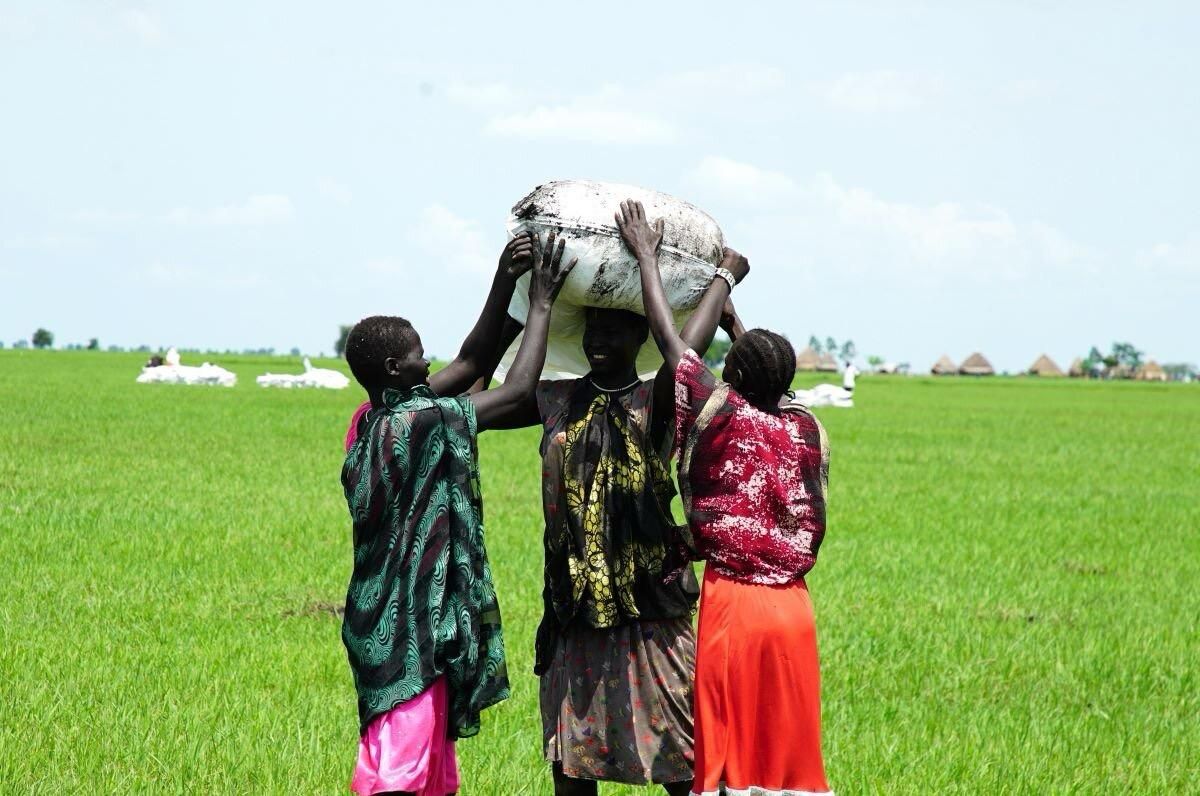
JUBA, South Sudan — As conflict and hunger tighten their deadly grip on parts of South Sudan, the United Nations World Food Programme (WFP) has begun airdropping emergency food assistance to some of the country’s most remote and desperate communities. The operation, launched in Upper Nile State, aims to stave off looming famine for tens of thousands forced from their homes since violence surged in March.
For over four months, fighting has cut off access to Nasir and Ulang counties, where more than 40,000 people now teeter on the brink of starvation. These isolated areas can only be reached by air, a costly and logistically challenging method of delivery.
“The link between conflict and hunger is tragically clear in South Sudan and we’ve seen this over the past few months in Upper Nile,” said Mary-Ellen McGroarty,
WFP Country Director in South Sudan, in a statement. “Without a major scale-up in assistance, the counties of Nasir and Ulang risk slipping into full-blown famine. We urgently need to get food to these families, and we are doing everything possible to reach those who need it most before the situation spirals.” (Source: WFP)
Since March, clashes have displaced thousands, with some families crossing into neighbouring Ethiopia in search of safety and food. WFP is supporting around 50,000 people who have fled Upper Nile for Ethiopia.
Across Upper Nile alone, more than one million people are now facing acute hunger. Alarmingly, over 32,000 of them are experiencing Catastrophic levels of food insecurity, classified as IPC Phase 5, the most severe category that indicates famine conditions. According to WFP, this number has tripled in just a few months as violence disrupts livelihoods and aid delivery.
WFP’s goal is to reach 470,000 people in Upper Nile and neighbouring Northern Jonglei during the lean season, which runs through August and is the hungriest time of year. Yet ongoing fighting and blocked river routes have made this monumental task even harder. So far, the agency has managed to reach only 300,000 people in Upper Nile this year.
The blocked waterways are particularly concerning. They are the most cost-effective supply routes to deliver large volumes of food to communities along the Nile and into Northern Jonglei. With 1,500 metric tonnes of food pre-positioned, WFP says these stocks can be shipped quickly if the river routes reopen.
“Where we have been able to consistently deliver, we’ve seen real progress,” McGroarty said.
“In the first half of this year, we pushed back catastrophic hunger in areas of Jonglei State through regular deliveries of food assistance, and we can do the same in Upper Nile. But if we can’t get the food to people, hunger will deepen and famine is a real and present threat.” (Source: WFP)
Nationwide, South Sudan’s hunger crisis remains dire. Some 7.7 million people over half the country’s population are facing crisis, emergency or catastrophic levels of food insecurity. An unprecedented 2.3 million children are at risk of malnutrition.
The crisis is being compounded by a sharp global funding slowdown. Due to budget constraints, WFP has had to prioritise assistance for only the most vulnerable 2.5 million people, often with reduced rations. This covers just 30 per cent of those in acute need. To maintain life-saving operations until the end of the year, WFP urgently requires an additional US$274 million.
The humanitarian stakes could not be higher. If funding and access do not improve, communities already battered by conflict and displacement face the prospect of full-scale famine.
Founded in 1961, the World Food Programme is the world’s largest humanitarian agency, working to save lives in emergencies and using food assistance to foster peace and resilience among communities recovering from conflict, disaster and climate shocks.
Read Also: The Voice of Africa is Now Inside the United Nations