
Starvation and Siege: Number of Severely Malnourished Children Doubles in North Darfur as Crisis Spirals Across Sudan
Written By Maxine Ansah

|
Getting your Trinity Audio player ready...
|
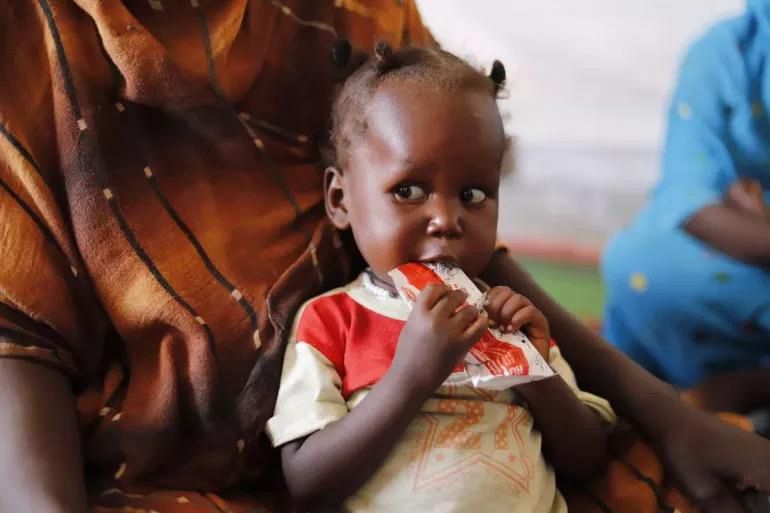
PORT SUDAN – A devastating nutrition crisis is unfolding across Sudan’s conflict-ravaged Darfur region, as new data from the United Nations Children’s Fund (UNICEF) reveals a 46 per cent surge in children being treated for severe acute malnutrition (SAM) between January and May 2025 compared to the same period last year. In North Darfur alone, over 40,000 children have been admitted for treatment, twice as many as during the first five months of 2024.
Across Darfur’s five states, the situation has reached deeply alarming levels. According to the most recent Standardised Monitoring and Assessment of Relief and Transitions (SMART) surveys conducted between April and May 2025, 9 out of 13 surveyed localities reported acute malnutrition rates exceeding emergency thresholds set by the World Health Organization (WHO). Particularly concerning is Yasin locality in East Darfur, where the global acute malnutrition (GAM) rate hit 28 per cent in May. If it rises to 30 per cent, it will meet one of three critical criteria used to declare famine.
“Children in Darfur are being starved by conflict and cut off from the very aid that could save them,” said Sheldon Yett, UNICEF Representative for Sudan. “Even before the lean season fully takes hold, these numbers are dangerously high and will likely worsen without swift humanitarian action. This is a moment of truth; children’s lives depend on whether the world chooses to act or look away.”
The crisis is not confined to Darfur. UNICEF reports that SAM admissions have increased by over 70 per cent in North Kordofan, by 174 per cent in Khartoum State, and by an astonishing 683 per cent in Al Jazirah State. While these figures partly reflect improved access to health services due to better security in some areas, the underlying reality remains stark: malnutrition rates are soaring amid widespread displacement, disease outbreaks and collapsing healthcare infrastructure.
Since April, conflict in North Darfur – especially around Al Fasher and Zamzam camp – has intensified dramatically. Hospitals have been bombed, entire neighbourhoods besieged and roads blocked. Aid convoys have faced attacks and looting, severely restricting humanitarian access. Supplies of ready-to-use therapeutic food (RUTF) in Al Fasher are now depleted, and health facilities in and around Zamzam have closed.
The scale of displacement adds to the crisis. In April alone, around 400,000 people fled Zamzam, many walking up to 70 kilometres to Tawila. Tawila is now overwhelmed, hosting over 500,000 displaced people who shelter in public buildings or sleep in the open with little access to food, water or sanitation. Poor sanitation and overcrowding are fuelling the spread of cholera and other life-threatening diseases, putting already malnourished children at even greater risk.
Severe acute malnutrition, also known as severe wasting, is the deadliest form of malnutrition. Children suffering from SAM are highly vulnerable to infections and complications that can quickly become fatal if they do not receive immediate and appropriate care.
UNICEF and partners continue to provide lifesaving assistance, including medical treatment, nutrition services, water supply and food distribution. Yet the violence and insecurity continue to create new needs faster than aid organisations can respond.
UNICEF is calling urgently for all parties to the conflict to allow rapid, safe and unhindered humanitarian access across Darfur and the Kordofans. The agency is also appealing to the international community to fully fund the humanitarian response, ensure supply chains for therapeutic food and medical supplies remain uninterrupted, and step up diplomatic efforts to end the violence. UNICEF estimates it needs an additional US$ 200 million this year to sustain and expand essential nutrition services for children, including the treatment of SAM.
Without immediate and coordinated action, the threat of famine in parts of Sudan could soon become a devastating reality, leaving millions of children’s lives hanging in the balance.