

|
Getting your Trinity Audio player ready...
|
In an unprecedented development, the United States emerged as a net exporter of crude oil to Nigeria in both February and March of this year, according to a recent analysis by the U.S. Energy Information Administration (EIA). Historically, Nigeria has been a consistent supplier of crude to the U.S. ranking ninth among U.S. oil import sources as recently as 2024 but for the first time, U.S. exports to Nigeria outpaced imports during this period.
What Drove the Shift?
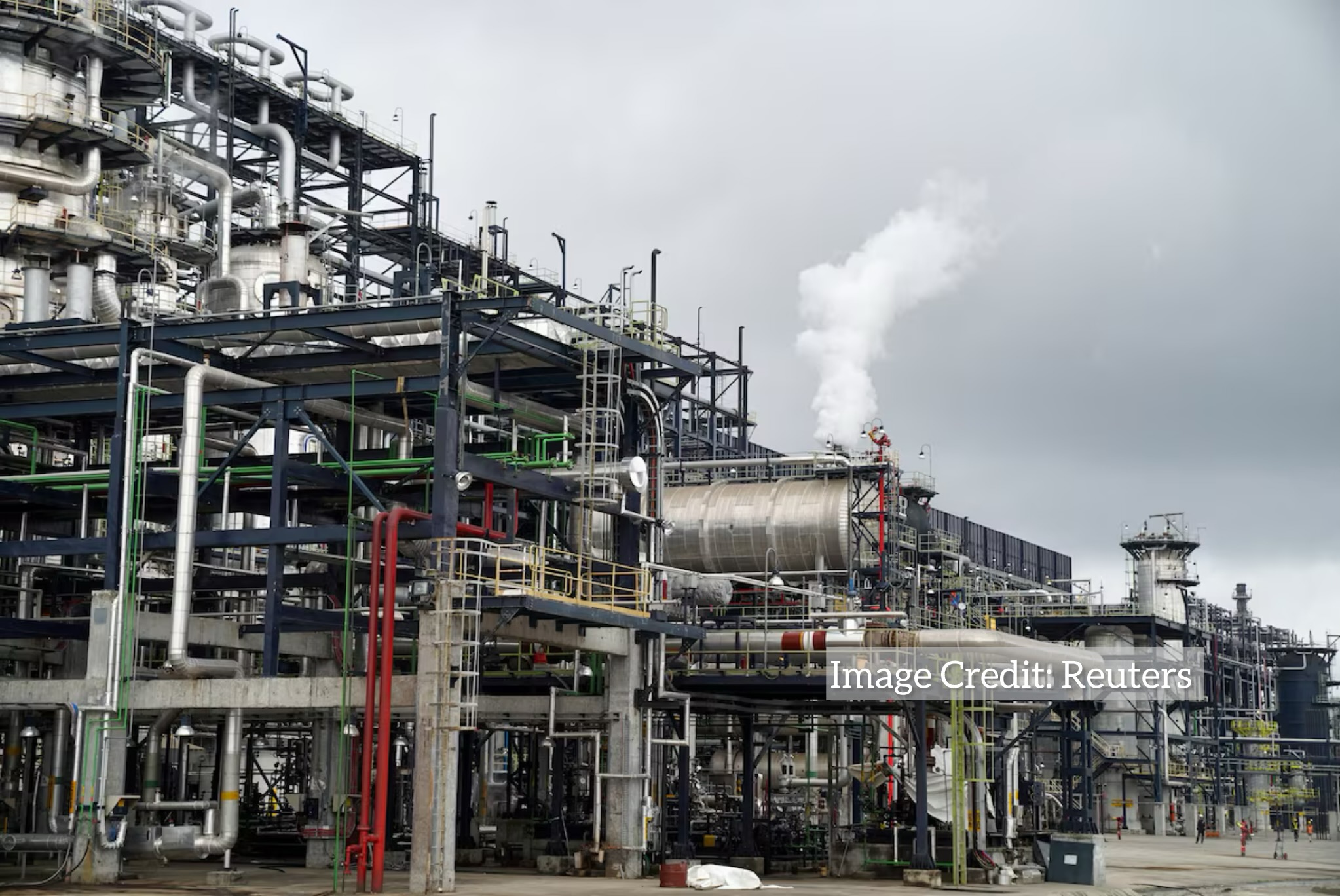
Two primary factors contributed to this historic reversal. First, maintenance shutdowns at the Phillips 66 Bayway refinery in New Jersey caused a notable reduction in U.S. East Coast crude demand. With Bayway’s processing capacity offline, U.S. export volumes found their way to alternative markets, including Nigeria. Second, Nigeria’s own refining capacity has surged with the start-up of the Dangote Refinery on Lagos’s outskirts in January 2024. As Africa’s largest single-site refinery, Dangote ramped up its intake of crude feedstock creating fresh demand for U.S. grades.
By the Numbers
• U.S. Exports to Nigeria: Climbed from minimal levels to 111,000 barrels per day (b/d) in February and 169,000 b/d in March.
• U.S. Imports from Nigeria: Fell from 133,000 b/d in January to 54,000 b/d in February and 72,000 b/d in March.
• Dangote Refinery Capacity: Set to reach its full 650,000 b/d nameplate capacity by year-end, reinforcing Nigeria’s role as a major refining hub.
Market Experts Weigh In
Eli Tesfaye, a senior market strategist at RJO Futures, cautioned that this trend likely reflects temporary market fluctuations rather than a lasting realignment.
“Refinery maintenance and new projects can cause significant but short-lived trade flow shifts,” he noted.
Giovanni Staunovo, an analyst at UBS, echoed this view, suggesting that as Bayway returns to service and Dangote explores a wider slate of crude grades, the U.S.–Nigeria crude balance may normalize.
Implications for Global Trade
This episode underscores the increasingly interconnected nature of global oil markets. Refinery outages in one region can redirect trade flows thousands of miles away, while new refining capacity, like Dangote’s facility can quickly reshape traditional supply chains. For Nigeria, the shift highlights the strategic value of domestic refining: reducing reliance on imported fuel products and positioning the country as a regional energy hub.
Looking Ahead
As the Bayway refinery completes its maintenance in April and Dangote undergoes its own minor service interruptions, both U.S. and Nigerian trade volumes are expected to adjust. Long-term patterns will depend on refinery reliability, crude price differentials, and decisions by the Dangote complex to source a broader array of crude benchmarks. For now, the U.S.’s brief stint as a net crude supplier to Nigeria illustrates the agility of energy markets and the potent impact of new refining capacity in Africa.
Source: Reuters