

|
Getting your Trinity Audio player ready...
|
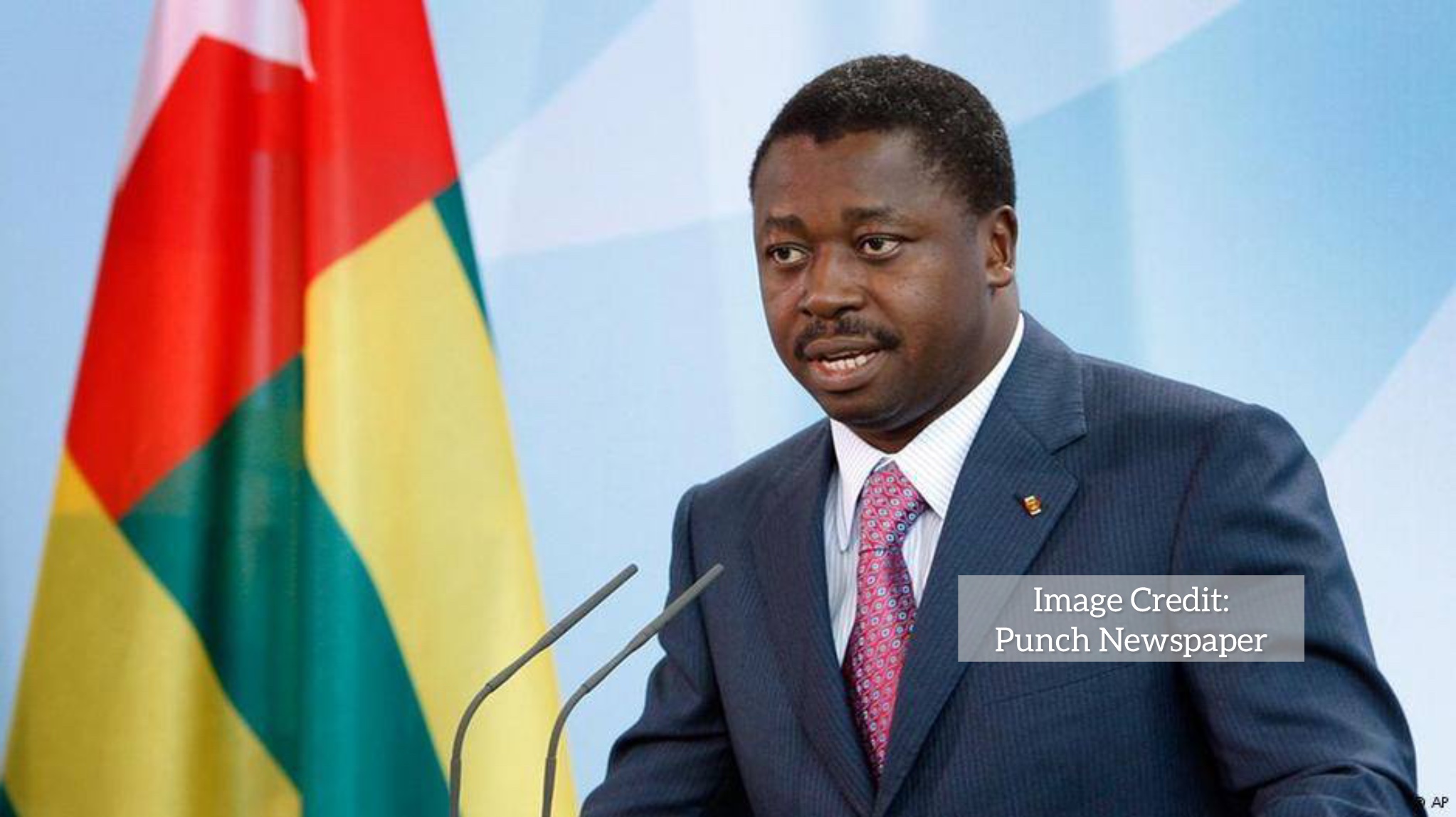
Togo is experiencing a surge of unrest and public dissatisfaction following the sudden adoption of a controversial new constitution that effectively entrenches the Gnassingbé family’s decades-long grip on power. At the heart of the storm is President-turned-Prime Minister Faure Gnassingbé, who has leveraged a constitutional shift to consolidate authority under the guise of parliamentary reform, a move that critics say eliminates presidential term limits without democratic consultation.
A Dynasty Rebranded
Under the revised constitution, executive powers have now been transferred from the presidency to the office of the prime minister. Faure Gnassingbé, who has been president since 2005, stepped down from the ceremonial presidency only to assume the newly strengthened premiership in May 2025. This change has been widely seen as a strategic maneuver to extend his reign without the burden of running for re-election.
The presidency, now largely symbolic, was handed to Jean-Lucien Savi de Tové, an 86-year-old former minister. Meanwhile, Faure’s political party, Union pour la République (Unir), maintains an overwhelming majority in parliament, aided by electoral districting that disproportionately favors the pro-regime northern regions, marginalizing opposition-heavy areas in the south.
Voices of Dissent from the Streets, Not the Polls
The boldest resistance to the new political setup has not come from traditional opposition parties, which were largely crushed in recent local elections, but from the nation’s youth. Bloggers, rappers, poets, and online influencers have emerged as the new face of opposition. Their discontent has sparked waves of street protests in Lomé and other cities.
Musician and outspoken regime critic Essowe Tchalla, known by his stage name Aamron, became a flashpoint for national outrage. After releasing a satirical video critical of Gnassingbé, he was abducted by security forces and later appeared in a bizarre video from a psychiatric hospital, claiming he had mental health issues and apologizing to the prime minister. After his eventual release without charge, Aamron disowned the video, fueling further public anger.
Another key figure, poet Honoré Sitsopé Sokpor, alias Affectio, has also been jailed, his arrest in January becoming a symbol of the regime’s crackdown on artistic dissent.
Brutality and Suppression
At least five people have died in clashes with security forces in recent weeks, and several others have disappeared. Human rights organizations report arbitrary arrests, with young men, including bystanders, swept up in mass detentions. Armed pro-government vigilantes have been observed roaming Lomé in pickup trucks, further exacerbating public fear.
The international community, largely distracted by global crises in Gaza and Ukraine, has remained silent. Regionally, the Economic Community of West African States (ECOWAS) has also avoided confrontation, possibly wary of provoking further instability after losing three member states Mali, Burkina Faso, and Niger to military rule.
Notably, the new constitution was passed swiftly in early 2024 without a public referendum. Shortly afterward, parliamentary elections were held in breach of ECOWAS’s own protocol, which requires a six-month delay after constitutional changes before major elections can be held.
Youth-Driven Movements and the Rise of M66
The cultural and digital space has become the epicenter of resistance. A new wave of activism, largely online, is coalescing around the #FaureMustGo hashtag and the M66 Movement, named after Gnassingbé’s June 6 birthday. This campaign, driven by young urban Togolese, calls for a democratic reset and end to the dynastic rule that has governed Togo for nearly 60 years, first under Faure’s father, Gnassingbé Eyadéma, and now under him.
What makes this wave unique is its independence from traditional political structures. Many Togolese no longer trust established political parties, which have failed to mount a meaningful challenge. The 2020 presidential election gave a glimpse of hope when opposition candidate Agbeyomé Kodjo, backed by the late Archbishop Philippe Kpodzro, performed unexpectedly well, but both figures have since passed away, leaving a vacuum now filled by artists and activists.
A “Republican Monarchy”?
Togolese critics and West African commentators have described the current governance system as a “republican monarchy”, a legal façade designed to preserve power in the hands of one family. Others have called it “legalist authoritarianism,” a term that underscores the regime’s reliance on constitutional manipulation to maintain its dominance.
The government has defended the 2024 election and the constitutional changes. Gilbert Bawara, Minister of Civil Service and Labor, claimed that all major political actors participated in the process and accused exiled activists of stirring violence.
What Lies Ahead?
Togo’s political future appears uncertain. The regime seems intent on maintaining its grip through institutional control, security force intimidation, and suppression of free expression. Yet the rising cultural resistance decentralized, tech-savvy, and emotionally resonant is proving difficult to silence.
As the world looks elsewhere, Togo’s youth are sending a clear message: dynastic rule dressed in parliamentary garb is no longer acceptable. Whether this resistance leads to tangible reform remains to be seen, but what’s undeniable is the emergence of a new generation unwilling to remain silent in the face of authoritarian transformation.