

|
Getting your Trinity Audio player ready...
|
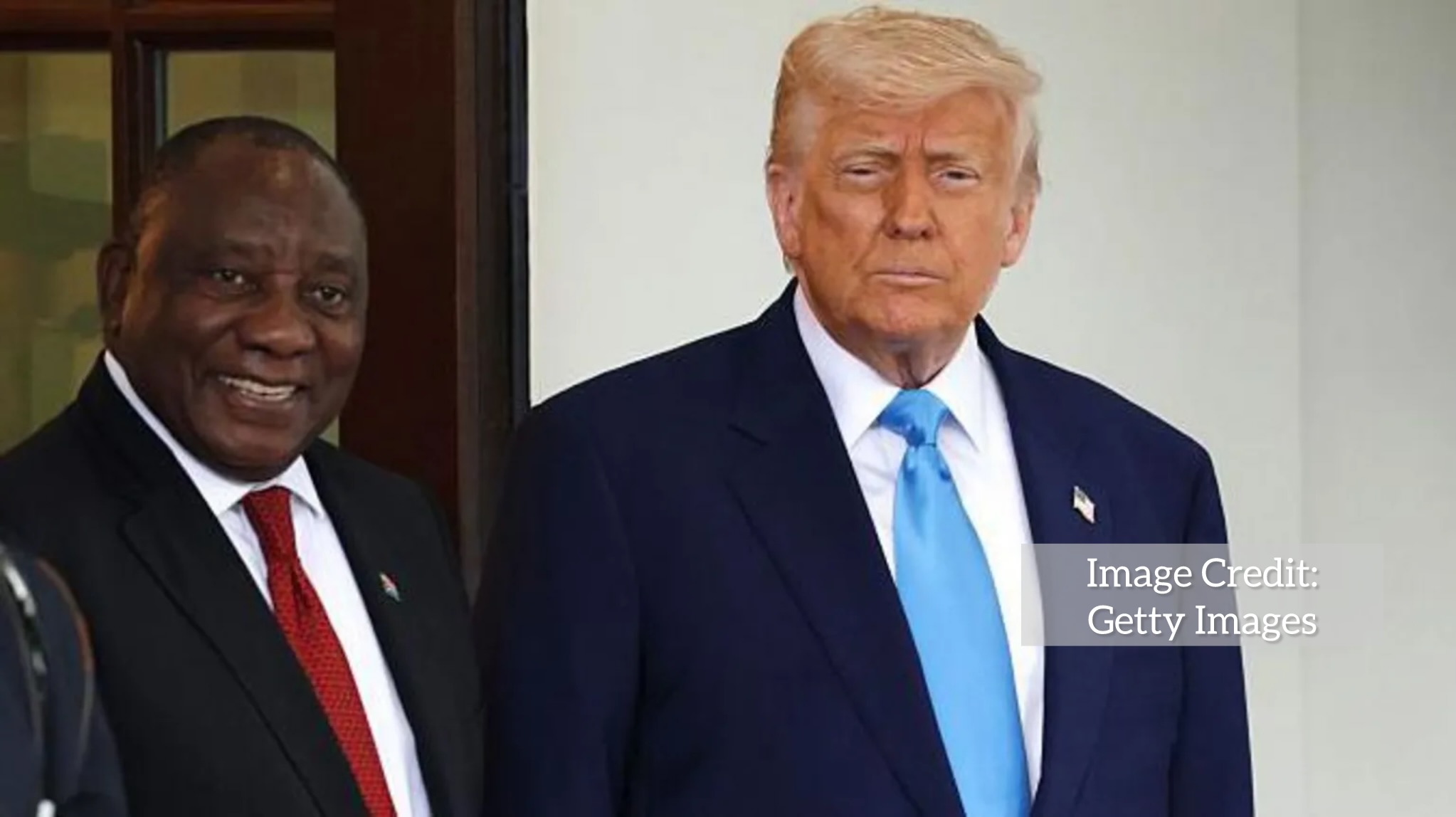
U.S. President Donald Trump has unveiled a sweeping trade policy that takes effect in August 2025, imposing a new 30 percent levy on all South African exports to the United States, the steepest duty of any sub‑Saharan country. The move represents a stark departure from existing trade norms, ending the preferential treatment long afforded under the African Growth and Opportunity Act (AGOA).
This new tariff is part of a broader restructuring of U.S.-Africa trade relations. While South Africa faces the full 30 percent rate, Nigeria is charged 14 percent and Ghana 10 percent, with those two countries receiving the lowest rates among key exporters. Lesotho, initially burdened with a threatened 50 percent rate, saw it reduced to the still-challenging level of 50 percent as of April; Zimbabwe has been assessed an 18 percent rate. Tunisia faces 25 percent, and both Algeria and Libya are now subject to 30 percent duties. Ethiopia and Kenya, by contrast, are among a broader group of African nations receiving the standard 10 percent minimum tariff.
The administration’s rationale is anchored in a two-tier “reciprocal tariffs” framework, introduced on April 2, 2025. A universal 10 percent base duty now applies to most imports, while higher, country-specific surcharges are levied according to what Trump’s team cites as trade imbalances or unfair treatment of U.S. exports. South Africa, for instance, was singled out as a “high surplus offender,” justifying the higher 30 percent rate.
For South Africa, the implications are profound. Products ranging from automobiles and vehicle parts to citrus, textiles and apparel previously benefited from duty-free access under AGOA, which allowed African exporters preferential entry into U.S. markets. That privilege effectively dissolved when the unilateral duties were imposed, months before AGOA’s scheduled September expiry. Trump’s executive orders also stand in direct tension with ongoing trade negotiations between Pretoria and Washington.
The economic impact is already visible. In May 2025, exports of autos bound for the U.S. plunged by more than 80 percent, according to the National Association of Automobile Manufacturers of South Africa (NAAMSA). That sector alone represents hundreds of thousands of jobs and more than 4 percent of national GDP. Citrus growers, garment manufacturers, and metal processors, all industries with major U.S. exposure, are bracing for cascading revenue losses and operational shutdowns. The South African Reserve Bank warns that up to 100,000 jobs may be at risk, and inflationary pressure could push annual CPI toward 6 to 7 percent.
President Cyril Ramaphosa immediately criticized the tariff, calling the White House’s 30 percent figure a “miscalculation” and arguing that nearly 80 percent of U.S. goods enter South Africa duty-free, with the average tariff on U.S. exports under 8 percent. He emphasized that much of the data used to justify the reciprocal rate misrepresents the volume and value of actual bilateral trade. While negotiations continue, Ramaphosa also said the government had submitted a “framework deal”, offering to open South African markets to U.S. liquefied natural gas and poultry in exchange for exemptions from the sweeping tariff regime.
Across the continent, leaders are responding with a mixture of pragmatism and concern. Kenya’s leaders welcomed their relatively lighter 10 percent tariff, seeing a potential lure for U.S. buyers shifting from higher-cost competitors, though cautioning that global recession risks and domestic constraints could undercut gains. Meanwhile, Lesotho’s garment sector, heavily reliant on U.S. contracts under AGOA, is in crisis, even after a temporary reduction to 50 percent was reversed. Factories producing for U.S. brands like Levi’s and Wrangler report cancelled orders and unemployment spikes. Zimbabwe, having unilaterally removed all tariffs on U.S. imports in a goodwill gesture, aims to stabilize trade relations and signal flexibility.
Beyond individual country fallout, the tariff rollout signals a broader shift away from multilateral trade norms, powered by executive order rather than negotiated treaties or WTO mechanisms. AGOA’s future is in jeopardy, and legal scholars and economists question the legality of invoking emergency powers under the International Emergency Economic Powers Act (IEEPA) to impose costs on countries with little recourse. Several businesses headed for U.S. court filings, and the U.S. itself faces potential trade litigation.
Despite the disruption, affected African states are accelerating strategic responses. Many are fast-tracking AfCFTA implementation to shift export flows within Africa and reduce U.S. dependency. Governments are also seeking to renegotiate bilateral trade and investment agreements with the European Union, China, India, and the Middle East. Analysts argue that this is not just a tariff hike—it is a regional tempter for long-overdue industrial diversification, infrastructure investment, and policy sovereignty.
In conclusion, the Trump administration’s introduction of a flat 30 percent tariff on South African exports has disrupted decades of U.S.–Africa trade relations and cast doubt on the future of preferential trade arrangements like AGOA. While South Africa faces the largest burden, many African economies are confronting structural shocks that expose vulnerabilities in trade dependence. Whether through diplomatic negotiation or regional integration, governments must chart new paths, shifting from dependency on unilateral tariffs to building resilience through diversification, value addition, and intra-African trade.