
A Cry for Change: Gambian Women Challenge Female Genital Mutilation from Within
Written By Maxine Ansah

|
Getting your Trinity Audio player ready...
|
BASSE, The Gambia – For generations, the practice of female genital mutilation (FGM) has been woven into the fabric of Gambian society, handed down from mother to daughter like a rite of passage. At 55, Hulay Damba knows this all too well. She spent years carrying out the procedure on young girls, a role passed down from her grandmother.
“It was what I was taught,” she said. For her, and for many other women, FGM was not only normal but considered honourable. It brought seasonal income and a sense of prestige within the community. Yet behind it lay silent pain, lasting health complications and stories of survival that continue to haunt the country’s women and girls.
Despite years of advocacy, FGM rates remain stubbornly high. Data from 2021 reveals that nearly three quarters of girls aged 15 to 19 in The Gambia have been subjected to FGM, mirroring the proportion of women aged 45 to 49. A survey of mothers adds more troubling details: while 54 per cent of women with daughters under 25 reported that their daughters had not been cut, 22 per cent admitted that their girls had undergone FGM before their first birthday.
Breaking the silence
Most FGM procedures in The Gambia involve the cutting away of flesh. Around 12 per cent of cases go further, with girls being sewn closed. Almost all are performed by traditional practitioners like Ms. Damba. For years, she believed she was protecting her community’s honour. But six years ago, her perspective changed after attending community dialogues led by the NGO Tostan, with support from the Italian Agency for Development Cooperation through UNFPA. There, she learned about the devastating consequences of FGM: haemorrhage, infection, infertility, complications in childbirth and even death.
“Looking back, I wish I had known then what I know now,” she reflected. Today, Ms. Damba has turned her voice to advocacy, joining a grassroots movement of former practitioners, mothers and young people determined to end the practice. “Every girl deserves to grow up safe and whole,” she said.
Struggles in childbirth
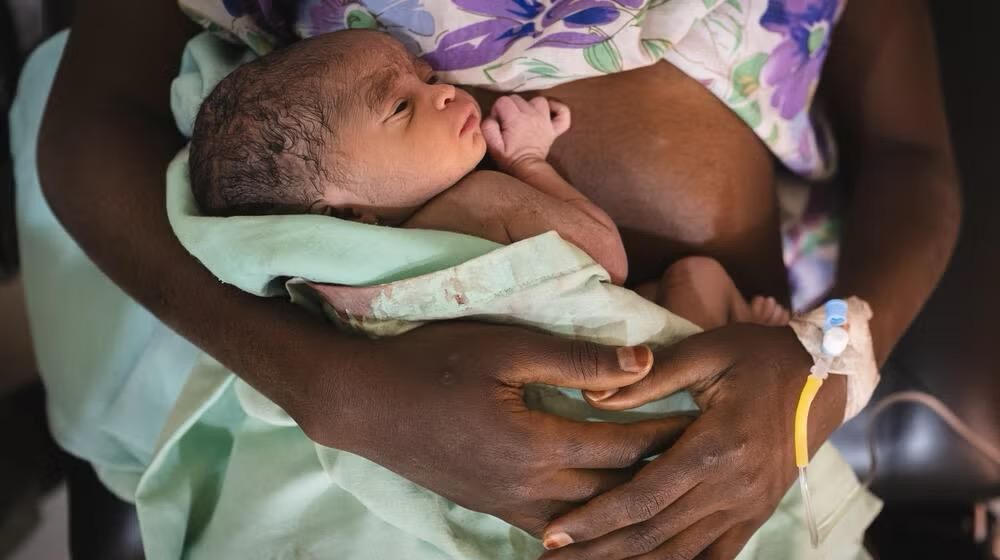
The consequences of FGM often reveal themselves most acutely in the delivery room. At Basse District Hospital, 16-year-old Fatou* clutched her newborn daughter after a harrowing birth. Having been subjected to FGM herself, her labour was obstructed by scar tissue, threatening both her life and her child’s. Thanks to a trained midwife, both survived.
The hospital is part of a UNFPA-supported programme, funded by the Italian Agency for Development Cooperation and China Aid, which equips health providers with specialised training to treat FGM complications. Such initiatives are vital, yet they represent only part of the solution.
The fight for progress
FGM has been banned in The Gambia since 2015. Yet the struggle to end it is far from over. In 2024, lawmakers attempted to legalise the practice once again, a move that was ultimately unsuccessful but underscored the fragility of progress.
According to Fatou Baldeh, founder of Women in Liberation and Leadership, the persistence of FGM reflects entrenched gender inequality. “Women remain both victims and enforcers of a deeply violent tradition,” she explained. “They are products of a system that teaches from birth that pain and sacrifice are intrinsic to womanhood. What is needed are efforts to dismantle the structures that pressure women into performing this act.”
Her words highlight the dual role women often play in the continuation of FGM. While they endure its physical and emotional scars, many also perpetuate it, driven by cultural expectations, religious interpretations and fear of social exclusion.
A new generation rising
Despite the challenges, hope is emerging in the voices of young Gambians who are determined to end the cycle. Among them is 18-year-old Ramata Baldeh, who experienced FGM in her childhood. For her, the future must be different.
“If I have a daughter one day, I will never allow her to go through the same thing,” she said. “I want her to go to school, to dream, to choose her path.”
Her conviction reflects a growing shift, especially among younger generations who view education, empowerment and autonomy as the true markers of womanhood.
The path to ending FGM in The Gambia is long and fraught with resistance. Yet with the combined efforts of survivors, former practitioners, health workers and advocates, the possibility of a future where no girl faces the blade grows stronger every day.
Name changed for privacy and protection
Read Also: The Voice of Africa is Now Inside the United Nations