
Trapped in Hunger and Fear: Sudan’s Children Struggle After 500 Days Under Siege
Written By Maxine Ansah

|
Getting your Trinity Audio player ready...
|
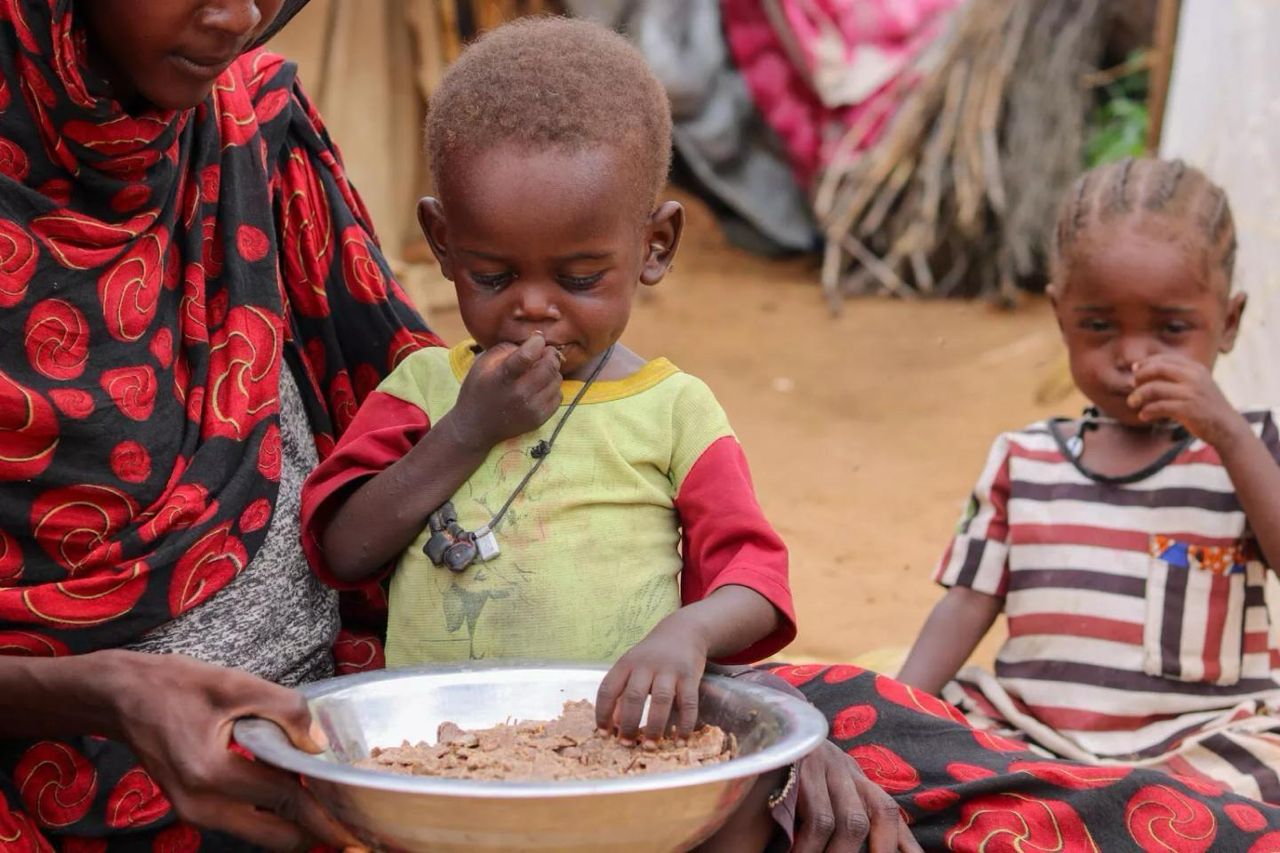
For 500 days, the city of Al Fasher in Sudan’s North Darfur has been under siege, leaving children facing a relentless crisis of starvation, disease, and deadly violence. Once a centre of refuge for those fleeing war, the city has now become the epicentre of suffering, with entire families cut off from lifesaving aid.
At least 600,000 people have been displaced from Al Fasher and surrounding camps in recent months, half of them children. Inside the city, an estimated 260,000 civilians remain trapped, including 130,000 children who are living in desperate conditions without access to essential supplies for more than 16 months.
“We are witnessing a devastating tragedy. Children in Al Fasher are starving while UNICEF’s lifesaving nutrition services are being blocked,” said UNICEF Executive Director Catherine Russell. She described the denial of humanitarian access as a grave violation of children’s rights, warning that lives are hanging in the balance.
The toll on young lives is staggering. Since the siege began in April 2024, more than 1,100 grave violations against children have been verified. Over 1,000 have been killed or maimed, many while sheltering in their homes, displacement camps, or local marketplaces. Reports confirm that at least 23 children have been subjected to rape, gang rape, or sexual abuse. Others have been abducted, recruited, or forced into service by armed groups. UNICEF and other agencies believe the real numbers are far higher, as access restrictions make verification difficult.
Violence continues to devastate families. Just this week, seven children were reported killed in an attack on the Abu Shouk Internal Displacement Camp on the city’s outskirts. Such assaults have left survivors traumatised and communities increasingly vulnerable.
The blockade enforced by the Rapid Support Forces has crippled health services. Supplies have run out, forcing health facilities and mobile nutrition teams to shut down. Around 6,000 children suffering from Severe Acute Malnutrition (SAM) are left without treatment. Without therapeutic food and urgent medical support, these children face a sharply increased risk of death.
Hospitals and schools have also come under repeated attack. Thirty-five hospitals and six schools have been struck, among them Al Fasher Saudi Maternal Teaching Hospital, which has been hit more than ten times. Shelling in January destroyed the therapeutic health centre at Abu Shouk camp, stripping thousands of children of essential treatment.
Malnutrition is spreading rapidly. Since January alone, over 10,000 children in Al Fasher have been treated for SAM, nearly double the figure from the previous year. However, depleted supplies have halted these efforts, with reports indicating that at least 63 people, mostly women and children, died from malnutrition in just one week.
Beyond Al Fasher, the crisis is spreading. In July, Mellit locality, which has absorbed large numbers of displaced people, recorded an acute malnutrition rate of 34.2 per cent, the highest since the war began in April 2023.
As hunger deepens, disease is compounding the misery. Sudan is facing its worst cholera outbreak in decades. Since July 2024, there have been more than 96,000 suspected cases and 2,400 deaths nationwide. In Darfur alone, nearly 5,000 cases and 98 deaths have been recorded. Children weakened by hunger are particularly vulnerable, especially in overcrowded displacement camps such as those in Tawila, Zamzam, and Al Fasher.
UNICEF is urgently appealing for access and resources to reach those most in need. The agency has called on the Government of Sudan and all other parties to ensure safe, unimpeded humanitarian access. It is pushing for a sustained humanitarian pause in Al Fasher and other conflict-affected areas, alongside protection of civilians and infrastructure under international humanitarian law.
To help combat the cholera outbreak, UNICEF requires an additional US$30.6 million to fund health, water, hygiene, sanitation, and awareness programmes. The organisation is working with the World Health Organization and other partners to deliver more than 1.4 million oral cholera vaccines, coordinating procurement, cold chain logistics, and community mobilisation to protect vulnerable populations.
For the children of Al Fasher, the situation remains urgent. Without immediate humanitarian access, thousands face the prospect of starvation, disease, and further violence. The international community’s response in the coming days may determine whether they survive.