
Building Resilience: How Malawi is Harnessing Innovation and Community Action to Strengthen Early Warning Systems
Written By Maxine Ansah

|
Getting your Trinity Audio player ready...
|
Malawi is stepping up its fight against climate shocks with an ambitious plan to strengthen its early warning systems and build resilience at every level of society. Combining national policy reforms with community-driven solutions, and cutting-edge technology with local knowledge, the country is seeking to protect lives and livelihoods from the escalating threats of climate change.
Recurring floods, droughts and storms have already left their mark on Malawi’s economy, with projections suggesting that climate shocks could reduce the country’s GDP by as much as 16 per cent by 2050 if decisive action is not taken. Addressing participants at the opening of the Climate Risk and Early Warning Systems (CREWS) Malawi Partner Coordination and Stocktaking Meeting, the Principal Secretary of the Ministry of Environment and Climate Change, Dr Yusuf Mkungula, stressed that partnerships were key to achieving success. “Strengthening coordination and partnerships is essential for delivering effective and sustainable early warning and climate services,” he said.
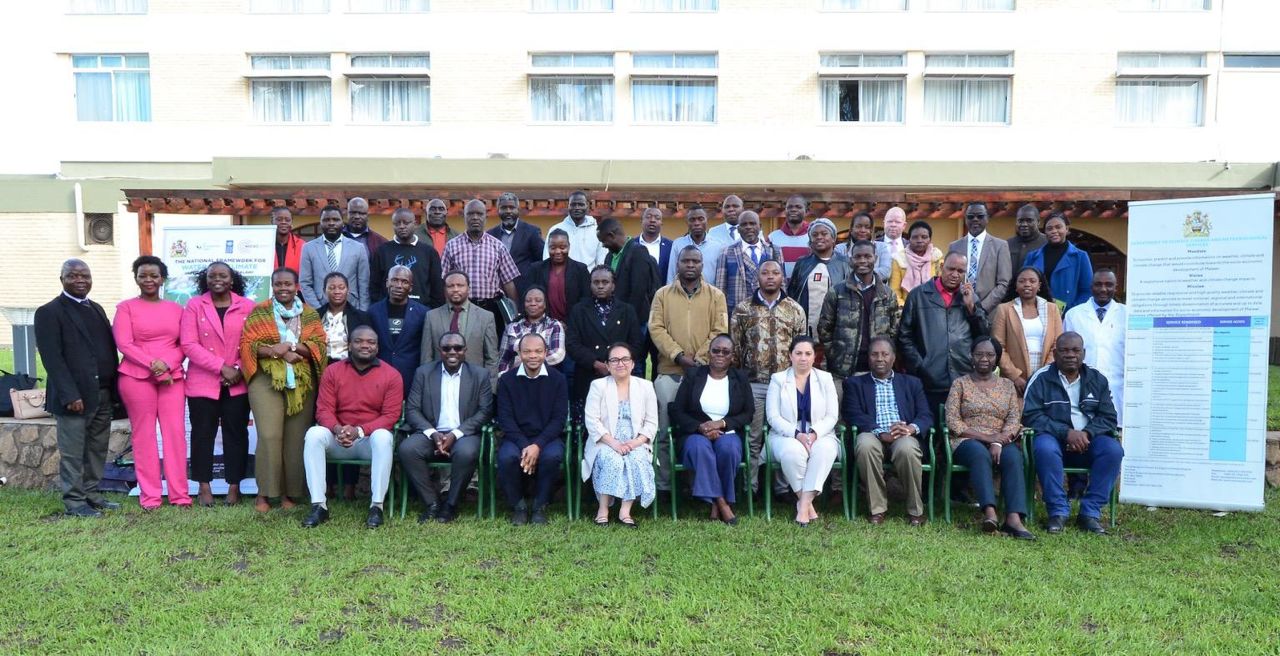
The two-day meeting, organised by the World Meteorological Organization (WMO) in collaboration with the World Bank and partners, drew over 100 representatives from government ministries, development agencies, international organisations, NGOs, academia and civil society. Participants also visited Zomba and Mzuzu to witness how CREWS investments are translating into real-life benefits for vulnerable communities.
Policy reforms at a pivotal moment
Malawi is advancing several significant reforms. The Meteorological Bill is under review, the Department of Climate Change and Meteorological Services (DCCMS) is finalising its Strategic Plan, and a new Climate Policy is being drafted. These developments complement the operationalisation of the Disaster Risk Management Act, together forming the foundation for Malawi’s ambition to achieve “Early Warnings for All” by 2027. This goal is centred on ensuring every citizen has access to timely and actionable information that can safeguard lives.
According to WMO Representative Joshua Ngaina, recent progress includes the operationalisation of ENACTS Maprooms, the deployment of WIS2Box, and the development of a gender and child-sensitive National Framework for Climate and Water Services (NFWCS). This framework is designed to strengthen community-based, gender-responsive early warning systems.
For the World Bank, Catalina Marulanda emphasised the importance of supporting DCCMS in its Strategic Plan for 2025–2030, which will place inclusivity at the core of climate and weather services.
Challenges and opportunities
Despite progress, Malawi still faces serious infrastructure gaps. Out of 100 weather stations nationwide, only 28 are fully operational. DCCMS Director Lucy Mtilatila estimates that $63 million will be needed to fully implement the National Framework for Water and Climate Services. Yet, a preliminary cost-benefit analysis suggests that every dollar invested in meteorological services could yield up to $14 in returns, highlighting the value of prioritising investment in this area.
At the same time, technological advances are beginning to transform how Malawians receive weather information. The bilingual Zanyengo weather app is expected to widen public access to forecasts. It draws on strengthened observation networks, ICT platforms such as the Climate and Weather Information System, and localised dissemination channels, including community radios, SMS alerts and village committees.
Dr Mtilatila also noted a surge in public interest in weather services. The DCCMS Facebook page has attracted more than 50,000 followers, with a goal of reaching half a million within five years. “This reflects the growing public interest in receiving timely weather information,” she explained.
Technology meets local action
Innovation is not limited to mobile apps. A new Artificial Intelligence pilot project funded by CREWS is deploying an AI-based Weather Prediction system to improve the accuracy and timeliness of forecasts. Yet technological solutions are being closely integrated with community-led resilience strategies.
In Mzuzu, residents have used knowledge from risk awareness training to build drainage systems that protect homes from flooding. Disaster Risk Management Committees (DRMCs) have implemented contingency plans, developed risk maps, and received training in search and rescue operations. Equipped with PPE, torches and emergency tools, these committees are reducing flood-related fatalities and ensuring preparedness reaches even the most vulnerable.
Block leaders have emerged as vital links in delivering last-mile warnings. By combining word-of-mouth networks with instant messaging, they ensure that everyone, including people with disabilities, women and children, receives timely alerts.
“When the city council sends warnings, we receive them on WhatsApp and spread them to every household. Everyone knows who to call and where to go,” explained Prince Ngulebe, a DRMC member in Mzuzu.
In Zomba, village elder Mr Talipu described how communities are now better prepared: “Thanks to CREWS support, we now understand that we live in a dangerous area and know what to do in case of a disaster. We are better prepared and can help protect ourselves and members of our community.”
A way forward
Malawi’s determination to combine policy, innovation and community action is positioning the country as a leader in building resilience in the face of climate risks. While challenges remain, especially in infrastructure and financing, the progress seen in districts such as Mzuzu and Zomba demonstrates what can be achieved when local ownership meets global support.
The journey towards achieving Early Warnings for All by 2027 is ambitious. Yet if Malawi succeeds, it will not only protect its people but also provide a model for other nations grappling with the increasing volatility of a changing climate.