
A Fragile Hope: UNHCR Urges Global Support for Refugees Returning to DRC and Rwanda
Written By Maxine Ansah

|
Getting your Trinity Audio player ready...
|
The United Nations High Commissioner for Refugees, Filippo Grandi, has called for urgent international backing to support the safe and dignified return of refugees in the Democratic Republic of the Congo (DRC) and Rwanda. His appeal followed a week-long visit to both countries, where he underscored the importance of peace, stability, and sustained humanitarian assistance to enable displaced populations to rebuild their lives.
Speaking at the conclusion of his mission, Grandi stressed that voluntary return remains the most viable solution for many refugees in the region. He highlighted the significance of recent regional peace efforts, including the Washington agreement and the Doha peace process, both of which have recognised refugee issues as central to long-term stability. Grandi cautioned, however, that the true test of these agreements will be in their implementation, through tangible actions that foster security, investment, and sustainable community reintegration.
A rare sign of progress emerged on 25 August when 533 Rwandan refugees, mostly women and children, returned voluntarily from eastern DRC to Rwanda. The repatriation, which came just weeks after commitments made at the DRC-Rwanda-UNHCR Tripartite meeting in Addis Ababa, was hailed as an important step in confidence building and a sign of potential momentum in the peace process.
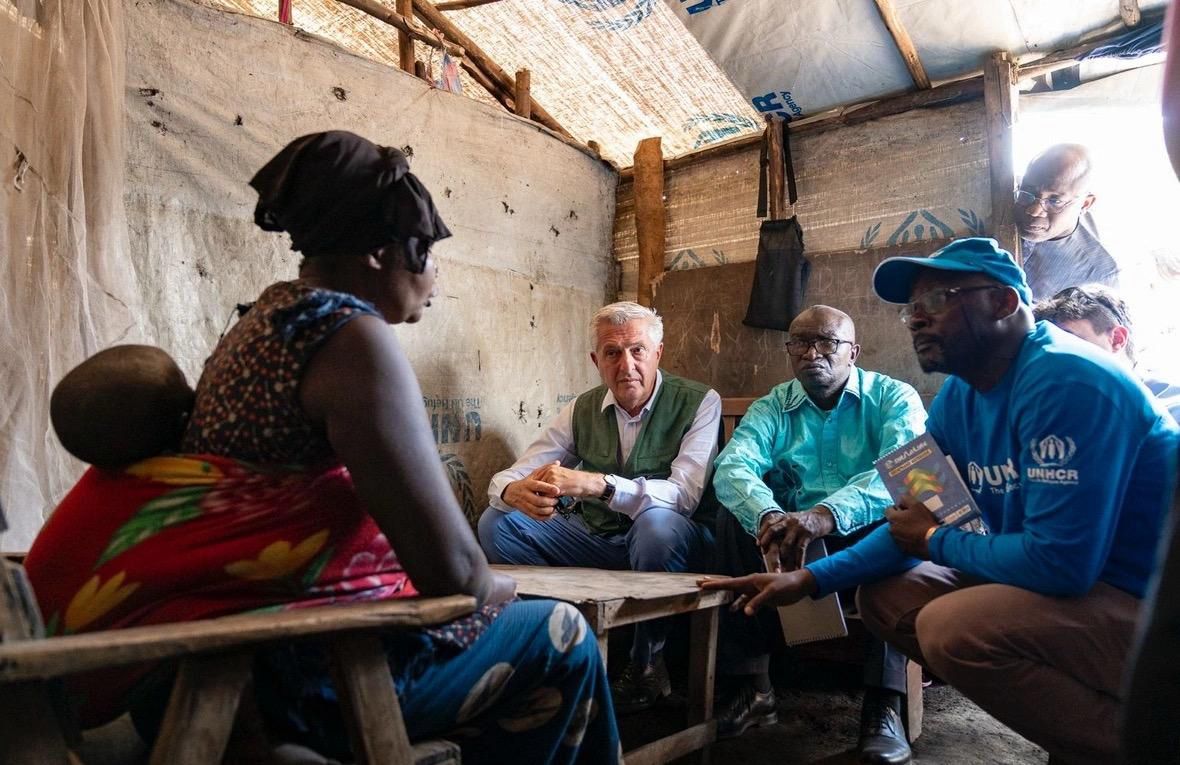
In Kinshasa, Grandi met with President Félix Tshisekedi, welcoming his commitment to facilitating safe returns and urging continued political will to sustain progress. He also visited Sake, near Goma, where he engaged with displaced families who had fled violence repeatedly over the years. Many expressed their desire for lasting peace and the opportunity to restart their lives, while highlighting the enormous obstacles they still face.
“For decades, the people of the Democratic Republic of Congo have endured conflict and repeated displacement. We hope the recent peace efforts will create an environment where unhindered humanitarian access is guaranteed, helping to reduce suffering and meet urgent needs. We also call on the international community to demonstrate stronger solidarity. Ending the cycle of violence and enabling communities to rebuild their lives is only possible through collective action,” Grandi said.
In Rwanda, the High Commissioner praised the government’s inclusive policies towards refugees. In his meeting with President Paul Kagame, he reaffirmed UNHCR’s readiness to work alongside Rwanda in advancing durable peace in the region. Grandi noted that Rwanda’s progressive approach has given displaced people opportunities to integrate, learn, and work, setting an example of what is possible when societies embrace refugees as contributors rather than burdens.
Looking forward, UNHCR has pledged to remain engaged in supporting voluntary repatriation under the tripartite framework, while also advocating for international solidarity and investment in communities recovering from displacement. Grandi’s visit underscored both the fragility and the promise of the current moment: the prospect of peace, if nurtured, could finally offer refugees and internally displaced people the chance to return home with dignity and security.