
Unequal Harvest: Report Uncovers Gender Gaps in Africa’s Agrifood Systems
Written By Maxine Ansah

|
Getting your Trinity Audio player ready...
|
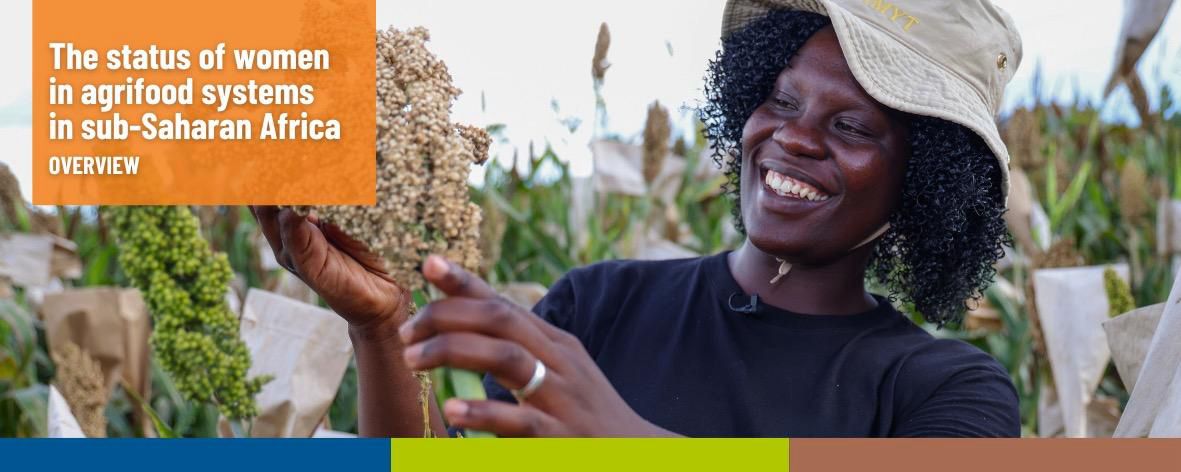
A new report has revealed the deep gender inequalities embedded in sub-Saharan Africa’s agrifood systems, despite women accounting for nearly half of the workforce that sustains the sector. The Status of Women in Agrifood Systems in Sub-Saharan Africa report, launched during the Africa Food Systems Forum in Dakar, underscores the urgent need for policies and investments that place women at the centre of transformation.
According to the report, three out of four working women in the region are employed in agrifood systems. Women represent 49 percent of the sector’s workforce, yet their contributions are too often undervalued and overlooked. Employment in off-farm segments such as processing, packaging and distribution has increased for women, rising from 21 percent in 2005 to 29 percent in 2022. However, their participation remains limited in critical areas that offer higher economic returns, such as transport, where women make up only 3 percent of the workforce.
The report also highlights that women in sub-Saharan Africa are widely recognised as carriers of culture, knowledge and social cohesion. Yet systemic barriers, including unequal access to land, water and forests, continue to undermine their potential. Data from 28 out of 33 countries show men are far more likely to own or hold secure rights to agricultural land, while women face significant challenges in securing resources essential for their livelihoods and well-being.
Women’s work within the sector is predominantly informal, with more than 90 percent of employed women engaged in informal roles. While they make up nearly three-quarters of the workforce in food processing and services, their labour is often linked to domestic or reproductive roles, which further restricts their influence and visibility.
“Women are powering agrifood systems through informal, domestic and subsistence work. However, they need more formal wage-paying jobs, and their livelihoods must be safeguarded through stronger social protection programmes,” said Abebe Haile-Gabriel, FAO Assistant Director-General and Regional Representative for Africa.
Food insecurity remains a pressing concern across the region, with around 64 percent of the population experiencing moderate or severe food insecurity in 2024. The report reveals that 11.2 million more women than men were affected. At the same time, almost 40 percent of women aged 15 to 49 live with anaemia. Alongside these challenges, occupational health risks in agrifood systems and the prevalence of gender-based violence further threaten women’s safety and wellbeing.
The report stresses that positive change is possible and already under way. Collective action around women’s land rights, efforts to combat gender-based violence, and women’s leadership in agroecological movements and natural resource governance are providing pathways to progress.
“Positive change already exists, directly addressing the inequalities faced by diverse women in the region. These changes can improve livelihoods and ensure women’s priorities are better represented in decision-making,” said Dr Lora Forsythe, Associate Professor in Gender, Inequalities and Food Systems at the Natural Resources Institute of the University of Greenwich.
Presenting the report in Dakar on behalf of FAO, NRI and AWARD, Dr Susan Kaaria, Director of African Women in Agricultural Research and Development, emphasised the transformative potential of gender-responsive action. “Achieving gender equality and empowering women in agrifood systems is both a moral imperative and an effective policy choice. It is key to social justice as well as unlocking inclusive growth, food security and climate resilience,” she said.
The report calls for gender-transformative approaches that not only improve women’s access to resources but also tackle the root causes of inequality. Greater investment in women’s empowerment and stronger recognition of their role in agrifood systems could deliver wide-ranging benefits for social justice, inclusive development and resilience against climate and economic shocks.