
Housing Futures at the Fore: UN-Habitat Charts a Bold Course at UNGA 80
Written By Maxine Ansah

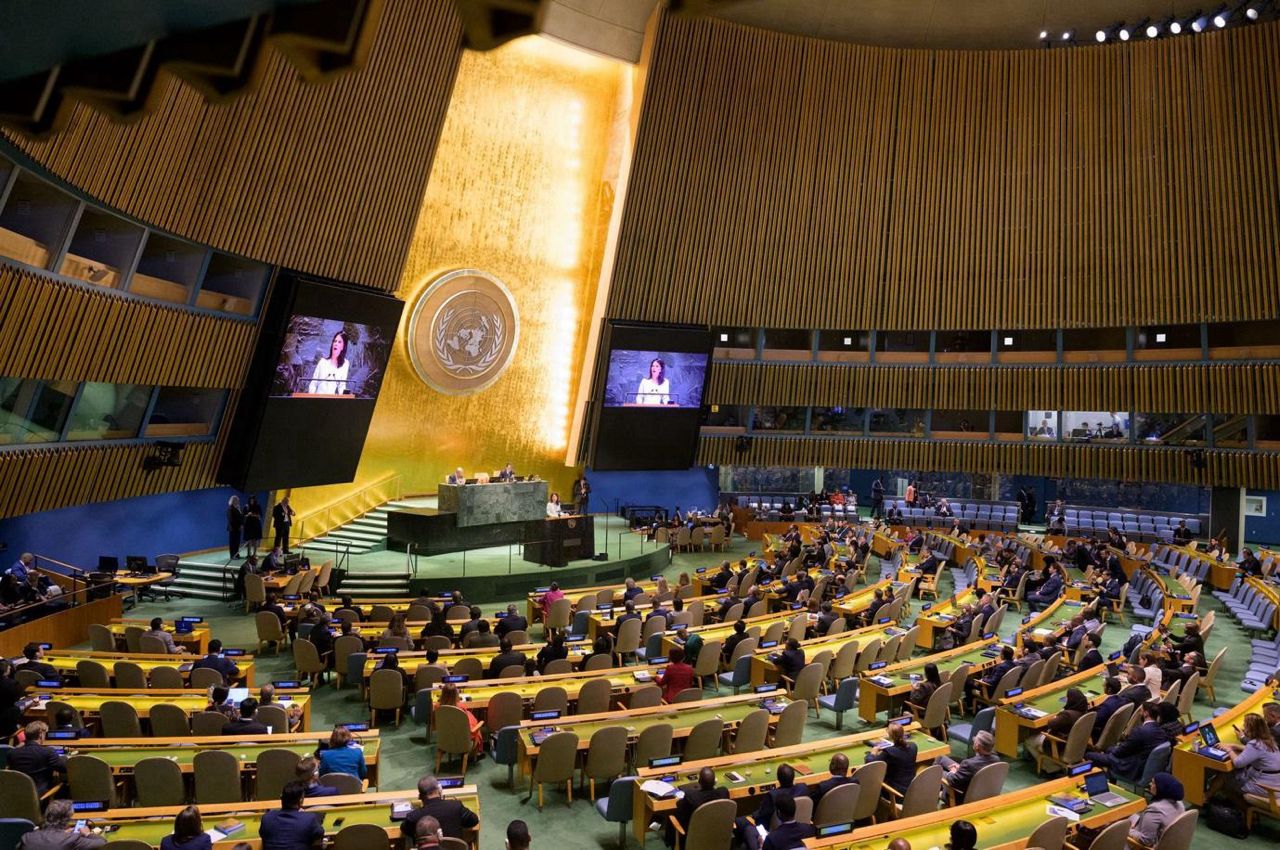
As the 80th Session of the United Nations General Assembly (UNGA 80) commenced on 9 September 2025, a chorus of global concern echoed from New York through capitals around the world: housing is no longer a background issue, but a linchpin for sustainable development. At the heart of UN-Habitat’s engagement this year lies a High-Level Roundtable on Adequate and Affordable Housing, held on 24 September and convened under the banner of the Global Champions for Adequate Housing. Co-hosted by the Kenyan government and UN-Habitat, the Roundtable invites heads of state, ministers, UN leadership, and international financial institutions to deliberate on ways to ensure that safe, adequate, and affordable housing becomes a reality for all.
The stakes behind “adequate and affordable housing”
Housing is widely recognised as a fundamental human right and arguably one of the most powerful levers for sustainable social transformation. Beyond providing shelter, it offers dignity, stability, and opportunity. Globally, the absence of adequate housing is tightly interwoven with poverty, inequality, health outcomes, and vulnerability to climate and disaster risks.
When households lack decent homes, they are more exposed to illness, forced displacement, limited access to education and services, and precarious livelihoods. Conversely, stable housing can be a gateway to financial inclusion, social mobility, and community resilience. In this sense, housing is not only an infrastructure challenge but a keystone of the Sustainable Development Goals—especially those relating to poverty reduction, gender equality, reduced inequalities, and sustainable cities.
Yet, for billions around the world, housing remains out of reach: exorbitant costs, insecure tenure, lack of basic services, and informal settlements persist. The challenge is not merely to build more, but to build better—with equity, sustainability, and rights at the centre.
UNGA 80 and the Global Champions Roundtable: what to expect
UN-Habitat’s presence at UNGA 80 is more than symbolic. Its agenda seeks to reposition housing at the heart of global priorities, to connect political will with programme practice, and to build bridges across institutions, sectors, and financing mechanisms.
The marquee event is the High-Level Roundtable of the Global Champions on Adequate and Affordable Housing, scheduled for 24 September. This inaugural gathering builds on Kenya’s leadership and the emergent Global Champions framework. The Roundtable is expected to shine a spotlight on:
- Shared learning and peer exchange, where governments can present successful housing models and challenges
- Political commitments and momentum, anchoring housing in national agendas and intergovernmental frameworks
- Innovative financing approaches, bridging public, private, and multilateral investments to scale affordable housing
- Collaborative partnerships, drawing in UN agencies, development banks, civil society, and the private sector
The event will culminate in a Call to Action — a document intended to crystallise shared goals, commitments, and pathways for collective progress on housing access.
The Kenyan government has played a pivotal role in hosting this inaugural edition and in championing the notion that housing is not just infrastructure but a foundation for dignity, prosperity, peace, and hope. President William Ruto has been honoured as a Global Champion of Adequate Housing, reinforcing Kenya’s bid to galvanise global leadership on the issue.
Why this moment is pivotal
Several dynamics make the timing of UNGA 80 and this housing Roundtable especially significant:
- Global political momentum
As UN member states gather and global agendas are renegotiated, the spotlight is brighter than ever. Housing must contend alongside climate, health, migration, and security—but its interconnections make it a powerful anchor.
- Financing crossroads
Traditional housing financing models are under strain. Interest rates, debt constraints, and competing demands challenge governments. The Roundtable offers an occasion to explore blended finance, risk-sharing, concessional lending, and equity tools that make affordable housing viable.
- Data, innovation, and urban resilience
Advances in monitoring, digital mapping, participatory planning, and climate-resilient design mean that housing need not repeat past mistakes. Evidence-based policies and innovations must find support at the highest levels.
- Sustainability and inclusion imperatives
Any new wave of housing must be green, accessible, and inclusive. That means attention to women, persons with disabilities, displaced populations, and peri-urban and rural linkages.
Toward a renewed global compact on housing
With the Roundtable, UN-Habitat aims to elevate housing from a sectoral issue to a global movement. It is not enough to build houses — we must build societies where no one lives in slums, where tenure is secure, and where communities thrive.
This year’s engagement offers several strategic pivots:
- Drawing housing into the climate and just transition agenda, recognising how homes need to be resilient, efficient, and climate-adaptive
- Embedding housing in national systems, rather than leaving it to isolated projects, so that policies, land, and finance work in systemic coherence
- Mobilising multi-stakeholder coalitions, acknowledging that no single institution, public or private, can carry the burden alone
- Positioning housing as a test of global solidarity and shared responsibility
In the coming days on the margins of UNGA 80, world leaders have a chance to elevate housing from a footnote to a foundational agenda. Whether the Roundtable marks the beginning of a sustained push or just another diplomatic flourish depends on follow-through. But if the lines of commitment forged in New York carry into capitals, budgets, policies, and practices, then a new chapter in housing justice could truly be underway.