
|
Getting your Trinity Audio player ready...
|
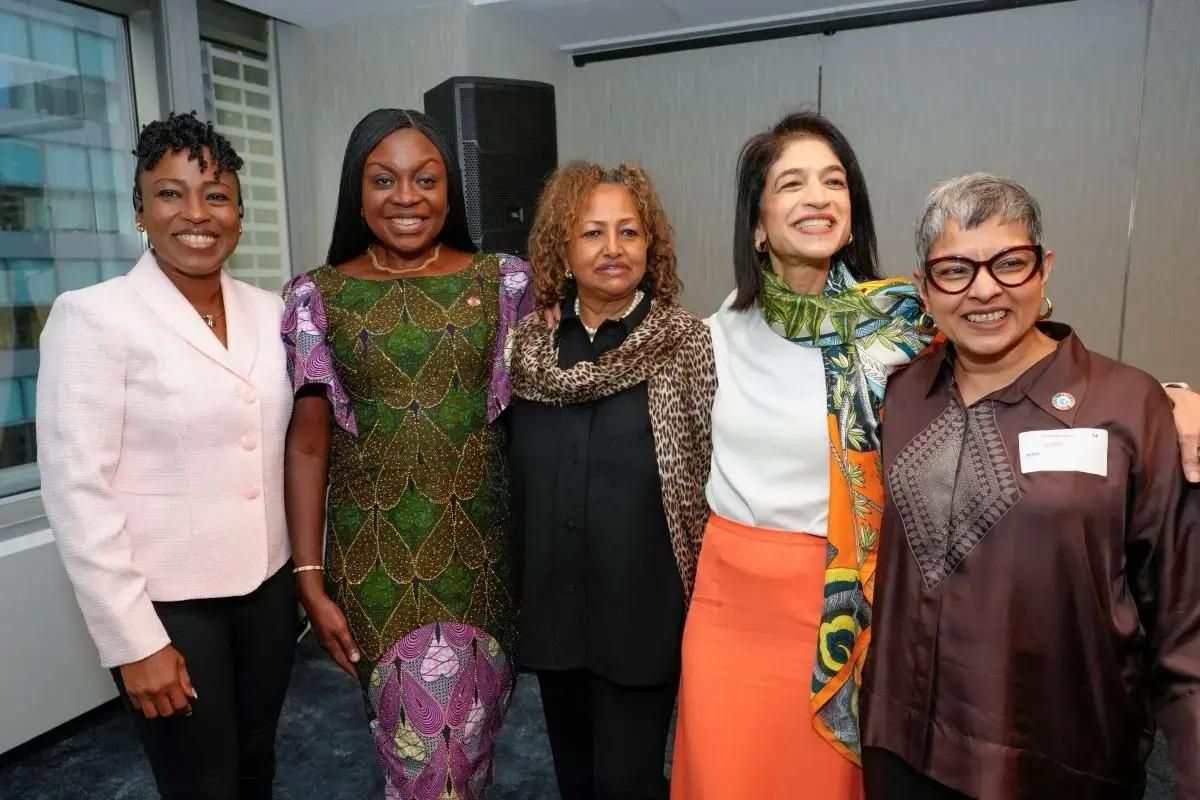
On the sidelines of the 80th United Nations General Assembly (UNGA80), a diverse group of women leaders gathered to call for urgent action to place women’s leadership at the centre of global peace efforts. The event, hosted by the UN Women Leaders Network in partnership with the Government of Iceland and the UN Foundation, came at a historic moment. This year marked the 30th anniversary of the Beijing Declaration and Platform for Action and anticipated the 25th anniversary of UN Security Council resolution 1325, which established the Women, Peace and Security agenda.
In her opening remarks, UN Women Executive Director Sima Bahous reflected on the challenges of conflict but also on the strength of women’s leadership. She emphasised that equality for women and girls remained the most profound, yet simplest change required to make a difference.
Melanne Verveer, Executive Director of the Georgetown Institute of Women, Peace and Security, highlighted the persistent sidelining of women in peace processes. She noted that women’s role in peace and security was essential and backed by evidence, yet their involvement continued to be undermined.
The panel of leaders, all members of the UN Women Leaders Network, offered examples of women’s leadership in conflict prevention, negotiations, humanitarian response and post-conflict reconstruction. Inés Yábar, UN Youth Office Expert: Young Leaders for the SDGs, spoke of the shared responsibility to shift the course of history. She underlined that leadership at all levels could move the needle towards peace and equality.
The speakers called for bold measures to guarantee women’s equal participation and decision-making in all areas of peace and security. They urged greater involvement of women in conflict resolution, peacebuilding, peacekeeping, humanitarian response and reconstruction. They also demanded the creation of policies to enforce accountability and gender equality across peace processes.
Helen Clark, former Prime Minister of New Zealand, noted the positive results already being seen in local peacebuilding efforts. She, however, called for stronger political will at the global level to match grassroots action and to build societies that were fair, equitable and gender equal.
The gathering laid the foundation for a Call to Action on Women’s Leadership for Peace, which will be developed by the UN Women Leaders Network in the coming months. The message emerging from this meeting was clear. A peaceful and sustainable future depends on the leadership of women. As the world reflected on 25 years of the Women, Peace and Security agenda, the women leaders underscored one truth. When women lead, peace follows.