

|
Getting your Trinity Audio player ready...
|
President Andry Rajoelina has rejected mounting demands for his resignation amid intensifying nationwide protests, as youth-led demonstrators accuse his government of failing to address deepening economic and social crises.
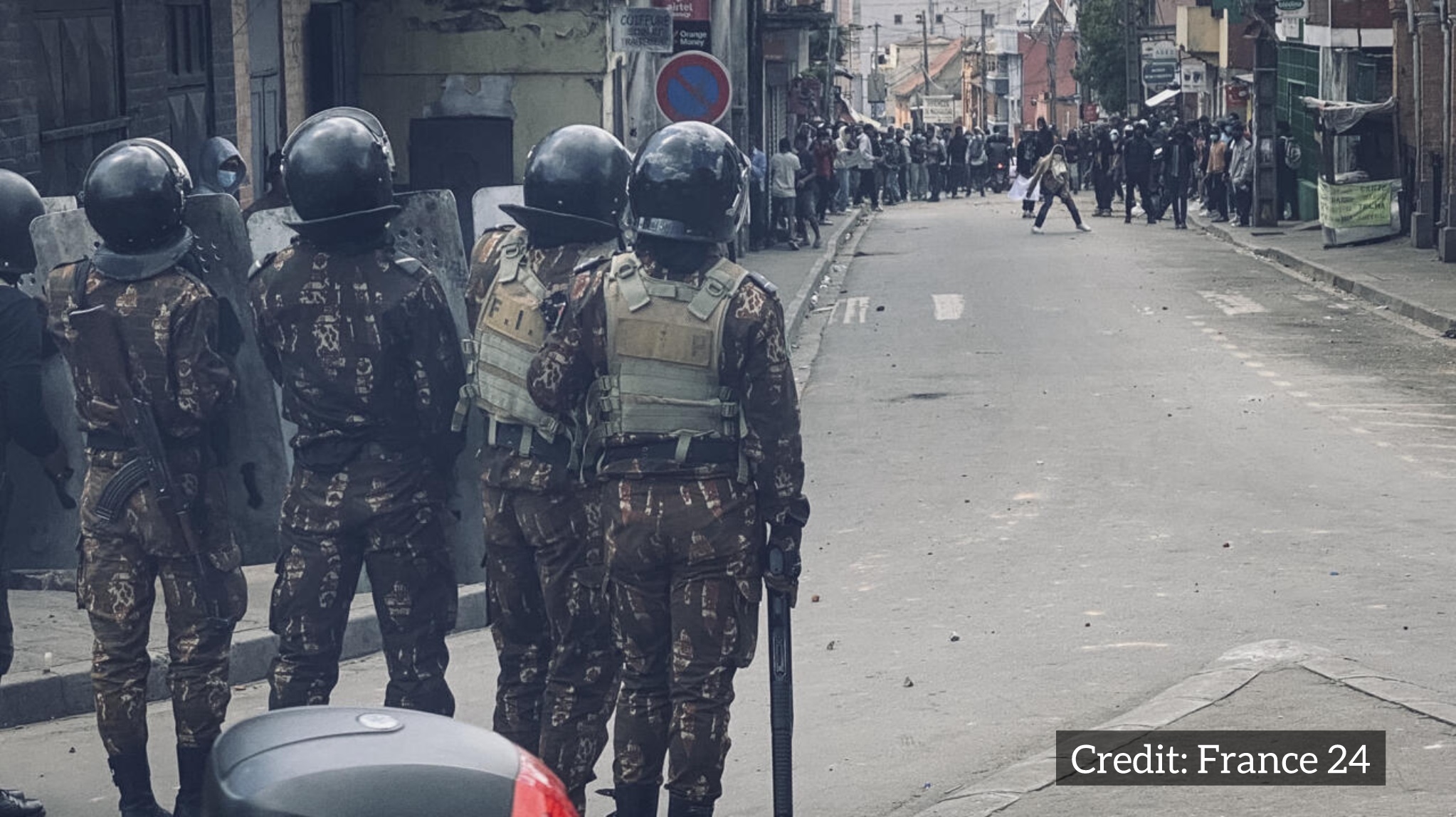
The demonstrations, driven primarily by a movement known as “Gen Z”, resumed in the capital on Friday after a brief strategic pause. Protesters are demanding that the president step down, citing persistent shortages of basic services such as electricity and clean water.
The protests, which began on September 25, have so far claimed at least 22 lives, according to the United Nations, with police reportedly using tear gas to disperse crowds in Antananarivo and other cities. The movement has now issued a 24-hour ultimatum, threatening to take “all necessary measures” if their demands are not met.
President Rejects “Coup Plot” Allegations
In a televised address broadcast on his Facebook page, President Rajoelina dismissed the calls for his resignation, framing the protests as part of a larger scheme orchestrated by political rivals to destabilize the country.
“No one gains from destroying the nation. I remain here, ready to listen, ready to extend a hand, and to find solutions for Madagascar,”
President Andry Rajoelina
The president alleged, without offering evidence, that certain opposition figures had contemplated launching a coup while he was attending the United Nations General Assembly in New York last week. He accused unnamed actors of attempting to “destroy” the country for political gain.
The Gen Z movement swiftly rejected his remarks, calling them “senseless” and reaffirming their commitment to push forward with demonstrations until concrete steps are taken.
Protests Spread Beyond the Capital
Beyond Antananarivo, demonstrations have also erupted in several other regions, including Mahajanga in the north and the southern cities of Toliara and Fianarantsoa. These protests reflect growing frustration among citizens over worsening living conditions and lack of access to essential services.
Despite being rich in natural resources, Madagascar remains one of the world’s poorest nations. According to the World Bank, approximately 75% of its 32 million citizens lived below the poverty line as of 2022.
Political Turmoil and Government Response
The growing unrest has forced President Rajoelina to dissolve his government earlier in the week. He has since called for national dialogue and met with civil society groups and community leaders in an effort to ease tensions.
In a statement posted on his X (formerly Twitter) account, Rajoelina reiterated his commitment to listening to citizens’ concerns and pledged to find peaceful solutions through consultation.
Meanwhile, Foreign Minister Rasata Rafaravavitafika claimed that the country has been targeted by a sophisticated cyberattack and a foreign digital manipulation campaign aimed at influencing domestic politics. She alleged that certain “opportunistic groups” have infiltrated the youth-led protests to exploit the frustrations of young citizens.
A President with a Controversial History
Rajoelina, a former mayor of Antananarivo, first came to power in 2009 after leading a movement that ousted then-President Marc Ravalomanana. Following international pressure, he was barred from contesting the 2013 elections, but later returned to win the presidency in 2018 and secured re-election in 2023.
His leadership has been marked by recurring political unrest and criticism over governance and economic management. The latest wave of protests underscores growing discontent among a younger generation that feels excluded from economic opportunities and disillusioned by persistent inequality.
What Lies Ahead
With tensions still high and the ultimatum from protesters looming, Madagascar faces an uncertain path forward. The government’s ability to manage the crisis peacefully, while addressing the root causes of discontent, poverty, unemployment, and service delivery, will be crucial in determining whether the nation can avoid further instability.
As the Gen Z movement vows to escalate its campaign if demands remain unmet, all eyes are on Rajoelina’s next move in a country with a long history of political volatility.