
Building Africa’s Industrial Future through Skills and Innovation
Written By Maxine Ansah

|
Getting your Trinity Audio player ready...
|
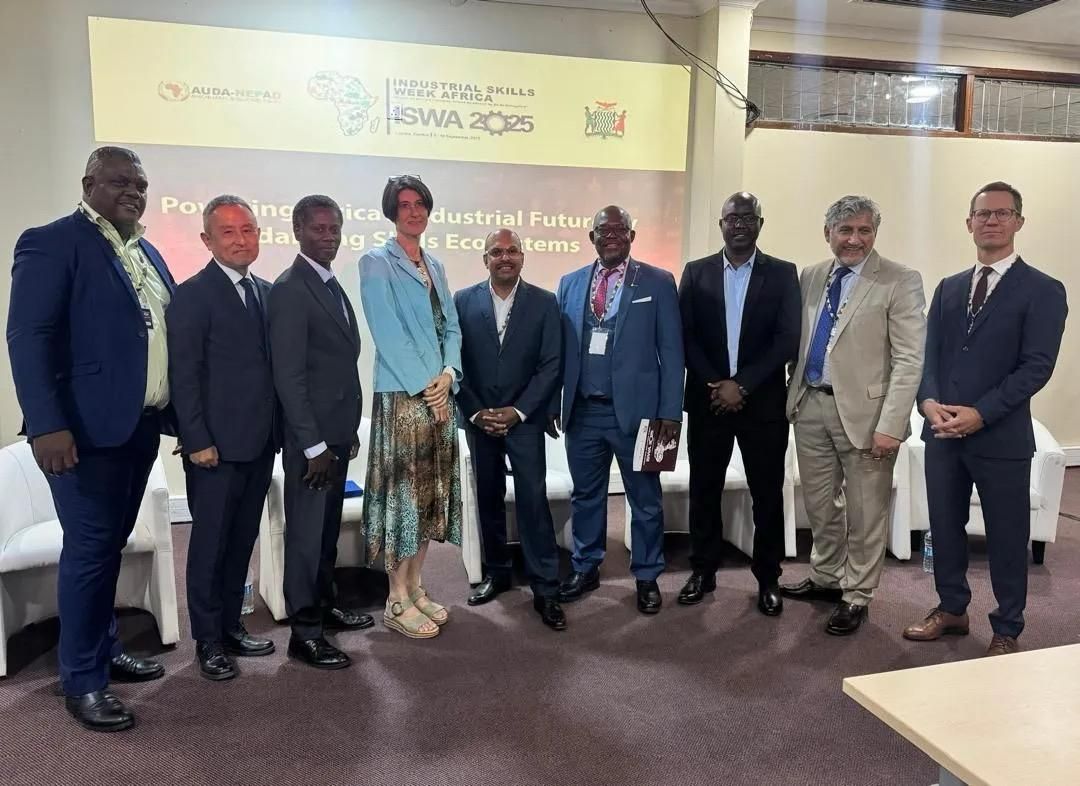
In Lusaka, Zambia, the first-ever Industrial Skills Week Africa (ISWA) brought together governments, industry leaders, training providers, and development partners to explore how skills development can drive Africa’s industrial transformation. Held from 9 to 10 September 2025, the event highlighted the crucial role of technical and vocational education and training (TVET) in preparing Africa’s workforce for a fast-changing industrial landscape.
Organised by the African Union Development Agency-NEPAD (AUDA-NEPAD) in partnership with the Government of Zambia, ISWA 2025 aimed to accelerate the continent’s industrial growth by strengthening collaboration between public and private stakeholders. The gathering aligned closely with the African Union Continental TVET Strategy (2025–2034), which envisions a skilled, innovative, and employable workforce capable of supporting sustainable development.
Under the theme “Powering Africa’s Industrial Future: Skills for Innovation, Growth and Sustainability,” the two-day event featured a series of policy dialogues, sectoral roundtables, innovation exhibitions, and site visits to training centres. Discussions centred on addressing the persistent gap between education systems and labour market needs, particularly in sectors such as manufacturing, agro-processing, pharmaceuticals, mining, and green industries.
The International Labour Organization (ILO) played an active role during ISWA, promoting inclusive, demand-driven skills systems and lifelong learning as foundations for decent work and sustainable industrialisation. The organisation highlighted its ongoing partnerships and initiatives that link training providers with industry players to ensure that skills development keeps pace with technological change and industrial demands.
Among the ILO’s key contributions were two flagship initiatives. The Africa Critical Skills Bank, implemented by AUDA-NEPAD, serves as a strategic platform for identifying and addressing critical skills shortages across the continent. It provides governments and industry actors with data and tools to better align education and training with the skills needed for industrial development. Meanwhile, the Skills for Sustainable Industrial Transformations in Africa (SITA) initiative, jointly implemented by the ILO and the United Nations Industrial Development Organization (UNIDO), strengthens collaboration between employers, workers, and training institutions to foster sustainable industrial growth.
The ILO Africa Skills Hub also played a leading role in technical sessions, sharing expertise on labour market intelligence, future skills forecasting, and TVET reform. These efforts form part of the organisation’s broader mandate to promote sustainable employment opportunities, especially for young people and women, through inclusive skills ecosystems.
“The industrial transformation of Africa cannot happen without transforming how we prepare our people, especially our youth, for the jobs of tomorrow,” stated Ms Nardos Bekele-Thomas, Chief Executive Officer of AUDA-NEPAD. Her words captured the spirit of ISWA, which called for action to ensure that Africa’s growing youth population is equipped to meet the demands of a modern industrial economy.
Zambia’s active role in hosting the event underscored its leadership in advancing demand-driven skills reforms. The Ministry of Technology and Science, together with the Technical Education, Vocational and Entrepreneurship Training Authority (TEVETA), showcased local initiatives that connect TVET institutions with employers to promote innovation, entrepreneurship, and employment.
The inaugural Industrial Skills Week Africa concluded with a shared commitment among partners to scale up investment in skills development, strengthen public-private partnerships, and support regional collaboration. By equipping its people with the right skills, Africa can unlock new opportunities for inclusive growth, sustainable industrialisation, and decent work for all.