
Africa’s World Cup 2026 Qualifiers: The Nine Nations Heading to North America — and the Four Still Fighting
|
Getting your Trinity Audio player ready...
|
Africa’s 2026 World Cup Qualifiers Explained: Standings, Withdrawals, and the Playoff Route
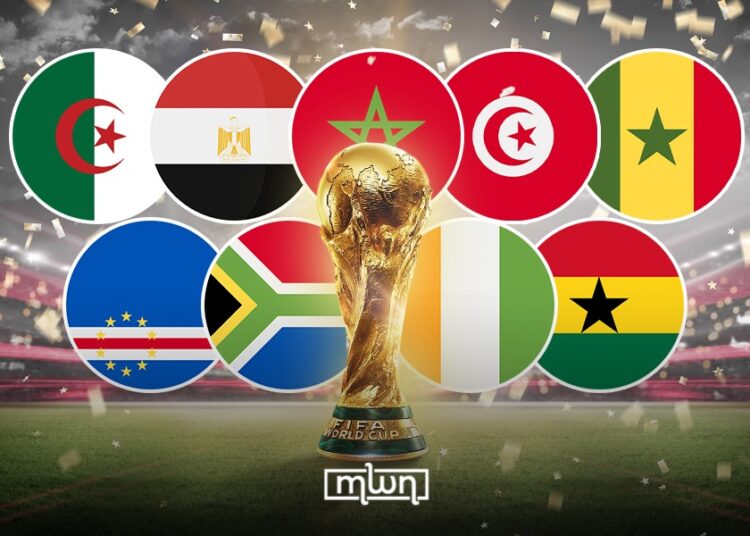
The road to the 2026 FIFA World Cup has officially closed for most African nations—after months of drama, surprises, and history-making moments. With the expanded tournament granting nine automatic African slots (up from five), Côte d’Ivoire, Morocco, Tunisia, Egypt, Algeria, Ghana, Cape Verde, South Africa, and Senegal have now secured their tickets to North America, while Cameroon, DR Congo, Gabon, and Nigeria will battle it out for the continent’s final hope in a decisive playoff round next month in Morocco.
The Automatic Qualifiers: Africa’s Nine Representatives
Morocco were the first to qualify, winning all six matches in Group E after Eritrea’s withdrawal, including a 5–0 demolition of Niger. With coach Walid Regragui at the helm, the Atlas Lions continue their resurgence, now heading to their third consecutive and seventh overall World Cup, just one behind record-holders Cameroon (nine).
Tunisia dominated Group H, scoring 22 goals and conceding none. Under Sami Trabelsi, the Carthage Eagles earned nine wins from ten games—clinching a World Cup berth with two matches to spare. Like Morocco, Tunisia head to their third straight and seventh total World Cup appearance, still chasing their first knockout-stage success.
Egypt, back under legend Hossam Hassan, topped Group A with 26 points, beating Djibouti 3–0 on October 8. Mohamed Salah scored nine goals—edging closer to Hassan’s own national scoring record. Hassan, notably, becomes the first Egyptian to reach the World Cup both as player and coach.
Algeria sealed qualification on October 9 with a 3–0 win over Somalia—technically an “away” match played in Algiers. This marks their fifth World Cup appearance, and first since 2014, when they famously forced eventual champions Germany into extra time in the Round of 16.
Ghana joined them after a hard-fought 1–0 win over Comoros in Accra on October 12, courtesy of Mohammed Kudus. The Black Stars topped Group I to claim their fifth World Cup ticket, having reached the quarter-finals in 2010—a feat no African side has yet surpassed.
Cape Verde provided the fairy-tale story of qualifying, defeating Eswatini 3–0 in Praia on October 13 before just 8,000 fans. Under Pedro ‘Bubista’ Brito, the Blue Sharks became the second-smallest nation ever to qualify for the World Cup (after Iceland in 2018) and will make their debut appearance in 2026.
South Africa also made a triumphant return, ending a 16-year absence. After overcoming a points deduction for fielding an ineligible player, Hugo Broos’ men sealed qualification with a commanding 3–0 win over Rwanda in Nelspruit on October 14. This marks Bafana Bafana’s fourth appearance, and first since they hosted in 2010.
Côte d’Ivoire, fresh off their AFCON victory, left it late but clinched top spot in Group F with a final-day win over Kenya, powered by Franck Kessié and Yan Diomande. The Elephants, guided by coach Emerse Faé, didn’t concede a single goal through qualifying—one of only two teams to do so (alongside Tunisia).
Eritrea’s Withdrawal and Its Ripple Effect
When Eritrea withdrew from World Cup qualifying in November 2023, few realized how much it would reshape the group standings. Originally, CAF planned for nine groups of six teams—but Eritrea’s exit left one group with only five, forcing CAF to adjust the points calculation.
To maintain fairness, CAF excluded results against the bottom-ranked teams in all six-team groups when determining the four best runners-up. This ensured every team’s record was based on an equal number of matches. While statistically fair, the rule sparked debate—some argued it punished teams that had earned big wins, while others saw it as the only practical solution.
The change ended up reshuffling the “best second-place” table and ultimately decided who advanced to the playoff stage.
The CAF Playoff: Africa’s Final Ticket
The final four—Cameroon, DR Congo, Gabon, and Nigeria—will compete in a centralized playoff tournament in Morocco from November 13–16, 2025.
-
Nigeria vs Gabon
-
Cameroon vs DR Congo
Each semi-final will be a single-leg tie, with extra time and penalties if necessary. The winners meet on November 16 for a place in the inter-confederation playoff in March 2026.
That final playoff will feature six nations: one each from Africa, Asia, South America, and Oceania, plus two from CONCACAF. The winners of two mini-brackets will claim the final two World Cup slots in North America.
For Africa, the stakes are high. The CAF playoff winner will need to win one or two more knockout matches in March 2026 to join the continent’s nine qualifiers at the World Cup.
The Bigger Picture: Africa’s Strongest Lineup Yet
With heavyweights like Morocco, Senegal, Egypt, and Côte d’Ivoire joined by comeback stories like South Africa and Algeria, and debutants Cape Verde, Africa heads into 2026 with its most diverse and competitive lineup ever.
The qualifiers proved what many have said for years — that African football is not short of talent, only of balance and opportunity. Now, with expanded slots and fairer structures, the stage is set for the continent to deliver its most unified and dangerous challenge on the world stage yet.
And yes, after decades of “potential,” Africa might finally have the numbers—and the momentum—to rewrite its World Cup narrative.