
Tanzania’s President Samia Hassan Faces Unprecedented Protests After Disputed Election
Youth-led demonstrations shake a once-untouchable regime and test Africa’s democratic resilience

|
Getting your Trinity Audio player ready...
|
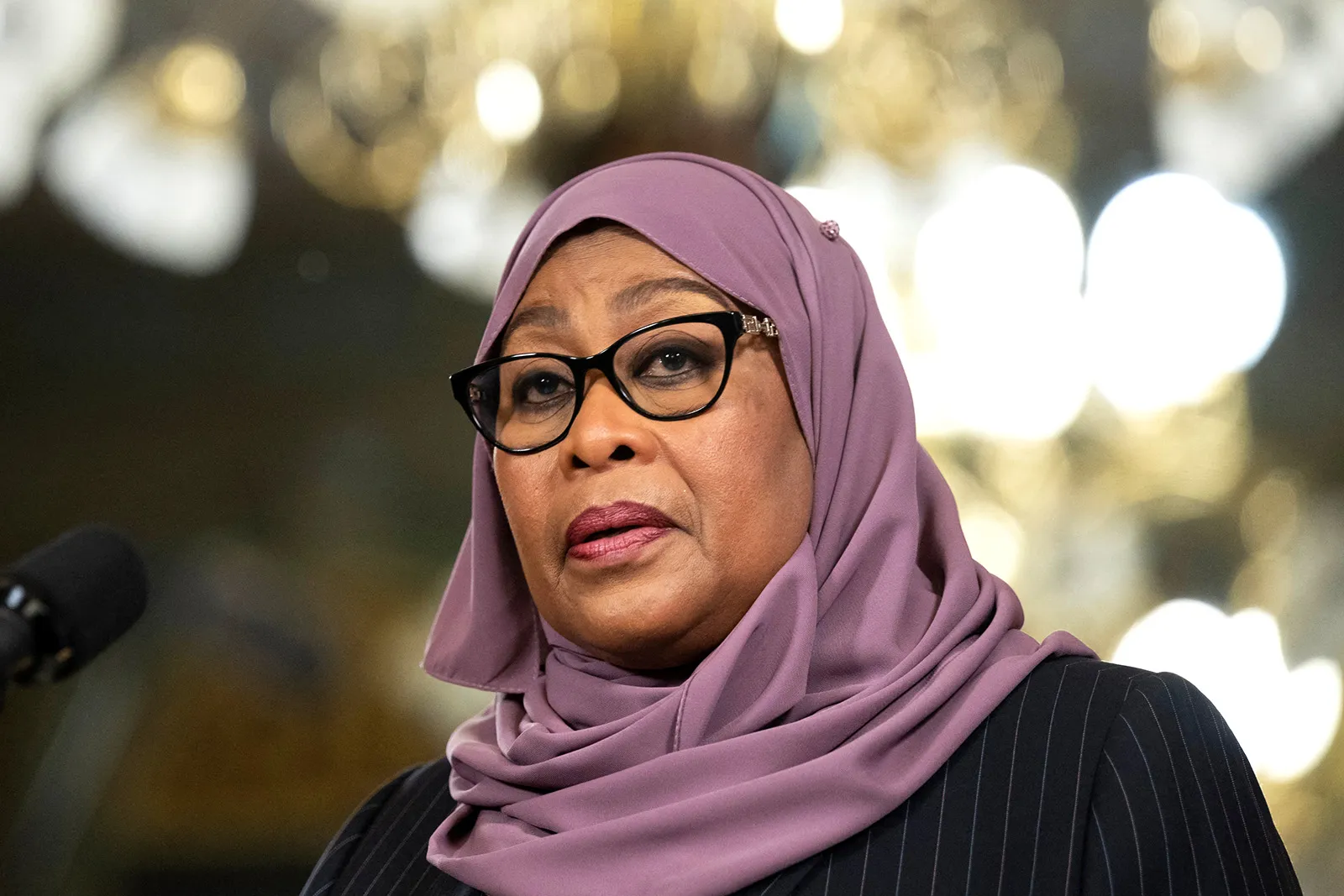
Tanzania has entered a defining moment in its modern political history. What began as frustration over the October 29, 2025 elections has evolved into one of the largest waves of protest since the country’s independence in 1961. Thousands of citizens have taken to the streets in Dar es Salaam, Arusha, Mwanza and other towns, defying curfews and facing down security forces. The demonstrations mark a rare challenge to the dominance of the ruling Chama Cha Mapinduzi (CCM) party and to President Samia Suluhu Hassan, who claimed re-election with 97.66 percent of the vote after opposition leaders were barred or jailed.
According to independent observers and opposition sources, police used tear gas and live fire to disperse crowds. Dozens have reportedly been killed, and hundreds injured. The government insists the situation is “under control,” but internet restrictions and the arrest of journalists have created an information blackout across much of the country.
These protests are not merely political—they are deeply generational. Tanzania’s population is one of the youngest in the world, with more than half under the age of 18. Yet for many, the promise of development has not translated into opportunity. The youth driving these protests are street vendors, motor-taxi operators, and informal workers who make up nearly 72 percent of the national workforce. They are demanding dignity, jobs, and genuine representation.
Under President Hassan, Tanzania’s economy has continued to grow steadily, but the benefits remain uneven. Roughly two-thirds of Tanzanians still live in poverty, while investment in education and health lags behind regional peers. For a generation raised on the idea of transformation, this imbalance has become intolerable. The immediate spark for the protests was the exclusion of opposition candidate Tundu Lissu, who was placed on trial for treason, but the deeper cause runs through years of economic inequality and political suppression.
A regime once untouchable
Since independence, the CCM has ruled Tanzania uninterrupted—often by narrowing the political space in the name of stability. Former president John Pombe Magufuli began hardening state control in 2014, and by 2020, political competition had nearly disappeared. Hassan initially presented herself as a reformer after Magufuli’s death, but critics say her administration has expanded surveillance, curtailed freedoms, and intensified the state’s grip on the press. Activists, lawyers and opposition figures have been detained, brutalised or have disappeared altogether.
What is new in 2025 is not repression but resistance. For the first time, protests have spread nationwide, not just in isolated communities or Zanzibar. From tearing down CCM posters to calling for an independent electoral commission, demonstrators are linking social hardship to political exclusion. It is a revolt against a system, not just a leader.
Youth, leadership and Africa’s democratic test
Across Africa, youth movements are reshaping how power is understood. From Nigeria’s #EndSARS to Kenya’s cost-of-living marches, and now Tanzania’s protests, young citizens are asserting that governance must reflect their aspirations. Tanzania’s unrest has become a mirror for the continent’s broader question: can Africa’s leadership evolve fast enough to match the demands of its young majority?
If handled through dialogue and reform, this crisis could mark a democratic awakening. If met only with force, it risks deepening disillusionment and instability. Tanzania’s political choices will influence East Africa’s credibility as a region capable of combining growth with good governance.
The road ahead
For Africa’s development, this moment is not just about Tanzania. It is about the balance between state control and citizen voice, between order and opportunity. When young Africans see peaceful protest met with violence, faith in institutions erodes. But when governments choose transparency and inclusion, the continent moves closer to the promise of shared growth and leadership.
Tanzania has long been a symbol of stability. Now it must become a symbol of renewal. Africa is still young—its democracies younger still. With the right reforms, nations like Tanzania can turn today’s unrest into tomorrow’s rebuilding. The future belongs to those who listen, lead, and act with courage.