
When Hope Refused to Be Silenced: Africa’s Bright Spots in a Dark Global Year
By Maxine Ansah
|
Getting your Trinity Audio player ready...
|
UNITED NATIONS, New York – 2025 will be remembered as a year marked by deep global strain. Conflicts intensified, climate shocks multiplied, humanitarian funding fell sharply, and new forms of digital violence spread with the rapid expansion of artificial intelligence. For millions, especially women and girls, the year brought fear, loss and uncertainty.
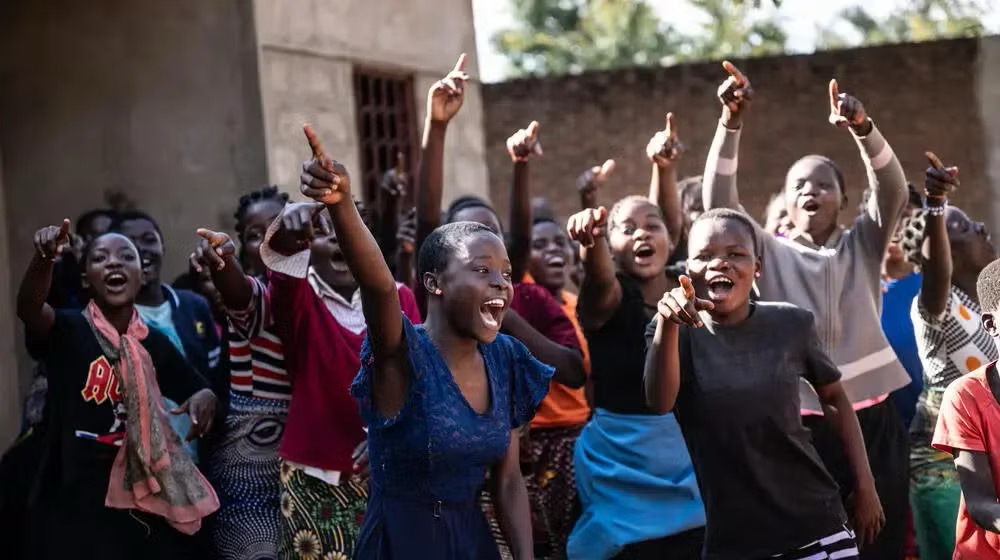
Yet across Africa, amid crisis and constraint, communities continued to push forward. Women and young people did not wait for conditions to improve before acting. They organised, demanded protection, rebuilt lives and challenged systems that had long failed them. These stories, often overlooked in the global headlines, offer a different account of 2025.
Somalia: Female Genital Mutilation Survivors Lead the Push for Change
In Somalia, survivors of female genital mutilation are helping to end the practice that nearly claimed their lives. Amina*, just 13 years old, arrived at a UNFPA-supported safe space bleeding heavily from complications and infection following mutilation. Displaced and unable to afford care, she was treated by local health workers who saved her life and supported her return to school. “Before coming here, I thought my life would end,” she said. “Now, I feel healthy and strong again.”
Female genital mutilation affects an estimated 98 per cent of girls and women in Somalia and remains a grave violation of human rights. While a bill prohibiting the practice has been approved, it is yet to be ratified. In 2023 alone, UNFPA supported more than 260,000 people in Somalia to learn about, avoid and recover from the practice.
Since 2008, the UNFPA-UNICEF Joint Programme on the Elimination of Female Genital Mutilation has enabled 7.2 million girls and women to access prevention and protection services, working closely with thousands of grassroots organisations. As UNFPA gender-based violence specialist Nkiru Igbokwe noted, young Somali women are redefining what protection looks like by leading the change themselves.
Zambia: Obstetric Fistula Survivor Returns to School and Trains as a Midwife
In Zambia, resilience took the form of healing and return. Charity*, now 23, became pregnant while still in boarding school and later developed obstetric fistula after prolonged labour without medical care. Confined to her bed and isolated, she feared her future was over.
After hearing a radio announcement about a UNFPA-supported programme, she returned to hospital for repair surgery carried out with the Ministry of Health and the Fistula Foundation. The surgery was successful. Charity returned to school, retook her exams and is now training as a midwife.
Today, she speaks openly about fistula to encourage others to seek care and prevent early pregnancy. “I want to be an example,” she said, “that no matter how difficult the circumstances, you can still overcome them.”
Central African Republic: Gen Z Women Demand Action on Online Gender-Based Violence
Africa’s youth were also at the forefront of a growing pushback against digital harm. In Bangui, Central African Republic, young women voiced frustration at the lack of protection from online harassment and abuse. One 23-year-old told UNFPA she wanted stricter laws, better awareness of internet risks and safer platforms.
As artificial intelligence accelerates crimes such as sextortion, doxxing and deepfake abuse, many young people argue that responsibility should not rest on users alone. In November 2025, UNFPA and partners convened the first Africa Symposium on online gender-based violence.
Through the Making All Spaces Safe programme, supported by the Government of Canada, efforts are expanding across Benin, Ghana, Kenya and Tunisia to protect people, especially women and girls, from digital violence.
Afghanistan: Girls Rebuild Their Futures After the Education Ban
Beyond Africa, similar acts of quiet determination unfolded. In Afghanistan, girls denied access to secondary education continued to seek alternatives. Meena, who had studied alone at home in Kabul after the 2021 ban, found renewed confidence through a UNFPA-supported youth centre offering counselling and skills training.
With support from a European Union-funded programme, she launched an online business and began sharing computer skills with others in her community. “The programmes have completely changed my life,” she said.
Ukraine: Giving Birth Safely Inside a UN-Supported Maternity Bunker
In Ukraine, conflict did not halt care. In the southern city of Kherson, Lyudmila gave birth as shelling struck nearby, delivering her baby safely in a maternity bunker supported by UNFPA. Health workers continued despite air raids and power cuts, a reality echoed across war zones.
“When the shelling starts, we just keep going,” said an obstetrician in Kyiv.
Panama: Indigenous Women Secure Respectful and Culturally Sensitive Maternal Care
In Panama, indigenous women continued long-standing advocacy for respectful maternal care. In remote mountain regions, the Ngäbe Women’s Association, working with UNFPA and the Ministry of Health, operates maternity waiting homes and trains local health workers.
These efforts have helped ensure culturally sensitive care, language interpretation and respect for women’s consent within the national health system.
Across these contexts, UNFPA worked with communities in more than 150 countries and territories in 2025, scaling up support to women- and youth-led grassroots organisations. More than 42 per cent of the agency’s humanitarian spending last year went directly to local partners across 71 countries, with plans to increase this further in 2026.
As the year closes, Africa’s experiences stand as a reminder that progress does not always arrive through sweeping reforms or global summits. It often begins with individuals choosing to act within limited means. Many African countries are still young by historical standards, navigating inherited systems while confronting modern crises. That youth, paired with courage and collective action, continues to shape solutions grounded in dignity, resilience and hope. Even in a difficult year, Africa showed that forward motion is possible.
Names changed for privacy and protection
Africa UN stories 2025, UNFPA Africa, women and girls Africa, female genital mutilation Somalia, ending FGM Africa, obstetric fistula Zambia, maternal health Africa, youth activism Africa, digital violence Africa, online gender based violence Africa, Gen Z Africa activism, humanitarian funding cuts, women led organisations Africa, grassroots organisations Africa, reproductive health Africa, gender based violence Africa, AI and women Africa, UN humanitarian work Africa, youth leadership Africa, Somalia women rights, Zambia maternal health story, Central African Republic digital safety, Africa digital rights, Ghana digital violence, Kenya digital safety, Tunisia digital rights, Benin online safety, Africa resilience stories, Africa women empowerment, UN development Africa, Africa health systems, Africa community leadership, Africa social change, Africa youth movements, Africa gender equality, Africa humanitarian response, Africa civil society, Africa local solutions, UN Africa partnerships, women rights UN Africa, adolescent pregnancy Africa, fistula care Africa, Africa advocacy stories, Africa grassroots impact, Africa crisis response, Africa hope stories, UNFPA humanitarian Africa, Africa social justice, Africa women leadership, Africa public health, Africa community care, Africa human rights, Africa development narratives, Africa UN reporting, Africa policy advocacy, Africa recovery stories, Africa gender justice, Africa women resilience, Africa youth voices, Africa humanitarian support, Africa rights protection, Africa future outlook, Africa inclusive development, Africa women led change, Africa dignity and rights, Africa people centred development