
Tunisia–Saudi Arabia Economic Cooperation Grows with Investment and Trade Expansion

|
Getting your Trinity Audio player ready...
|
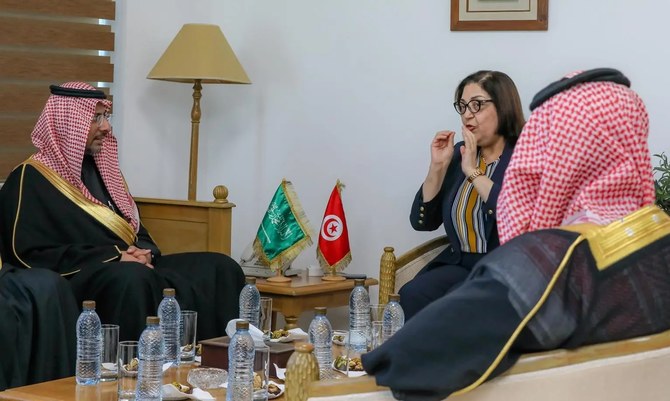
Economic ties between Tunisia and Saudi Arabia are entering a new phase of expansion, marked by rising Saudi investment, growing trade volumes, and renewed political commitment to long‑term cooperation. The momentum was highlighted at the Tunisia–Saudi Arabia Business Forum, held in Riyadh in late December 2025.
Speaking at the forum, Tunisia’s Minister of Economy and Planning, Samir Abdelhafidh, revealed that Saudi Arabia now ranks among Tunisia’s top ten foreign investors, with cumulative investments surpassing $375 million by the end of 2024. These investments reflect increasing confidence in Tunisia’s economic environment and its strategic role as a gateway between Africa and the Arab world.
Growing Saudi Presence in Tunisia
Saudi capital is increasingly visible across the Tunisian economy. Around 500 Saudi or Saudi‑affiliated companies currently operate in the country, spanning sectors such as industry, agriculture, healthcare, tourism, and services. Notably, seven Saudi‑linked companies expanded their operations during the first nine months of 2025, signaling accelerating bilateral engagement.
This expanding footprint underscores Saudi Arabia’s broader strategy to diversify its international investments while supporting industrial development and job creation in partner countries.
Trade Flows Gain Momentum
Beyond investment, bilateral trade between Tunisia and Saudi Arabia continues to grow steadily. By the end of 2024, total trade exchanges reached 964 million Tunisian dinars, according to official data.
Tunisian exports to Saudi Arabia account for roughly 26 percent of Tunisia’s total exports to the Gulf region, valued at approximately 117 million dinars. These exports are carried out by 126 Tunisian companies, reinforcing Saudi Arabia’s position as a key Gulf market for Tunisian products.
Officials say the strength of trade flows reflects a relationship built not only on proximity, but also on complementary economic needs and shared growth ambitions.
Strategic Vision for Deeper Cooperation
Saudi Minister of Industry and Mineral Resources Bandar bin Ibrahim Al‑Khorayef described the business forum as a turning point, emphasizing that the objective is to convert economic potential into concrete, high‑impact projects.
Both sides reaffirmed their commitment to strengthening institutional cooperation through the Tunisia–Saudi Joint Commission, which plays a central role in aligning investment priorities, facilitating partnerships, and addressing regulatory challenges.
Tunisia’s Role as a Regional Bridge
Tunisia’s geographic and economic positioning makes it an attractive hub linking Africa, the Middle East, and Europe. Saudi investors increasingly view the Tunisian market as a strategic platform for accessing African value chains while benefiting from Tunisia’s skilled workforce and diversified economy.
Sectors such as information and communication technology (ICT), renewable energy, agro‑industry, and advanced manufacturing are emerging as priority areas for future cooperation.
Challenges and Untapped Potential
Despite strong momentum, Tunisian authorities acknowledge that further progress depends on continued reforms. Simplifying administrative procedures, improving the business climate, and offering targeted incentives remain critical to attracting larger volumes of foreign direct investment.
Officials on both sides agree that while bilateral cooperation has grown significantly, it has not yet reached its full potential. Expanding sectoral diversification, deepening trade integration, and accelerating project implementation will be key to sustaining long‑term growth.
A Shared Path Forward
As Saudi Arabia confirms its position as one of Tunisia’s most important economic partners, the evolving relationship reflects a broader trend of Africa–Middle East economic integration. Through investment, trade, and industrial collaboration, Tunisia and Saudi Arabia are laying the groundwork for a partnership aimed at shared, sustainable economic growth.