

|
Getting your Trinity Audio player ready...
|
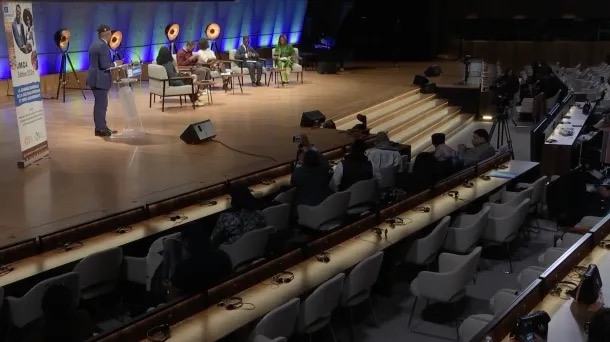
On 26 January 2026, UNESCO Headquarters hosted a Special Youth Segment as part of the 9th commemoration of the World Day for African and Afro-descendant Culture. Held under the theme Cultural Heritage, Progress and Harmony: Engaging African Youth to Strengthen World Peace, the session placed African and Afro-descendant young people at the heart of global peace conversations.
Organised by UNESCO’s Sector for Priority Africa and External Relations, in collaboration with the Permanent Delegation of Togo to UNESCO, the one-hour hybrid dialogue created space for youth-led reflection on how culture functions not only as identity, but as infrastructure for peace.
The first segment brought together young African and Afro-descendant leaders whose work spans advocacy, film, education, music and student organising. Rania Abbas, a Child Rights Awareness Officer and Global Youth Ambassador, reflected on the role of cultural awareness in protecting children and shaping inclusive futures. Filmmaker and actress Aurielle Jioya spoke to storytelling as a vehicle for healing and social cohesion, while Pherton Casimir, representing the SDG 4 Youth and Student Network, linked education and culture as twin pillars of sustainable peace.
Musician Elosha Kapata highlighted the unifying power of music across divided societies, and Souleymane Diallo, President of the Sciences Po Students’ Association for Africa, underscored the importance of intellectual and student-led spaces in nurturing dialogue, critical thought and Pan-African solidarity.
The second part of the session expanded the conversation through an intercultural exchange with young leaders from different regions. Arya Manandhar, Founder of Greentech for Women, shared perspectives on gender-responsive innovation for peace. Journalist and media educator Anna Järviluoma reflected on responsible storytelling across cultures, while Amadou Diallo, former President of the Sciences Po Students’ Association for Africa, spoke to continuity in youth leadership. Julie Ojiambo, Co-Convener of the 2025 Oxford Africa Conference, emphasised youth networks as bridges between local realities and global platforms.
Moderated by Nonso Obikili of UNESCO, the dialogue reinforced a shared message: African and Afro-descendant youth are not passive inheritors of culture, but active custodians shaping it as a strategic tool for harmony. Their contributions aligned closely with UNESCO’s mandate across culture, education, science and communication, and helped build momentum towards the Biennale of Luanda – Pan-African Forum for the Culture of Peace.
As Africa remains the youngest continent in the world, its youth continue to redefine peacebuilding through creativity, memory and collective action. Their leadership reminds the global community that culture is not peripheral to peace. It is central. From Dakar to Nairobi, Accra to Luanda, young Africans are crafting futures where heritage becomes strength, dialogue becomes practice, and peace becomes possible, even in societies still navigating the weight of history and the promise of youth.