
Cape Verde Opposition Wins Parliamentary Elections, Set to End Decade of Incumbent Rule

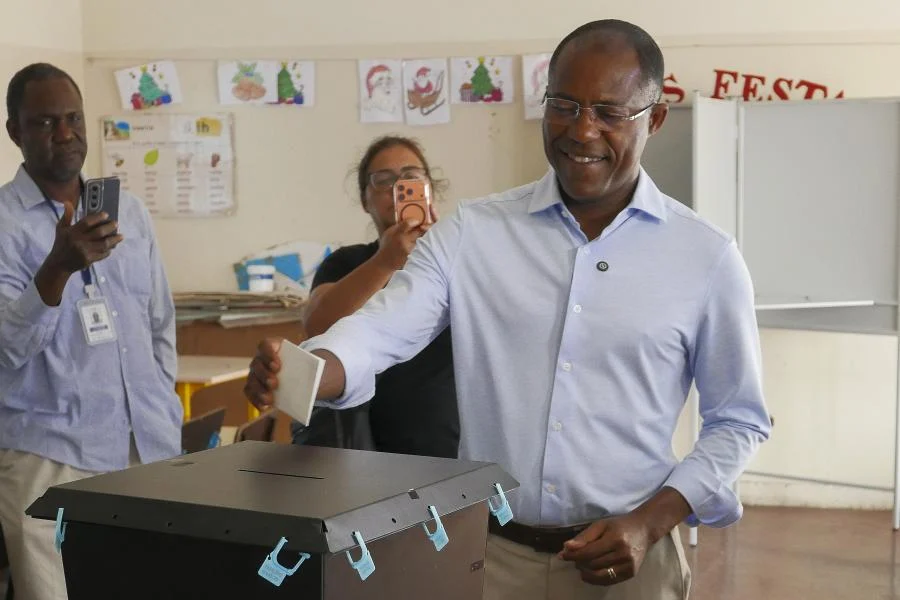
|
Getting your Trinity Audio player ready...
|
Cape Verde is heading for a political transition after the main opposition party secured victory in parliamentary elections, marking a potential shift in leadership after a decade of incumbent rule.
The African Party for the Independence of Cape Verde (PAICV) won 46 percent of the vote, according to provisional results from nearly all polling stations.
Its leader, Francisco Carvalho, is now poised to become Prime Minister, replacing Ulisses Correia e Silva, who has led the government for the past ten years.
A Shift, But Not a Surprise
PAICV has secured 33 of the 72 seats in the National Assembly and is expected to strengthen its position as remaining votes — including those from the diaspora — are finalized.
Correia e Silva has already conceded defeat, congratulating Carvalho in a move that reinforces Cape Verde’s reputation for orderly democratic transitions.
In many parts of the continent, that alone would be the headline.
One of Africa’s Most Consistent Democracies
With a population of roughly 550,000, Cape Verde has long been regarded as one of Africa’s most stable and democratic systems.
Elections are competitive, transitions are peaceful, and institutions largely function as expected.
That consistency has made the country something of an outlier — not because democracy is rare in Africa, but because it is rarely this predictable.
What the Victory Means
For Carvalho, the challenge begins immediately.
Winning an election in Cape Verde is one thing. Governing an economy exposed to global shocks, limited natural resources, and heavy reliance on tourism and remittances is another.
The PAICV will need to translate electoral momentum into economic delivery — particularly as global conditions remain uncertain.
The End of a Political Cycle
The defeat of the incumbent government signals the end of a ten-year political cycle under Correia e Silva.
While his administration maintained stability, voters appear to have opted for change — a reminder that even in stable democracies, political capital has a shelf life.
Eyes on the Presidential Vote
The parliamentary elections are only part of the story.
Cape Verde’s electoral calendar continues with a presidential election scheduled for November, which will further shape the country’s political direction.
The Bigger Picture
At a time when elections across the continent are often defined by tension, dispute, or uncertainty, Cape Verde offers a different narrative.
A competitive vote. A clear result. A concession. A transition.
Simple, but not insignificant.
Cape Verde election 2026, PAICV, Francisco Carvalho, Ulisses Correia e Silva, Cape Verde politics, African elections, West Africa democracy, Cape Verde parliament, National Assembly Cape Verde, African opposition victory, democratic transition Africa, Cape Verde government change, African political systems, Cape Verde democracy ranking, peaceful elections Africa, Africa governance stability, Cape Verde leadership change, African political transitions, Cape Verde prime minister, Praia mayor Francisco Carvalho, Cape Verde political parties, African democracy success stories, Cape Verde election results, African governance models, Cape Verde constitution, African electoral systems, opposition wins Africa, Cape Verde policy direction, African leadership turnover, Cape Verde economic policy, African island nations politics, Cape Verde tourism economy, remittances Cape Verde, African small states politics, Cape Verde foreign relations, African political stability, Cape Verde reforms, Africa democracy trends, Cape Verde voter turnout, Africa election analysis, Cape Verde diaspora vote, African parliamentary elections, Cape Verde governance, Africa institutional strength, Cape Verde development strategy, African political change, Cape Verde economic challenges, Africa leadership dynamics, Cape Verde transition government, Africa election credibility, Cape Verde ruling party loss, Africa democratic institutions, Cape Verde policy outlook, African politics news, Cape Verde international reputation, Africa stable democracies, Cape Verde government formation, Africa electoral integrity, Cape Verde future leadership, African election outcomes, Cape Verde civil society, Africa governance analysis, Cape Verde leadership shift, African political balance, Cape Verde public policy, Africa democracy progress, Cape Verde regional influence, Africa peaceful transitions, Cape Verde political history, African democratic benchmarks, Cape Verde political stability, Africa governance success, Cape Verde election coverage, Africa leadership accountability, Cape Verde state institutions, African democracy examples, Cape Verde opposition success, Africa political reform, Cape Verde administration change, African electoral process, Cape Verde government structure, Africa political systems comparison, Cape Verde global relations