
Russia Expands Military Ties With Equatorial Guinea as Influence Grows Across Africa

|
Getting your Trinity Audio player ready...
|
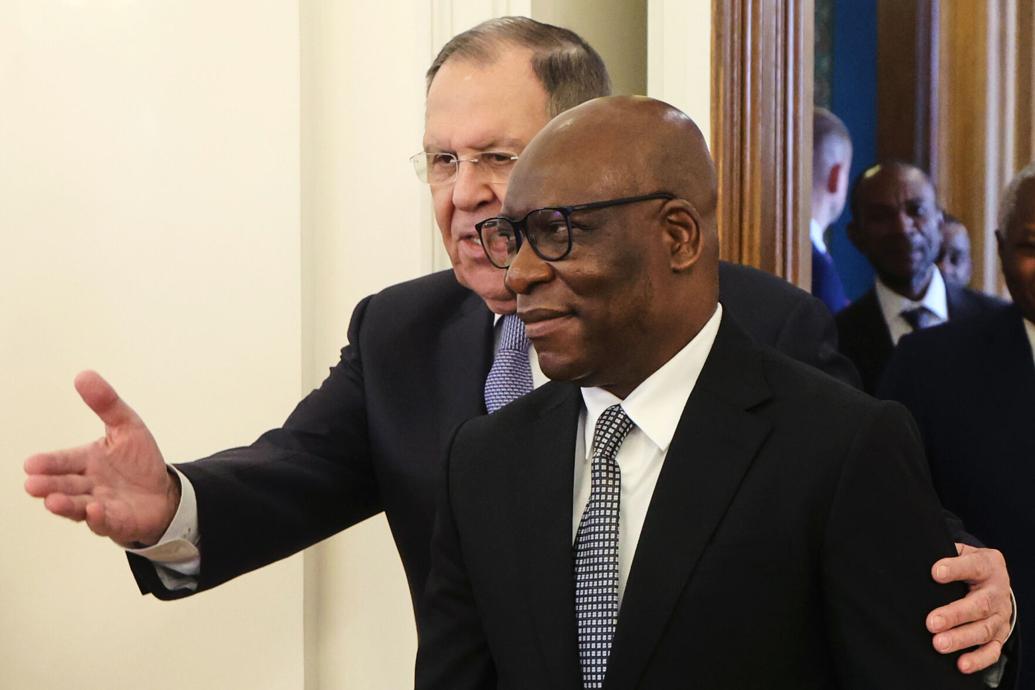
Sergey Lavrov has reaffirmed Russia’s commitment to expanding military cooperation with Equatorial Guinea, signaling Moscow’s continued push to strengthen its strategic footprint across the continent.
The remarks came during a meeting in Moscow with Equatorial Guinea’s Foreign Minister, Simeon Oyono Esono Angue, where both sides discussed defense collaboration and broader geopolitical alignment.
A Familiar Offer, Repeated Again
Lavrov’s message was direct.
Russia, he said, remains ready to support Equatorial Guinea’s defense capabilities, describing the relationship as part of an ongoing and expanding partnership.
“We are always open to listening and meeting your needs in the field of defense capability,” he said.
It is a line Moscow has delivered across multiple African capitals in recent years — and one that is increasingly being accepted.
Africa’s Security Gaps Meet External Power Plays
For Equatorial Guinea, the engagement reflects a broader reality.
Across parts of Africa, governments facing security pressures or shifting alliances are exploring partnerships beyond traditional Western actors.
Angue pointed to Russia’s involvement in the Sahel and the Central African Republic, describing its role as contributing to stability.
That assessment, however, depends on who is speaking.
While some governments view Russian support as effective and responsive, critics argue it often comes with opaque terms and long-term strategic costs.
Russia’s Expanding African Strategy
Moscow’s approach in Africa has been consistent.
Security cooperation first. Political alignment second. Economic interests follow.
From the Sahel to Central Africa, Russia has positioned itself as an alternative partner — one that offers military assistance without the governance conditions often attached by Western countries.
That model is proving attractive in certain contexts.
Not Just About Defense
While the language of the meeting focused on military cooperation, the implications go beyond security.
Russia’s growing presence is part of a wider geopolitical shift, where global powers are competing for influence in Africa’s emerging markets, strategic locations, and natural resources.
Equatorial Guinea, with its oil wealth and strategic Atlantic position, fits squarely into that equation.
The Bigger Picture
This is not an isolated meeting.
It is part of a broader pattern.
As global tensions reshape alliances, African countries are increasingly diversifying their partnerships — balancing relationships between Western powers, China, and Russia.
For Russia, Africa is no longer peripheral.
It is strategic.
And for African governments, the calculation is equally clear.
Partnerships are no longer about alignment.
They are about leverage.
Russia Africa relations, Equatorial Guinea military cooperation, Sergey Lavrov Africa, Russia defense Africa, Africa geopolitics, Russia Africa strategy, Central Africa security, Sahel Russia involvement, Russian military Africa, Africa foreign policy, Equatorial Guinea Russia ties, African security partnerships, Russia influence Africa, Africa global powers competition, Russia diplomacy Africa, Africa defense agreements, Russian foreign policy Africa, Africa international relations, Moscow Africa strategy, Africa security alliances, Russian expansion Africa, Africa military cooperation, Russia Sahel operations, Central African Republic Russia, Africa geopolitical shifts, Russia Africa engagement, Africa security challenges, Russia defense partnerships, African governments security, Russia Africa investments, Africa power competition, Russia alternative partner Africa, Africa Western relations, Russia vs West Africa, Africa strategic alliances, Russian military support Africa, Africa foreign alliances, Russia Africa summit, Africa international diplomacy, Russia global influence Africa, Africa resource politics, Equatorial Guinea oil geopolitics, Africa energy security politics, Russia Africa cooperation, Africa military strategy, Russia Africa diplomacy, Africa security policy, Russia foreign ministry Africa, Africa defense sector, Russia partnerships Africa, Africa global competition, Russia Africa expansion strategy, Africa geopolitical importance, Russia Africa leadership ties, Africa political alliances, Russia Africa influence growth, Africa defense cooperation agreements, Russia Africa engagement policy, Africa security dynamics, Russia Africa partnership model, Africa military development, Russia Africa regional influence, Africa global relations, Russia Africa bilateral ties, Africa strategic cooperation, Russia Africa positioning, Africa international partnerships, Russia Africa policy direction, Africa global strategy, Russia Africa military ties, Africa defense collaboration, Russia Africa relations analysis, Africa power dynamics, Russia Africa diplomatic outreach, Africa security framework, Russia Africa cooperation strategy, Africa global influence competition, Russia Africa leadership engagement, Africa defense agreements Russia, Russia Africa role, Africa foreign engagement, Russia Africa presence expansion