
Morocco Strengthens Succession Path as Crown Prince El Hassan Expands Military Role

|
Getting your Trinity Audio player ready...
|
Morocco has taken another step in preparing its future leadership, with Crown Prince Moulay El Hassan assuming a senior military coordination role once held by his father, King Mohammed VI.
The move signals a structured and deliberate approach to succession within one of Africa’s wealthiest monarchies, as the young royal becomes increasingly involved in state affairs.
Strategic Military Appointment
The Moroccan royal court recently confirmed that the 23-year-old crown prince has been appointed coordinator of the offices and services of the general staff of the Royal Armed Forces.
The position places him closer to intelligence briefings, defence oversight, military modernisation programmes and strategic security coordination within Morocco’s military structure.
It mirrors a similar path taken by his father, who was appointed to a comparable role by King Hassan II in 1985 before ascending the throne.
A Gradual Transition
While there is no indication of an immediate transfer of power, the prince’s rising responsibilities point to a gradual transition strategy.
King Mohammed VI, often regarded as Africa’s wealthiest monarch, has reduced some public engagements in recent months following recurring health concerns, including lower back pain that required a period of functional rest earlier this year.
The increased visibility of the crown prince suggests the monarchy is steadily preparing for continuity.
Expanding Public Profile
Prince El Hassan has also taken on a more prominent public role both domestically and internationally.
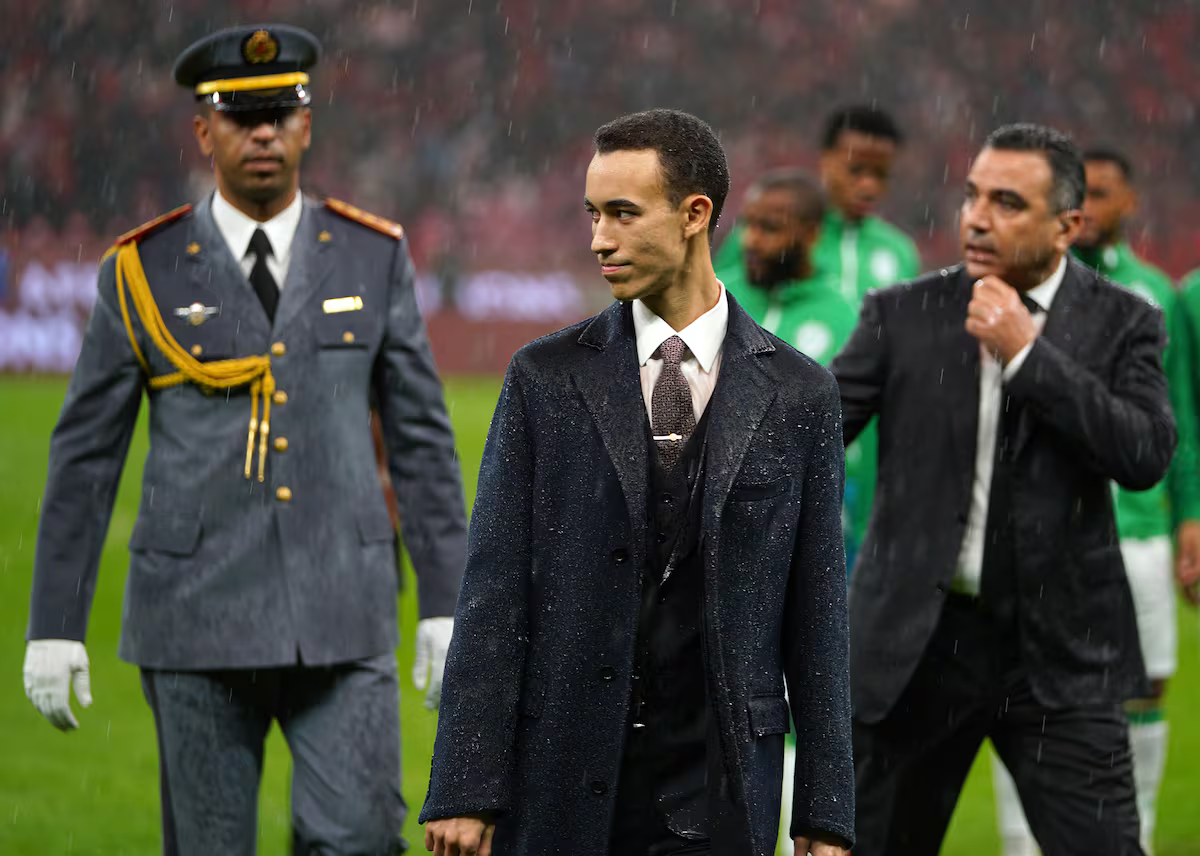
In December 2025, he presided over the opening ceremony of the Africa Cup of Nations hosted by Morocco and inaugurated the Prince Moulay Abdellah Stadium in Rabat.
He later inaugurated the Mohammed VI Tower, a 55-storey skyscraper valued at around 700 million dollars, now one of the country’s most recognisable modern landmarks.
The crown prince has also represented the monarchy in meetings with foreign dignitaries, military officials and international investors, further expanding his diplomatic exposure.
Balancing Stability and Public Pressure
The timing of his growing role comes amid underlying economic pressures.
Morocco experienced youth-led protests in 2025 driven by rising living costs, unemployment and inequality. These demonstrations, organised largely online by groups such as “GenZ 212”, became some of the most significant since the Arab Spring and the 2016 Rif protests.
Against this backdrop, the monarchy appears to be positioning the crown prince as a symbol of stability, modernisation and closer engagement with a younger generation.
Groomed for Leadership
Prince El Hassan was educated at the Royal College in Rabat, an elite institution attended by members of the royal family and selected students from influential Moroccan backgrounds.
The palace has carefully shaped his public image around diplomacy, continuity and reform, reflecting the evolving expectations of a younger population.
As Morocco continues to strengthen its economic and geopolitical position through infrastructure and industrial development, the next generation of leadership is being prepared in parallel.
A Monarchy Adapting to the Future
Morocco’s approach highlights a broader pattern across Africa, where institutions are gradually evolving to balance tradition with modern governance realities.
The careful grooming of leadership, combined with increasing public accountability and economic pressure, reflects a system adapting rather than resisting change.
For many African nations, the challenge is not only leadership transition but ensuring that governance systems remain responsive to a rapidly growing and youthful population.
Morocco’s current trajectory shows that even long-standing institutions are adjusting to new expectations, where stability must be matched with opportunity, inclusion and economic progress.
And while transitions of power are always closely watched, they also represent moments of renewal.
Across the continent, a new generation is steadily stepping into leadership spaces, bringing with it the possibility of systems that are more aligned with the realities and ambitions of Africa’s future.