

|
Getting your Trinity Audio player ready...
|
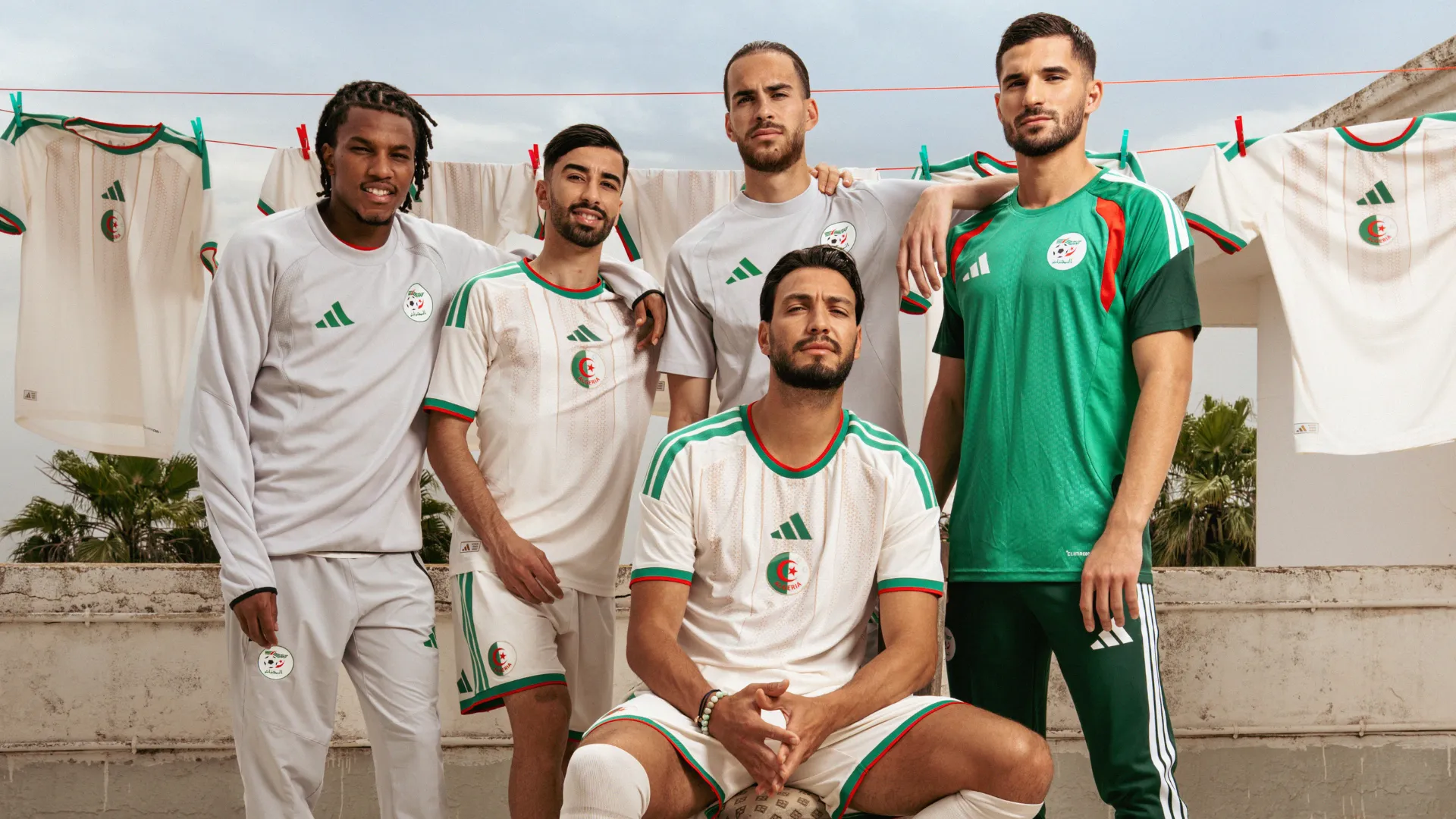
Algeria will return to the FIFA World Cup for the first time in 12 years when the Desert Foxes take their place at the 2026 tournament, carrying both the expectations of a passionate football nation and the challenge of turning talent into results.
Drawn in Group J alongside defending champions Argentina, Austria and World Cup newcomers Jordan, Algeria faces one of its toughest tests in recent years as it seeks to prove it can compete with the world’s elite.
The qualification marks a significant moment for a nation that has long been regarded as one of Africa’s most talented footballing powers but has often struggled to consistently translate that potential into major tournament success.
A Squad Blending Experience and Emerging Stars
Despite entering the latter stages of his international career, captain Riyad Mahrez remains the centerpiece of Algeria’s attack.
The former Manchester City star continues to provide creativity, leadership and technical quality, serving as the team’s primary playmaker and one of Africa’s most recognizable football figures.
However, Algeria’s future increasingly rests on a new generation of players emerging around him.
Wolfsburg forward Mohamed Amoura has developed into one of the team’s most dangerous attacking weapons, offering pace, directness and a growing goal threat.
Manchester City defender Rayan Ait-Nouri adds energy and attacking support from the left flank, while young winger Adil Boulbina has generated excitement among supporters who view him as part of the country’s next footballing chapter.
Together, the blend of established leaders and rising stars has created optimism that Algeria may possess the balance needed to compete at the highest level.
Questions That Still Need Answers
While the talent is evident, concerns remain over Algeria’s ability to deliver when it matters most.
The disappointment of missing the 2022 World Cup after a dramatic playoff defeat to Cameroon continues to linger among supporters. More recently, Algeria’s promising run at the 2025 Africa Cup of Nations ended in frustration after a quarterfinal defeat to Nigeria despite an impressive group stage campaign.
Those setbacks have reinforced questions about consistency, particularly in high pressure matches.
Head coach Vladimir Petkovic has occasionally struggled to transform Algeria’s attacking quality into a fully cohesive team, while defensive vulnerabilities have repeatedly undermined progress during major tournaments.
A goalkeeping dilemma has also complicated preparations. Injuries to several options forced Algeria to recall USM Alger goalkeeper Oussama Benbot despite his recent retirement from international football.
Benbot returns with renewed confidence after helping his club secure continental success and could now play a crucial role in Algeria’s World Cup campaign.
More Than a Tournament, A Test of Ambition
For Algeria, the 2026 World Cup represents more than a return to football’s biggest event. It is an opportunity to demonstrate that the country can once again compete among the world’s strongest football nations.
The talent exists. The experience is there. The challenge now is converting potential into performance when the pressure is highest.
Whether Algeria can navigate a difficult group and make a deep run remains uncertain, but the tournament offers a chance to redefine recent narratives and inspire a new generation of supporters across Africa.
As African football continues to grow in quality and global influence, Algeria’s journey reflects a broader story unfolding across the continent. Success is increasingly being built through long-term development, emerging talent and resilience. For the Desert Foxes, the World Cup is another chapter in that journey, and for African football, it is another opportunity to showcase the continent’s growing strength on the global stage.