
World Bank Youth Summit 2026 Hackathon Urges Young Innovators to Turn Prototypes Into Lasting Impact Through Finance, Partnerships, and Policy Support
Speakers at the World Bank Youth Summit 2026 said innovation alone is not enough, arguing that access to finance, supportive regulation, public-private partnerships, and youth engagement are essential to transform ideas into sustainable solutions and job creation.

|
Getting your Trinity Audio player ready...
|
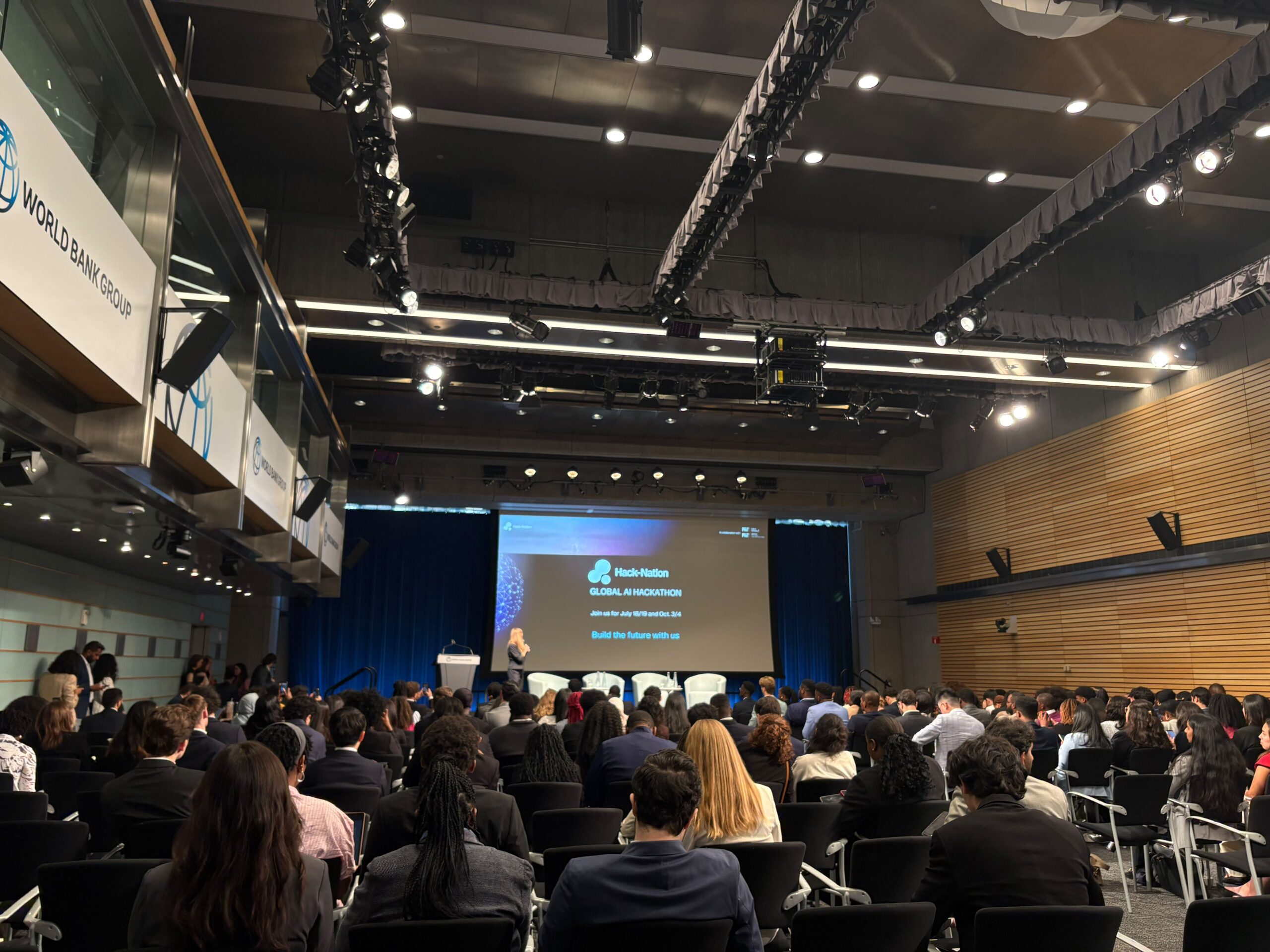
Young innovators participating in the World Bank Youth Summit 2026 were encouraged to view hackathons as the beginning of a longer journey rather than the final destination, as speakers emphasized that meaningful impact depends on continued learning, financing, partnerships, and supportive public policy.
The discussion, centered on “From Prototype to Impact: Achieving Impact,” highlighted the challenges and opportunities facing young entrepreneurs seeking to convert innovative ideas into businesses and development solutions. Throughout the session, speakers stressed that governments, financial institutions, and international organizations all have roles to play in helping youth-led innovation move beyond prototypes.
“Even just showing up is already a win,” one speaker told participants, encouraging young innovators to see participation itself as an important step toward building experience and networks.
Another message reinforced the need for continuous growth: “Try to make an impact by learning and building things,” while emphasizing that hackathons should serve as launchpads rather than endpoints.
The session concluded that this philosophy distinguishes the initiative, noting that “our hackathon is the starting line of something much bigger.“
Innovation Requires Collaboration, Not Isolation
Speakers encouraged participants to seek guidance and partnerships throughout their entrepreneurial journeys rather than attempting to solve problems alone.
“Don’t be afraid to ask for help,” said Raman Pugalumperumal, underscoring the importance of mentorship, collaboration, and knowledge-sharing within innovation ecosystems.
Similarly, Caroline Kuria highlighted growing opportunities for engagement between young innovators and public institutions, stating that “Governments are signaling that they want to work with you.“
The discussion suggested that stronger collaboration between youth, policymakers, and the private sector could accelerate the development and implementation of innovative solutions.
Private Capital Seen as Key to Creating Jobs
During the broader discussion, Mokhtar Diop, Managing Director of ISC, outlined the organization’s mission since 2021 to mobilize private investment for development through blended finance, de-risking mechanisms, and public-private partnerships.
According to the session, ISC aims to unlock financing for small and medium-sized enterprises across emerging economies while prioritizing women, rural communities, micro, small and medium enterprises (MSMEs), and youth-led businesses.
Speakers argued that closing employment gaps will require mobilizing private capital at scale rather than relying solely on public funding.
The discussion aligned this objective with the wider World Bank Youth Summit theme of promoting jobs and economic opportunities in emerging markets.
Young Entrepreneurs Face Persistent Financing Barriers
Participants identified access to finance as one of the biggest obstacles confronting youth entrepreneurship.
Common challenges discussed included:
-
Limited or nonexistent collateral.
-
Short credit histories.
-
Irregular income streams.
-
Banks often perceiving young entrepreneurs as high-risk borrowers.
According to the discussion, these barriers restrict access to loans and investment, limiting the ability of young people to start or expand businesses and create employment opportunities.
Rather than advocating generic youth programs, speakers emphasized targeted interventions based on local realities and evidence.
Blended Finance and Regulatory Reform Proposed as Solutions
Several financial and policy tools were highlighted as potential ways to improve access to capital.
These included:
-
Blended finance structures.
-
De-risking mechanisms that absorb initial losses.
-
Public-private partnerships.
-
Diagnostics to identify location-specific financing challenges.
-
Regulatory reforms supporting digital and mobile banking.
The discussion noted that guarantee structures could encourage lenders to finance entrepreneurs who might otherwise be considered too risky.
Participants also heard that ISC is collaborating with IBM in efforts related to advancing mobile banking solutions through regulatory engagement, while noting that startups seeking to provide lending services require appropriate banking licenses and supportive regulatory frameworks.
Youth Voices Should Shape Policy
Beyond financing, speakers argued that young people should participate directly in designing policies intended to support them.
The discussion emphasized that youth perspectives provide valuable insight into community needs and everyday economic realities, making direct engagement more effective than speaking on their behalf.
ISC and World Bank initiatives were described as seeking to deepen conversations with young people over the coming months and years to improve policy design and implementation.
Networking and Practical Experience Matter
The session also highlighted the importance of networking and practical engagement during the Youth Summit.
Participants discussed involvement in activities ranging from social media management and event organization to entrepreneurship pitching and collaboration across institutions and countries.
Upcoming entrepreneurship events and showcases were referenced, alongside examples of media partnerships and collaborations, illustrating how ecosystems beyond funding—including communications, networking, and institutional partnerships—can support innovation.
Why the Discussion Matters
The session underscored that successful innovation depends on more than technical ability or a promising prototype. Access to finance, supportive regulation, partnerships, mentorship, and meaningful youth participation all influence whether ideas become sustainable enterprises capable of creating jobs and delivering social impact.
For policymakers, the discussion highlighted the importance of designing evidence-based interventions that address local constraints. For financial institutions, it pointed to mechanisms that could expand lending opportunities for young entrepreneurs. For businesses and development organizations, it reinforced the value of collaboration in building inclusive innovation ecosystems.
As the World Bank Youth Summit 2026 continues to focus on youth development, entrepreneurship, and economic growth, the discussion suggested that transforming prototypes into lasting impact will require coordinated action among governments, the private sector, international institutions, and young innovators themselves.
World Bank Youth Summit 2026, World Bank Youth Summit, Youth Summit 2026, hackathon, prototype to impact, youth innovation, youth entrepreneurship, entrepreneurship, startups, startup ecosystem, innovation ecosystem, blended finance, de-risking, public private partnerships, PPP, MSMEs, SMEs, youth-led businesses, youth finance, access to finance, startup funding, investment, private capital, economic development, global development, job creation, employment, youth employment, emerging markets, entrepreneurship policy, development finance, financial inclusion, mobile banking, digital finance, regulation, policy reform, innovation policy, venture development, business growth, entrepreneurship support, youth empowerment, skills development, leadership, collaboration, mentorship, networking, technology innovation, sustainable development, inclusive growth, business environment, World Bank event, development stakeholders, entrepreneurs, innovation challenge, financing barriers, collateral, credit history, lending, banks, risk management, guarantee mechanisms, impact investing, economic growth, private sector, youth participation, policymaking, co-creation, public policy, innovation partnerships, startup ecosystem Africa, emerging economy, young innovators, hackathon presentation, prototype, scaling innovation, entrepreneurship showcase, youth leadership, development solutions, investment climate, innovation strategy, startup policy, SME finance, digital transformation, capacity building, institutional support, inclusive finance, social impact, enterprise development, development institutions, entrepreneurial ecosystem, global jobs, workforce development, innovation finance, regulatory framework, international development, technology for development, youth voices, local solutions, evidence-based policy, business innovation, startup growth, impact entrepreneurship, sustainable innovation, future of work.