

|
Getting your Trinity Audio player ready...
|
Kenya’s capital city entered a state of partial lockdown today as authorities moved to prevent mass demonstrations planned to mark the 35th anniversary of Saba Saba, a pivotal moment in the country’s democratic history. The protests, organized predominantly by youth activists, are calling for good governance, justice for victims of police brutality, and increased government accountability.
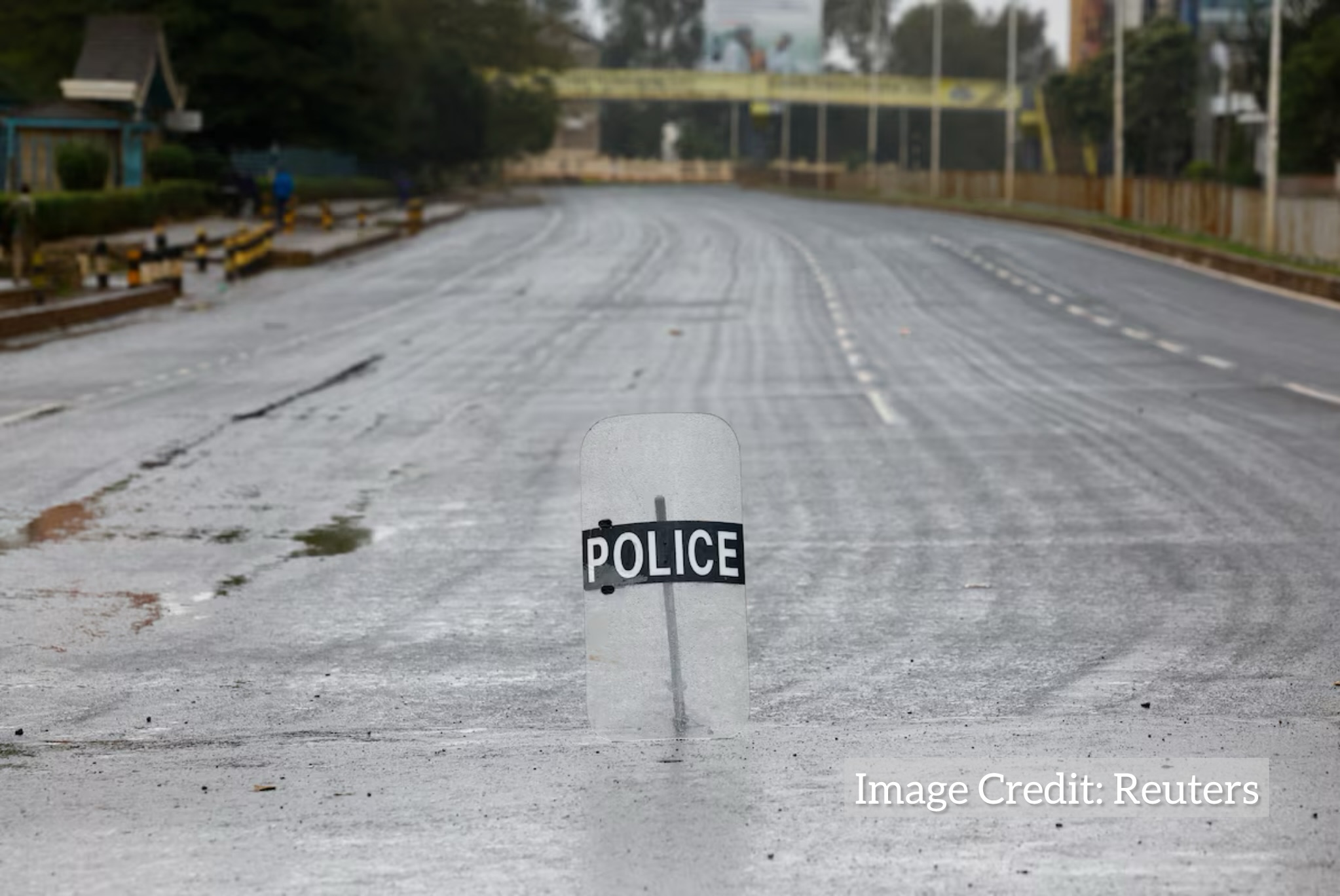
Security forces sealed off all major roads leading into central Nairobi early Monday morning, with multiple police checkpoints set up as far as 10 kilometers from the city center. Public transportation was severely disrupted, and hundreds of commuters, many arriving overnight, were stranded or turned away. Within the city, key government areas such as State House and Parliament were heavily barricaded with razor wire, and officers in riot gear were deployed in large numbers.
The lockdown created a tense but calm atmosphere across the capital. Businesses remained closed, and schools urged students to stay home as precautionary measures. The usually vibrant streets of Nairobi were eerily quiet as the city prepared for possible unrest.
Kenyan police released a statement on Sunday evening, saying the lockdown was necessary to “maintain public order and protect lives and property,” especially in light of recent demonstrations that have turned violent. Authorities cited the June 25th protests, during which at least 19 people were killed and widespread looting occurred, as justification for heightened security.
The Saba Saba Day, Swahili for “Seven Seven” is a historically significant date in Kenya. It commemorates the July 7, 1990 demonstrations that led to the end of one-party rule under then-President Daniel arap Moi and the eventual introduction of multi-party democracy. The original protests were met with brutal suppression, with reports of over 20 deaths and hundreds of arrests.
This year’s Saba Saba marks not only a remembrance of past struggles but also a powerful expression of current frustrations. The protests are largely being led by young Kenyans who have grown increasingly disillusioned with the political establishment. Their demands include justice for victims of police violence, an end to corruption, and improved economic opportunities amid rising inflation and unemployment.
Civil society groups have raised alarms over growing state hostility toward activists. On Sunday, an armed gang attacked the offices of the Kenya Human Rights Commission in Nairobi. The NGO was hosting a press event led by women’s groups advocating against police violence. While no injuries were reported, the attack heightened fears of politically motivated intimidation ahead of Monday’s protests.
Further complicating the situation are allegations of protest infiltration by so-called “goons” accused of looting and attacking demonstrators. Some activists claim these groups may be working in tandem with law enforcement to discredit peaceful protest efforts a charge police have categorically denied.
Despite the challenges, organizers remain resolute.
“We are standing in the legacy of those who fought in 1990,” said one youth leader via social media. “But this is our Saba Saba. We want a country where justice, not fear, defines our future.”
What makes this year’s protest especially significant is the visible shift in leadership. Unlike previous years, the movement is not being driven by opposition politicians, but by grassroots youth movements, online mobilizations, and decentralized networks of activists demanding structural change.
As of midday, the situation in Nairobi remained largely under control, though tensions were palpable. Observers from human rights organizations are monitoring developments closely, with many warning that Kenya’s response to these demonstrations will serve as a litmus test for the health of its democratic institutions.
As Kenya marks 35 years since the birth of its multi-party democracy, today’s events underscore that the struggle for civic freedom, justice, and equity is far from over. The youth-led protests serve as a powerful reminder that democracy is not just a legacy, it is a living, breathing process that must be protected and renewed.