

|
Getting your Trinity Audio player ready...
|
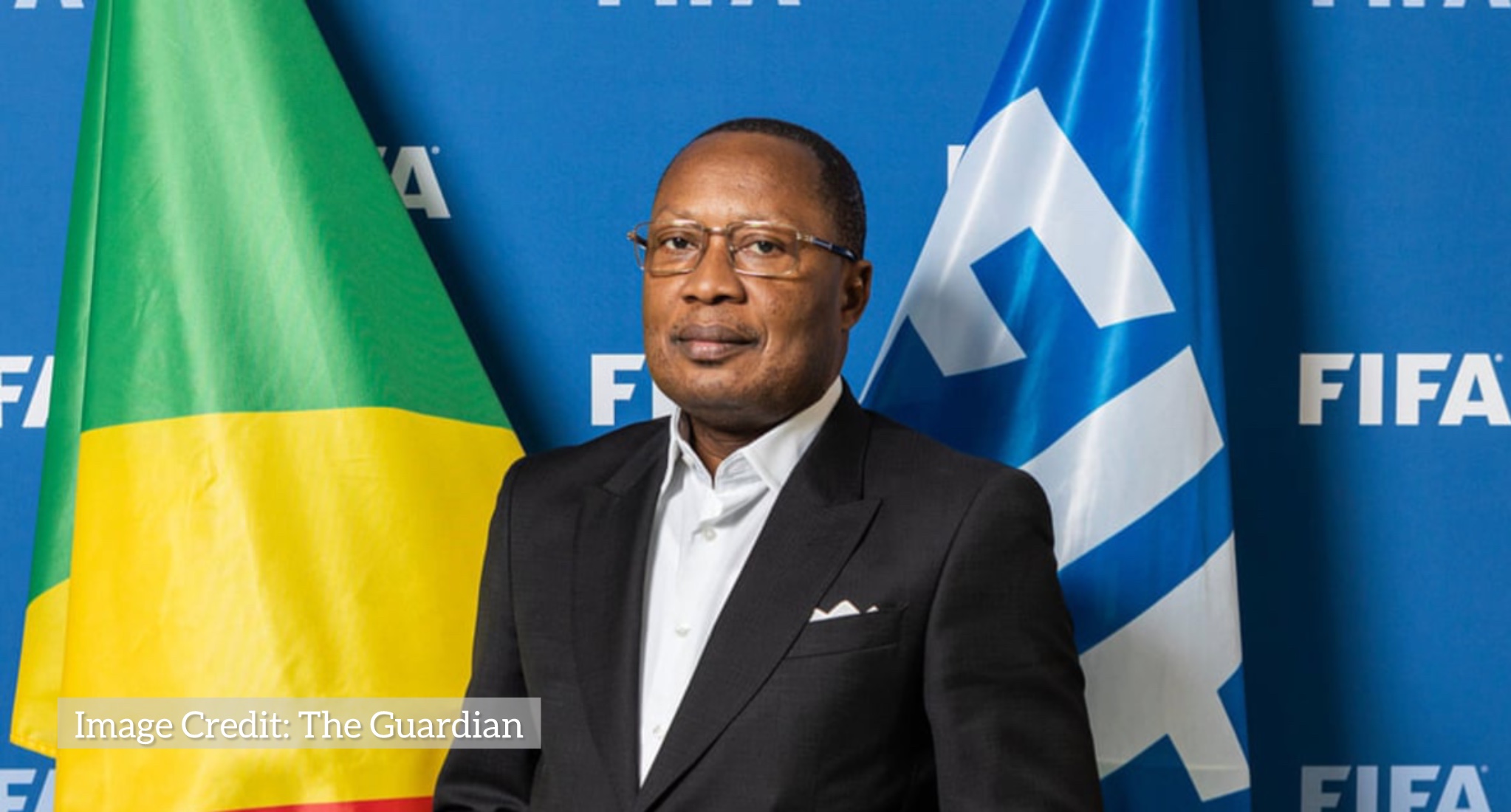
Jean-Guy Blaise Mayolas, President of the Congolese Football Federation (Fecofoot), is facing serious allegations of financial misconduct involving over $1.3 million in funds disbursed by FIFA. Among the funds reportedly misappropriated is nearly $500,000 intended specifically to support the country’s women’s football program.
According to Congolese authorities, Mayolas may be formally charged with offenses related to money laundering and forgery. His arrest, which took place in late May, was executed by the Central Intelligence and Documentation Office (CID), an arm of the Ministry of the Interior. Alongside him, Fecofoot’s General Secretary, Badji Mombo Wantete, has also been implicated. Both officials have denied the accusations, calling them part of a “conspiracy” aimed at undermining their leadership.
Accusations Center on Shell Companies and Misuse of FIFA Funds
Mayolas, who assumed the role of Fecofoot president in 2018, is accused of creating and using a network of shell companies to siphon funds provided by FIFA for the development of football in the Republic of the Congo. A particularly troubling aspect of the case involves the alleged mismanagement of $500,000 allocated by FIFA in 2021 as part of its global COVID-19 relief program, earmarked for the women’s game.
In a formal statement submitted in March to Congolese authorities, leaders from all of the country’s top-tier women’s clubs claimed they had received only $20,000 of that allocation. The rest, they allege, is unaccounted for.
Additionally, scrutiny has been directed toward an $800,000 fund meant for the construction and development of a national football training facility in Ignié. Eight years after the project began, the site remains incomplete and largely abandoned. An anonymous source familiar with the project stated,
“All the funds have been blocked and nothing is happening. It’s been such a long time and no one understands where the money has gone.”
Past Disciplinary Actions and International Fallout
This is not the first time Mayolas has come under FIFA’s spotlight. In 2015, he and Wantete were sanctioned by FIFA and handed six-month bans after being found guilty of accepting improper gifts during their tenure in Fecofoot’s executive ranks.
More recently, Mayolas was suspended by the Congolese Ministry of Sports in February, following internal investigations into financial irregularities. This triggered a diplomatic dispute between the national government and FIFA, which prohibits what it terms “third-party interference” in the affairs of national football associations. As a result, FIFA temporarily suspended Congo from international football competitions, forcing the country to forfeit two World Cup qualifying matches against Tanzania and Zambia, in March. Both opposing teams were awarded 3-0 wins.
Congo’s suspension was lifted in May after the ministry restored operational control of Fecofoot’s headquarters to the federation. Despite this, Mayolas and Wantete remained sidelined and were blocked from attending FIFA’s Congress in Paraguay. Shortly after, both were detained by local authorities.
FIFA’s Response and Ethical Review
It is believed that members of FIFA’s Ethics Committee made a visit to Brazzaville in March to conduct preliminary assessments regarding the financial allegations. However, the governing body has not yet opened a formal investigation, and FIFA has so far declined to comment publicly on the situation.
The controversy has cast a shadow over football governance in the Republic of the Congo and raised concerns about financial transparency in the administration of sports development funds, particularly those dedicated to women’s football, a sector already struggling for resources and recognition.
As legal proceedings move forward and potential charges loom, the global football community is watching closely. If the allegations are proven, this case may further intensify calls for more rigorous oversight of how FIFA funds are managed and distributed in lower-income footballing nations.