

|
Getting your Trinity Audio player ready...
|
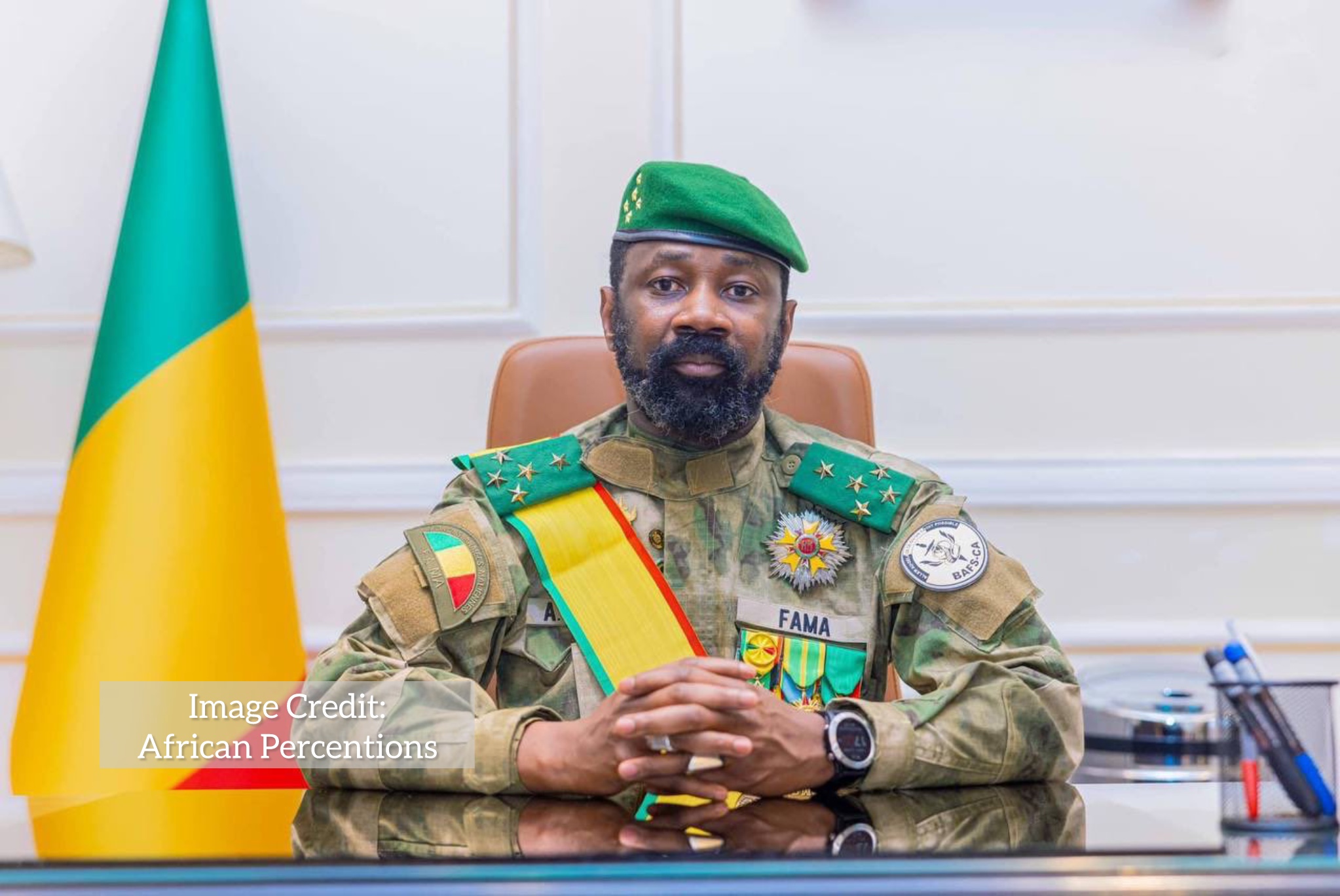
General Assimi Goïta, Mali’s transitional leader, has formalized a sweeping new law that awards him a five-year presidential term with no limits on renewal and no requirement for competitive elections. Published this Thursday, the legislation follows approval by the military-appointed legislative council and cements Goïta’s hold on power until at least 2030, despite an earlier promise to hand over authority to civilians by March 2024.
The measure, drafted and rubber-stamped behind closed doors, empowers Goïta to remain “head of state for a term of five years, renewable as many times as necessary, until the country is pacified.” It overturns the transitional timeline initially set after Goïta seized control, when he portrayed himself as a guardian against jihadist insurgency and vowed to restore democratic governance.
In recent months, Mali’s ruling junta has systematically curtailed political freedoms. Political parties were dissolved, new party-formation requirements were tightened, and public gatherings were outlawed. These steps came on the heels of a national consultation, organized by the military and boycotted by major opposition groups, which recommended proclaiming Goïta president without a popular vote. Critics say these moves amount to a one-man constitutional coup that undermines any genuine transition.
Goïta assumed leadership amid escalating violence by extremist groups linked to al Qaeda and Islamic State, which have ravaged northern and central Mali since 2012. Early in his rule, he won some support for pledges to reinforce security and pursue structural reforms. But his failure to adhere to the transition schedule, coupled with increasingly authoritarian measures, has alarmed both domestic civil-society activists and international partners.
On the diplomatic front, Mali’s relationship with Western nations has cooled sharply. Since expelling French forces and sidelining traditional European allies, Bamako has drawn closer to Russia, welcoming private military contractors from the Wagner network to bolster its counter-insurgency efforts. These troops have been accused of human-rights violations, further complicating Mali’s international standing.
Regionally, Mali has joined forces with fellow military-ruled neighbors Burkina Faso and Niger to establish the Alliance of Sahel States, pledging joint security operations with a combined force of 5,000 soldiers. This bloc signals a strategic pivot away from the Economic Community of West African States (ECOWAS) and traditional multilateral frameworks.
Despite these dramatic shifts, Goïta retains a degree of popular backing among Malians who view him as a strongman capable of stabilizing the country and reclaiming national sovereignty. For now, his unbounded presidential mandate stands as the latest indication that Mali’s path back to democratic rule will be neither swift nor straightforward.