
Burkina Faso Military Government Abolishes Electoral Commission, Tightens Grip on Future Elections

|
Getting your Trinity Audio player ready...
|
Burkina Faso’s military-led government has officially dissolved the country’s independent electoral commission, transferring full control of future elections to the Ministry of Territorial Administration. The move, announced via state broadcaster RTB, marks a significant shift in how elections will be organized and has triggered concerns about democratic backsliding in the West African nation.
Authorities justified the decision by citing high operating costs and concerns over foreign influence. According to Territorial Administration Minister Emile Zerbo, the electoral commission was receiving an annual government subsidy of nearly $870,000, which he described as an unjustifiable expense. Zerbo argued that the move would “reinforce sovereign control” over the electoral process and help reduce external interference in domestic political affairs.
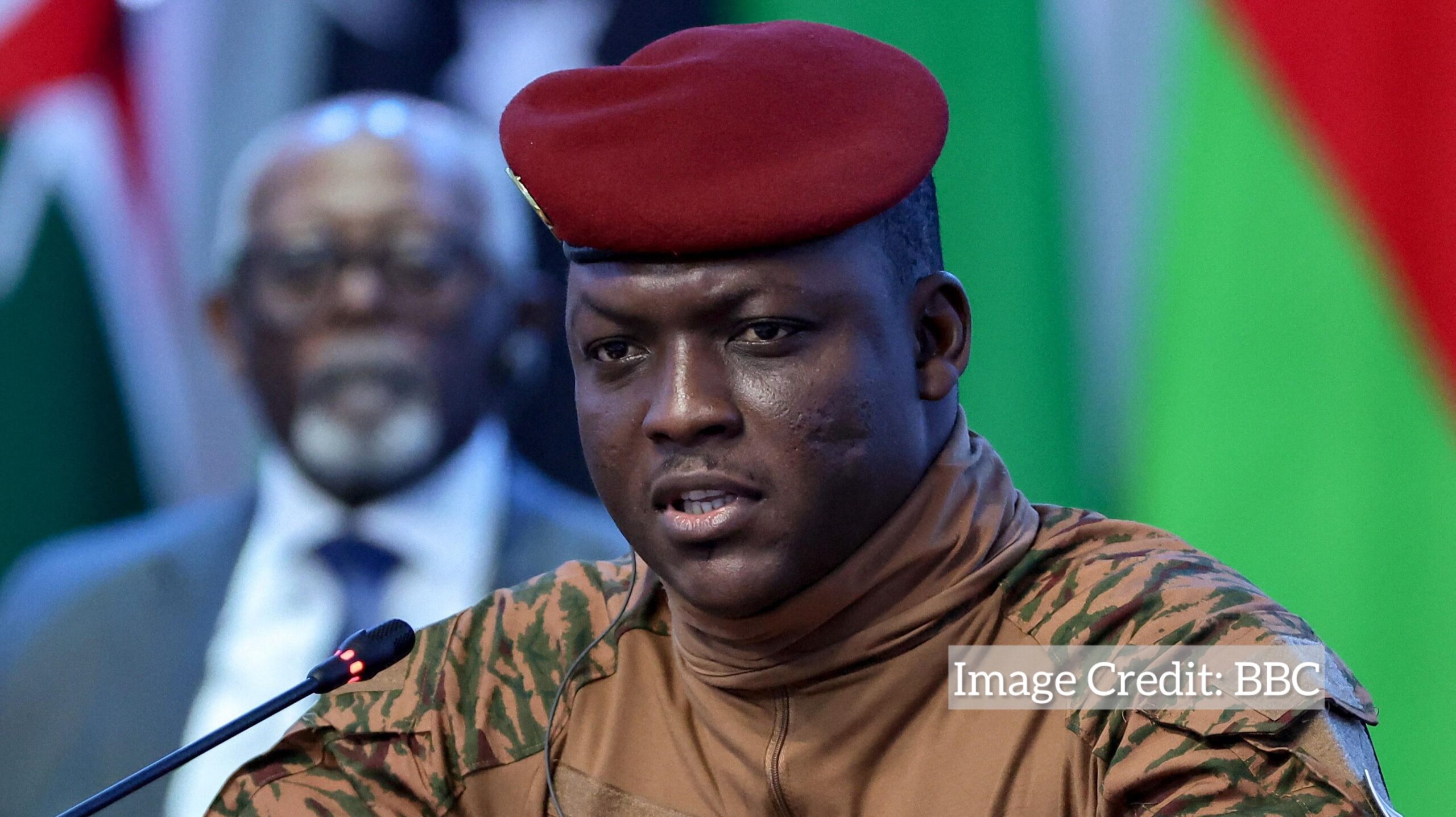
The announcement comes nearly three years after Captain Ibrahim Traoré and his military allies seized power in a 2022 coup, citing the previous civilian administration’s failure to contain a growing Islamist insurgency. Since then, the military government has postponed the return to democratic rule, extending the transitional timeline to July 2029. Under this revised schedule, Capt. Traoré is permitted to remain in office and would be eligible to contest future presidential elections.
The dismantling of the electoral commission is being interpreted by political analysts as a calculated move to centralize power and secure control over upcoming electoral processes. Critics argue that by placing elections directly under the interior ministry a department answerable to the military leadership the junta is weakening checks and balances that ensure transparency, fairness, and public trust in the electoral system.
Supporters of the military government say the decision is in line with a broader push to restore national sovereignty, particularly as the country distances itself from traditional Western partners. Since assuming power, the junta has rejected military support from France, its former colonial ruler, and instead strengthened ties with Russia. Government officials claim this realignment is necessary to secure national interests and fight terrorism more effectively.
However, the security situation in Burkina Faso continues to deteriorate. Despite intensified military efforts, jihadist groups, particularly Jama’at Nusrat al-Islam wal-Muslimin (JNIM), an al-Qaeda affiliate remain active and deadly. Verified reports show that in the first half of 2025 alone, over 280 attacks were attributed to jihadist militants, more than double the number during the same period in 2024. These figures raise doubts about the effectiveness of the military-led counterterrorism strategy.
Alongside growing insecurity, rights groups and international observers have expressed concern about a crackdown on civil liberties under military rule. Allegations of human rights abuses, including the targeting of civilians and the silencing of political opposition and journalists, have become increasingly common. The decision to dissolve the independent electoral body adds to fears that political space is being closed further under the current regime.
With democratic elections now delayed until at least 2029 and electoral oversight firmly in the hands of the state, Burkina Faso stands at a crossroads. The junta portrays its governance model as a necessary course correction aimed at restoring national integrity and overcoming years of instability. Critics, however, see a dangerous consolidation of power and a deliberate weakening of democratic institutions.
As Burkina Faso navigates an uncertain political and security landscape, the international community will be watching closely. The question now is whether this new structure will ultimately support a genuine transition to civilian rule or entrench authoritarian governance under the guise of sovereignty and national security.