

|
Getting your Trinity Audio player ready...
|
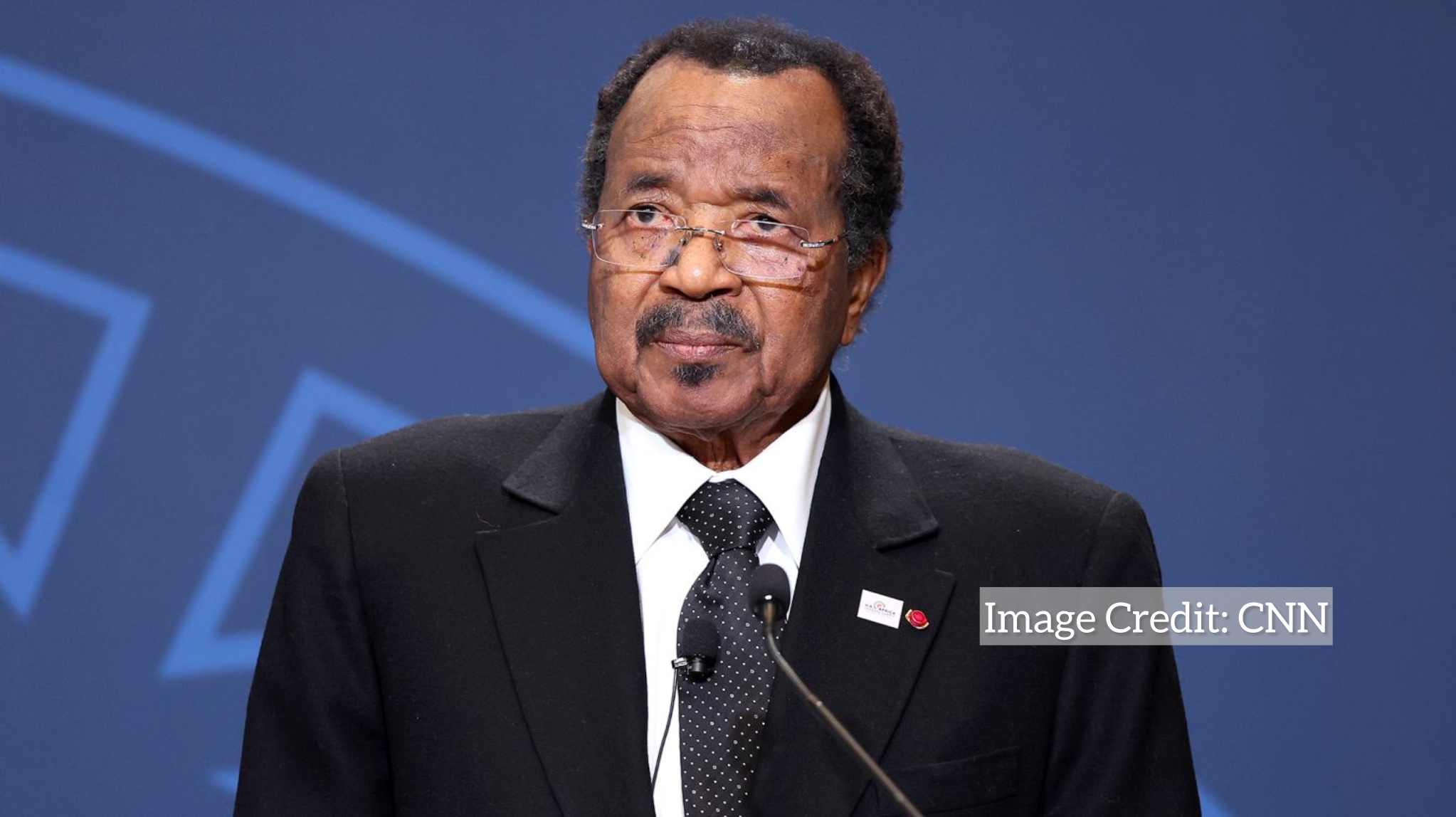
Just days after officially confirming his intention to run for another term in office, Cameroon’s President Paul Biya has enacted a major reshuffle of the country’s military leadership. The changes, formalized through a presidential decree, affect key branches of the armed forces and are widely viewed as a strategic move to solidify military loyalty ahead of the upcoming presidential election.
The shake-up includes significant promotions across the army, navy, and national gendarmerie. Five senior army officers have been elevated to the rank of Brigadier General, while eight current Brigadier Generals have advanced to Major General. In the navy, a captain was promoted to Rear Admiral, and a colonel from the gendarmerie was also appointed Brigadier General. These appointments are seen by political analysts as a deliberate effort by the president to strengthen his support base within the country’s defense structures.
At 92 years old, President Biya is the oldest serving head of state in Africa and one of the longest-ruling leaders globally, having first taken power in 1982. His decision to seek re-election has sparked renewed debates within Cameroon about governance, generational leadership transition, and the role of security forces in maintaining political continuity. Concerns about the president’s health and stamina for another term have also resurfaced, raising questions about long-term national leadership and stability.
Analysts suggest the timing of the military reshuffle is far from coincidental. Over the years, Biya has consistently relied on the loyalty of the armed forces to maintain his political grip particularly during times of domestic unrest, separatist uprisings, and electoral tensions. The latest wave of promotions may serve to reward loyalty, ensure alignment within the top brass, and reduce the risk of dissent from within the ranks as the election approaches.
“This move reflects a classic strategy of power consolidation,” said a regional political observer. “In Cameroon, the military is more than a defense institution, it’s a pillar of political power. Ensuring its loyalty is critical to maintaining control during sensitive periods like an election campaign.”
Biya’s presidency has been marked by a centralized style of governance, with the military playing a critical role in internal security and political enforcement. The country has faced multiple security challenges over the years, from the Anglophone separatist crisis in the west to Boko Haram insurgency spillovers in the north. In both cases, the military has been instrumental in the state’s response often amid accusations of heavy-handedness and human rights violations.
Despite the longevity of Biya’s rule, calls for political renewal have grown louder in recent years, particularly among younger Cameroonians. Opposition groups and civil society actors have long criticized the lack of democratic space and the president’s apparent reluctance to prepare the country for a post-Biya future.
With the 2025 presidential election now on the horizon, Biya’s military reshuffle sends a clear message: he intends to contest and win on his own terms, backed by a restructured and likely loyal defense establishment.
Whether this approach will secure another term for Biya or further inflame political tensions remains to be seen. What is certain, however, is that the coming months will be critical for Cameroon’s future both politically and institutionally as the nation once again heads toward an uncertain electoral cycle with a deeply entrenched incumbent at the helm.